Consistency Comes From Removing Variables
Muzzleloader success often depends on small details that either stay controlled or quietly drift out of control. A loose breech plug, damp primer, inconsistent seating pressure, untested projectile, forgotten ramrod mark, dirty flash channel, or unrealistic range can turn a good hunt into a mystery. The best muzzleloader hunters are not lucky with one-shot rifles. They build repeatable routines that make the firearm, load, weather plan, and shot decision behave the same way every time.
Standardize the Load
Consistency begins with choosing one load and proving it. That means the same powder or substitute, the same charge, the same projectile, the same primer, and the same seating pressure. A muzzleloader gives the hunter many chances to introduce variation, and every variation can change accuracy or ignition. The more carefully the load is standardized, the fewer mysteries remain when a shot misses or groups open.
Field preparation should mirror range success. If the rifle was zeroed with a specific charge and bullet, the speed loaders should contain that exact combination. If a certain swabbing pattern was used during practice, the hunter should know whether the first hunting shot comes from a clean bore, lightly fouled bore, or dry-patched bore. Consistency is not glamorous, but it is the heart of dependable muzzleloader performance.
One practical way to standardize the load is to prepare the hunt exactly like a range string. Use labeled speed loaders, check each component before leaving home, and keep a written card with the proven load. If a speed loader spills or a projectile looks damaged, replace it rather than hoping it will perform normally. Consistency starts before the rifle is ever loaded.
Consistency also means resisting camp experiments. If another hunter offers a different bullet or hotter charge the night before the opener, save that idea for the range after the season. Hunting is the place to use proven information, not to test curiosity on a live opportunity.
Own the Bore Condition
Many muzzleloader problems begin in the bore. Some rifles print the first clean-bore shot differently from later shots. Some foul quickly and become harder to load. Some need a dry patch after oiling before they are ready for powder. The hunter has to discover these habits before the season. Guessing at bore condition on opening morning is a poor plan.
A range notebook can track this clearly. Record whether the barrel was clean, fouled, swabbed, dry, or freshly oiled. Record how hard the projectile seated and where the shot landed. Over time, the rifle's preference becomes obvious. Once it is obvious, repeat it. A muzzleloader that seems inconsistent may simply be responding to inconsistent care.
Breech plug and flash channel maintenance should be part of bore management. Ignition needs a clear path. Fouling, oil, carbon, or residue in that path can turn a good load into a hesitation, hangfire, or misfire. Clean the whole ignition system, not only the shiny part of the barrel.
Bore condition should also be tied to the first shot of the hunt. Some hunters foul the bore before hunting because their rifle prints better that way, while others hunt from a clean dry bore because that is how they zeroed. Neither habit is automatically correct. The right answer is the one proven by your rifle with your load.
A good cleaning routine avoids over-oiling before storage and before loading. Protective oil is useful after cleaning, but the bore should be dry when powder is introduced. Before the next hunt, a dry patch can remove excess oil and restore confidence. That one small step prevents many unexplained first-shot problems.
The breech plug should be inspected like a precision part. Threads, flash hole, carbon buildup, and primer fit all influence ignition. A plug that is almost clean may still create uneven performance. Take the extra minutes to clean the parts that actually start the shot.
Prepare for Weather Like It Is Certain
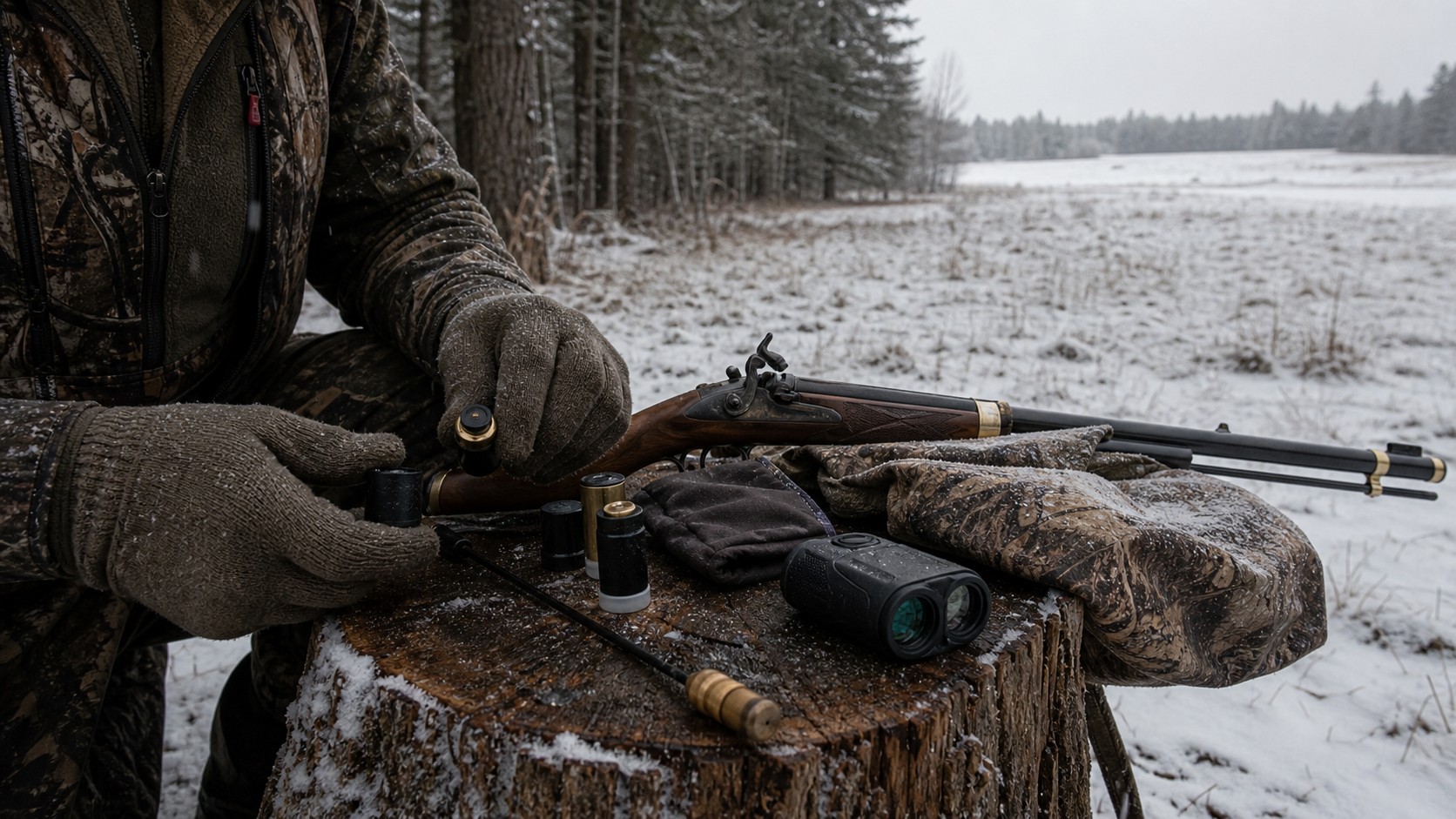
Muzzleloader seasons often happen when weather is rough. Rain, snow, sleet, fog, and condensation can all affect the load. A hunter who waits until the storm arrives to think about protection is already behind. Muzzle covers, dry primer storage, sealed speed loaders, action protection, and end-of-day cleaning plans should be ready before the hunt starts.
Condensation is sneaky. A cold firearm carried into a warm room can collect moisture, and that moisture may work into places the hunter does not notice. Travel hunts make this more common because rifles move between trucks, cabins, tents, and cold air. Think about where the firearm rests overnight and how it will be loaded the next morning.
Wet-weather success is also about restraint. Avoid unnecessary unloading and reloading in the rain if safety and rules allow the firearm to remain properly managed. Keep components closed until needed. Work slowly with dry hands or dry gloves. Most weather problems grow from rushing.
Weather plans should include transportation. A rifle bouncing in a damp case, riding in a warm truck after a freezing sit, or sitting beside a heater can experience condensation that is easy to miss. Cases protect rifles from bumps, but they can also trap moisture. Open, dry, and inspect gear when the day ends.
Hunters should also keep backup components separated. If every primer, cap, or speed loader rides in the same wet pocket, one leak can compromise the whole day. Dry storage should be redundant. A small sealed container in a pack can save a hunt when the quick-access pocket gets soaked.
Mark containers clearly. Powder, pellets, bullets, sabots, primers, and cleaning supplies can look similar in dim light or cold hands. A simple label system prevents the kind of mix-up that leads to bad groups or unsafe confusion.
If the rifle has been carried loaded through rough brush, check confidence in the load before continuing. The ramrod mark should match. The muzzle should be clear. The breech area should be dry. This pause takes seconds and can prevent hours of wondering later.
Make the First Shot Easier
A one-shot firearm asks the hunter to make the first chance count. That begins with stand choice. Set up where a steady rest is available, where likely shot distances are known, and where the animal can be watched after the shot. A muzzleloader hunter should not choose a position that requires a wobbly freehand shot if a nearby tree, shooting stick, or blind rail would create a steadier solution.
Range landmarks before animals appear. Late-season fields, snowy openings, and open hardwoods can make distance deceptive. A deer that looks close may be farther than the hunter thinks, especially through smoke, cold air, or fading light. Range the stump, trail bend, field edge, and far tree line before the moment matters.
Shot discipline should be conservative. Broadside and slightly quartering-away angles inside proven range are the standard. If the animal is alert, the wind is gusting, the rest is poor, or the distance is uncertain, wait. Muzzleloader seasons often reward patience because the hunter who passes questionable shots is still ready when a better one appears.
The one-shot mindset should influence how the animal is approached before the shot. Choose stands with natural rests, clear lanes, and distances that match the load. A hunter who sets up in open country without support may discover too late that the rifle is accurate but the position is not. Build the shot before the animal arrives.
Smoke management matters after the trigger breaks. Depending on wind and powder, the view may disappear for a moment. Keep both eyes engaged, listen for direction, and resist the urge to reload or move immediately if the animal's reaction is unclear. Marking the exit route can matter more than speed.
Follow-through is easy to neglect because smoke and recoil feel dramatic. Stay in the rifle, keep the sights where the animal stood, and listen. A hunter who immediately lifts their head may lose the only clues available after the shot.
Reloading should be practiced without panic. Even when a second shot is unlikely, knowing the safe sequence prevents fumbling. Practice with dummy routines and unloaded conditions until the movement is familiar.
Shot timing should include the smoke that follows. If wind will blow smoke across the likely escape route, the hunter needs to be ready to listen, mark landmarks, and avoid moving too soon. The shot is not finished when the rifle fires; observation is still part of success.
Keep the Kit Simple and Complete
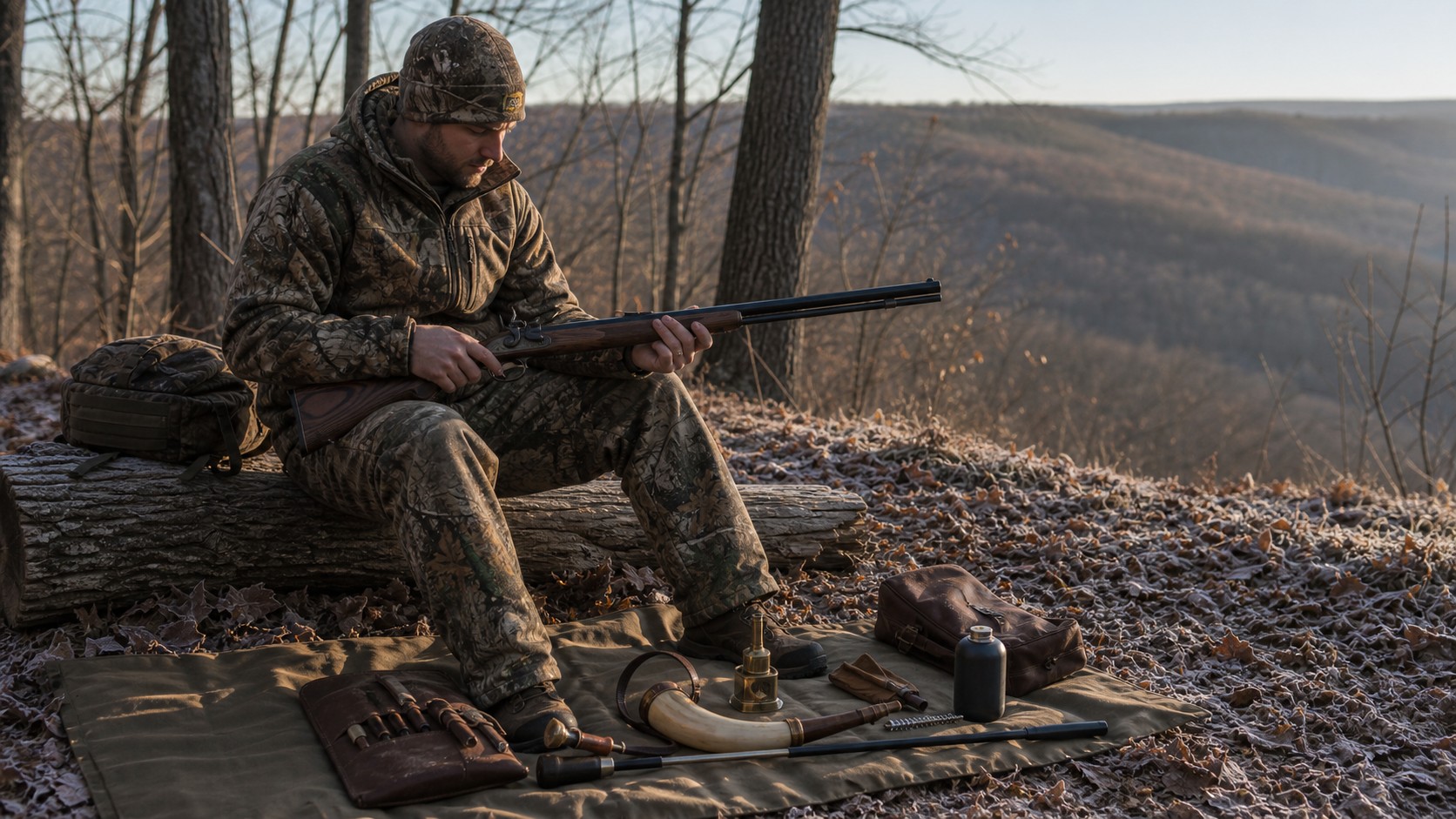
A muzzleloader field kit should be boringly useful. Speed loaders, primers or caps, short starter, ramrod accessories, patches, jag, breech plug tool, rangefinder, small weather cover, and a compact cleaning backup all have a job. Extra gadgets that complicate the routine should stay home unless they solve a problem you have actually experienced.
Organization matters under cold stress. If primers ride loose in one pocket, speed loaders in another, and tools in a noisy bag, the hunter may fumble when calm handling matters most. Put items in quiet containers and practice reaching them with gloves. A good kit makes the correct step easy and the wrong step obvious.
A complete kit should still be compact enough to use under stress. Too many tools can create confusion when the hunter only needs the next correct step. Lay everything out before the season and ask what problem each item solves. If it does not load, protect, clear, clean, or recover, it may not belong in the field bag.
The kit should also include a small way to solve stuck or awkward situations within safe limits. A jag, puller, or approved unloading method may be useful, but only if the hunter knows how to use it. Tools without understanding can make problems worse.
Review Every Hunt
After each hunt, review the routine. Did the ramrod mark match? Did the primer stay dry? Did the rifle hang in wet brush? Did the first shot from that bore condition land where expected? Was the range realistic? These questions turn each outing into data instead of folklore.
Consistent muzzleloader success is built between shots. The actual trigger pull is only the visible part of a longer routine that includes loading, protecting, carrying, cleaning, and deciding. The hunter who respects every step will have fewer surprises and better chances when the season finally offers one clean opportunity.
That is the quiet pleasure of muzzleloader hunting. It rewards hunters who slow down enough to notice details, but it also holds them accountable when details are ignored. Make the routine repeatable, and the rifle becomes far more trustworthy.
Review should include misses and passed shots. A pass because the range was too far or the rest was poor is a success in judgment. A miss should be traced through load, bore, rest, sight picture, wind, trigger press, and follow-through. Muzzleloader hunters improve when they study the whole routine instead of blaming the final second.
Over a season, consistency becomes visible. The rifle loads the same way, the ramrod mark looks familiar, the primer stays dry, and the hunter knows exactly what distance is acceptable. That confidence is earned, and it makes the slower muzzleloader rhythm feel like an advantage rather than a limitation.
At season's end, write down what the rifle liked. Include the load, zero, cleaning routine, weather lessons, and any mistakes. Next year will arrive faster than expected, and clear notes save the hunter from rebuilding confidence from scratch.