Deer Mount Displays Work Best When Space, Light, Wall Strength, Memory, and Room Flow Are Planned Together
Deer mount display ideas work best when the room guides the plan, not the mount alone. A shoulder mount, skull mount, antler plaque, pedestal mount, European mount, or grouped trophy wall changes the way a space feels. Good display planning protects the mount, respects the animal, supports the story, and keeps the room usable. The strongest displays look intentional because lighting, spacing, height, background, and surrounding decor all work together.
Start With the Room
A deer mount needs enough wall space and viewing distance to feel balanced. A large mount crowded into a narrow corner can look awkward even if the taxidermy is excellent. Ceiling height, door swings, furniture placement, windows, fireplaces, and traffic paths all affect where the mount belongs.
The display should improve the room instead of making the room serve only the mount.
Check Wall Strength
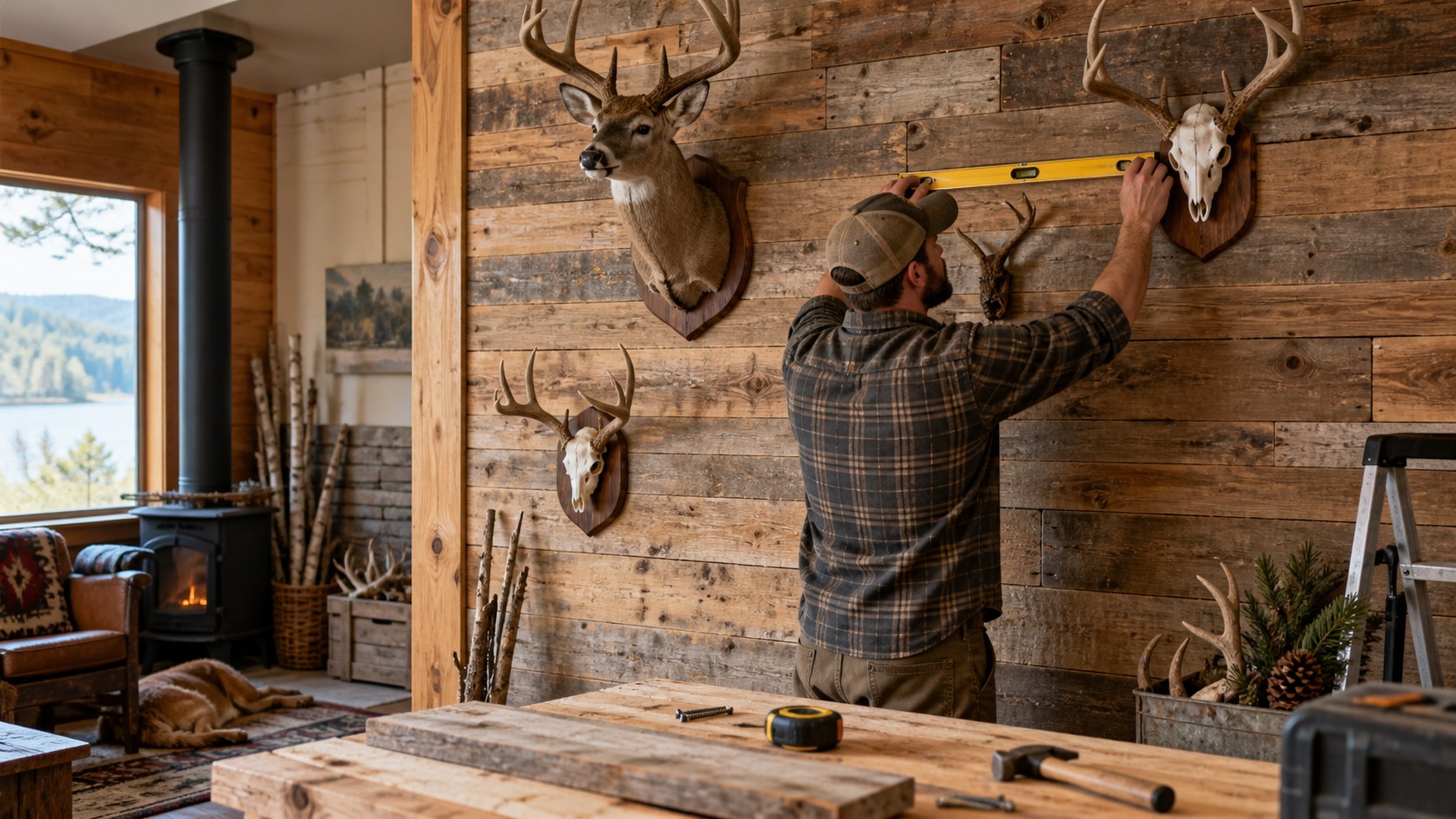
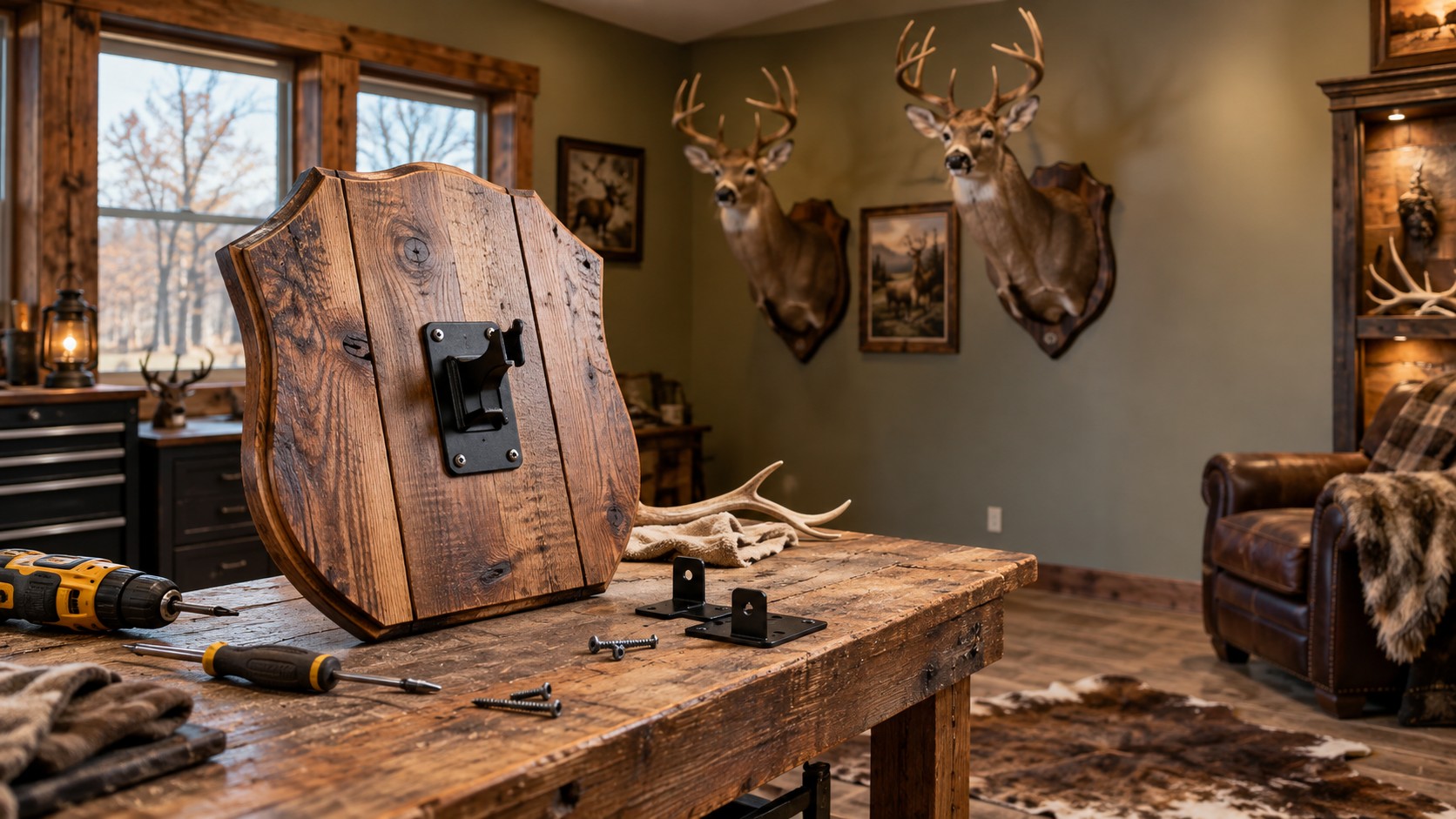
Mounts can be heavier than they look. Wall studs, anchors, masonry, brackets, and hardware need to match the weight and shape of the display. A weak installation can damage the mount, the wall, or someone nearby.
Planning hardware before hanging prevents rushed decisions and crooked placement.
Use Lighting With Care
Lighting can make a deer mount look warm and dimensional, but harsh light can flatten detail or damage materials over time. Avoid constant direct sunlight because it can fade hair, dry materials, and age the mount unevenly.
Soft directional lighting usually works better than glare from a window or bright overhead fixture.
Choose the Right Background
Wood, stone, painted drywall, metal panels, reclaimed boards, and fabric backdrops all change the mood of a display. A busy background may compete with antlers and facial detail, while a plain background can make the form easier to read.
The background should support the mount rather than hide it.
Group Pieces Thoughtfully
Multiple mounts need spacing, rhythm, and hierarchy. Antlers should not visually collide, and every piece should have room to breathe. Grouping by species, place, year, family history, or hunting story can make a trophy wall more meaningful.
A display with fewer well-placed pieces often feels stronger than a crowded wall.
Add Personal Context
Maps, photographs, tags, spent shells, old calls, framed notes, or a small plaque can connect the display to the hunt. Context should stay restrained. Too many extras can make the wall feel cluttered.
The goal is to help people remember the place, effort, and story behind the mount.
Protect the Mount
Dust, smoke, insects, humidity, heat, and sunlight can all shorten the life of a mount. Regular gentle cleaning, stable indoor conditions, and pest awareness help preserve hair, hide, eyes, and antlers.
Mounts should be placed away from fireplaces, vents, damp walls, and areas where people brush against them.
Make It Fit the Household
A display should fit the people who live with it. Shared rooms, guest spaces, children’s areas, and formal rooms may call for different levels of visual presence. European mounts, antler displays, and smaller plaques can work where a full shoulder mount feels too dominant. The best display feels like part of the home or cabin, not an object forced into the space.
Budget can also shape the right display. Reclaimed lumber, simple floating shelves, careful paint, good lighting, and clean hardware may create a better result than expensive materials used without a plan. Seasonal care belongs in the design too. A display in a cabin that sits empty part of the year needs extra attention to humidity, pests, dust, and temperature swings so the mount is not quietly damaged between visits.
The room should still leave space for ordinary life. A table, reading chair, coat rack, or family photo can keep the display from feeling like a showroom and make the hunting memory part of a livable setting.
How to Make Better Decisions About Deer Mount Display Ideas
Good judgment around deer mount display ideas starts by slowing the decision down. In hunting, cabin work, collecting, wildlife observation, and outdoor craft, excitement can make a person trust the first clue too quickly. A better approach is to compare several clues before acting.
The first question is always purpose. A person looking at deer mount display ideas should know whether the goal is field performance, safe use, historical accuracy, display value, wildlife understanding, or long-term ownership. Different goals create different standards.
The second question is setting. Weather, terrain, storage, local regulations, season dates, land access, animal behavior, and available tools can all change what counts as a good choice. Advice that works in one camp or region may not fit another.
The third question is consequence. A poor choice may waste money, damage a collectible, create an unsafe setup, disturb wildlife, violate a rule, or make a project harder to maintain. Thinking through those consequences before acting is part of responsible outdoor culture.
The best decisions are repeatable. If another careful person can inspect the same details and understand why the choice was made, the reasoning is stronger. That is true whether the subject is a piece of gear, an animal in the field, a cabin display, or a handmade replica.
Safety, Ethics, and Long-Term Value for Deer Mount Display Ideas
Safety should never be treated as a separate afterthought. For deer mount display ideas, safe judgment may involve tool handling, firearm awareness, wildlife distance, weather planning, storage, display mounting, legal transport, or the condition of older materials.
Ethics matter because hunting culture depends on trust. Responsible hunters and outdoor enthusiasts respect seasons, property boundaries, fair chase principles, conservation needs, partners, dogs, and the animals themselves. Even decorative or historical projects should honor that broader responsibility.
Long-term value comes from care. Gear should be stored correctly, natural materials should be protected from moisture and heat, and display pieces should be mounted without causing avoidable damage. A good choice today should not create preventable problems next season.
Documentation helps too. Notes, photographs, measurements, receipts, sketches, maps, and maintenance records can preserve what was learned. They make future repairs, comparisons, and ownership decisions easier.
When uncertainty remains, restraint is usually the better move. Waiting for a clearer identification, better reference, safer shot, stronger mount, or more reliable source protects the person making the decision and the outdoor tradition connected to it.
Common Mistakes to Avoid With Deer Mount Display Ideas
One common mistake is treating appearance as proof. Something can look old, rugged, expensive, or field-ready and still fail under closer inspection. For deer mount display ideas, surface impression should be tested against materials, context, construction, behavior, or documented use.
Another mistake is ignoring local conditions. Hunting and outdoor projects are shaped by region. Habitat, climate, game laws, building style, available materials, and community tradition all influence what makes sense.
Overcomplication is also a risk. A simple, well-built, well-understood setup often performs better than a complicated one that adds weight, cost, confusion, or maintenance without solving a real problem.
Copying without understanding can create weak results. A person may copy a display, gear list, replica, or hunting approach without knowing why it worked in the original setting. The better habit is to understand the principle first, then adapt it honestly.
The final mistake is failing to review the outcome. After a hunt, project, purchase, or display choice, it helps to ask what worked, what wore out, what confused people, what felt unsafe, and what should change next time. That reflection turns experience into skill.
How Deer Mount Display Ideas Fits Into Responsible Outdoor Culture
Responsible outdoor culture is built from more than success stories. It also includes patience, care for habitat, respect for property, honest discussion of mistakes, and a willingness to learn from people with deeper field experience. Deer Mount Display Ideas belongs inside that larger culture.
For beginners, the most useful lesson is that outdoor skill develops slowly. Reading sign, judging materials, understanding animal behavior, identifying old gear, or building a cabin display all improve through repeated observation. Quick answers are less valuable than habits that keep improving.
For experienced hunters and collectors, the challenge is often humility. Familiarity can make a person overlook small changes in law, land access, animal movement, material condition, or safety expectations. A careful expert keeps checking assumptions.
Conservation is part of the picture even when the article is not directly about taking game. Healthy habitat, ethical seasons, access to land, and respect for wildlife make hunting traditions possible. Outdoor projects should reinforce that respect rather than treating the landscape as a backdrop.
Good outdoor writing also avoids pretending every situation has one perfect answer. Terrain, weather, budget, local species, experience level, and intended use can all change the best choice. The strongest advice explains how to think, not only what to buy or do.
That thinking should include other people. Partners, landowners, guides, family members, guests, dogs, neighbors, and future owners may all be affected by a decision. A safe and practical choice is easier to defend when it considers more than the person making it.
Maintenance is another sign of respect. Cleaning, drying, sharpening, documenting, repairing, storing, and checking equipment may not feel exciting, but these habits protect money, history, safety, and performance.
Outdoor traditions survive when knowledge is passed on clearly. A person who learns something useful about deer mount display ideas should be able to explain it to a younger hunter, a new collector, a cabin guest, or a curious reader without exaggeration.
The best result is confidence without carelessness. People should come away with a better sense of what to inspect, what to question, what to preserve, and when to slow down before acting.
Seen that way, deer mount display ideas is not just a subject for one article. It is part of a larger practice of paying attention to land, animals, materials, tools, history, and the responsibilities that come with outdoor life.
Practical Review Points for Deer Mount Display Ideas
Before making a final choice about deer mount display ideas, it helps to separate facts from preferences. Facts include measurements, condition, species behavior, legal requirements, material strength, documented history, weather, and land access. Preferences include style, tradition, budget, display taste, and personal comfort.
Both matter, but they should not be confused. A person may prefer a certain look, method, or setup, while the facts may show that another option is safer, more durable, more accurate, or more ethical. Good judgment leaves room for that correction.
Field notes can make the process better. Recording what was seen, tried, bought, built, repaired, or changed creates a memory that can be checked later. Over time, those notes reveal patterns that a single outing or project might hide.
Comparison also matters. Looking at more than one example of deer mount display ideas helps prevent overconfidence. A collector can compare similar items, a hunter can compare covers, a builder can compare materials, and a cabin owner can compare how a room functions across seasons.
When people share knowledge responsibly, the whole community improves. Clear explanations, honest limits, and respect for safety help newer participants learn without copying bad habits or inflated claims.
The final review point is simple: the best outdoor decisions hold up after the excitement fades. If the choice still makes sense after inspection, use, weather, storage, and honest reflection, it is far more likely to be worth trusting.
Bottom Line on Deer Mount Displays
A strong deer mount display balances the mount, wall, lighting, hardware, room use, and personal memory.
When the display is planned carefully, it honors the hunt while keeping the space comfortable and practical.