
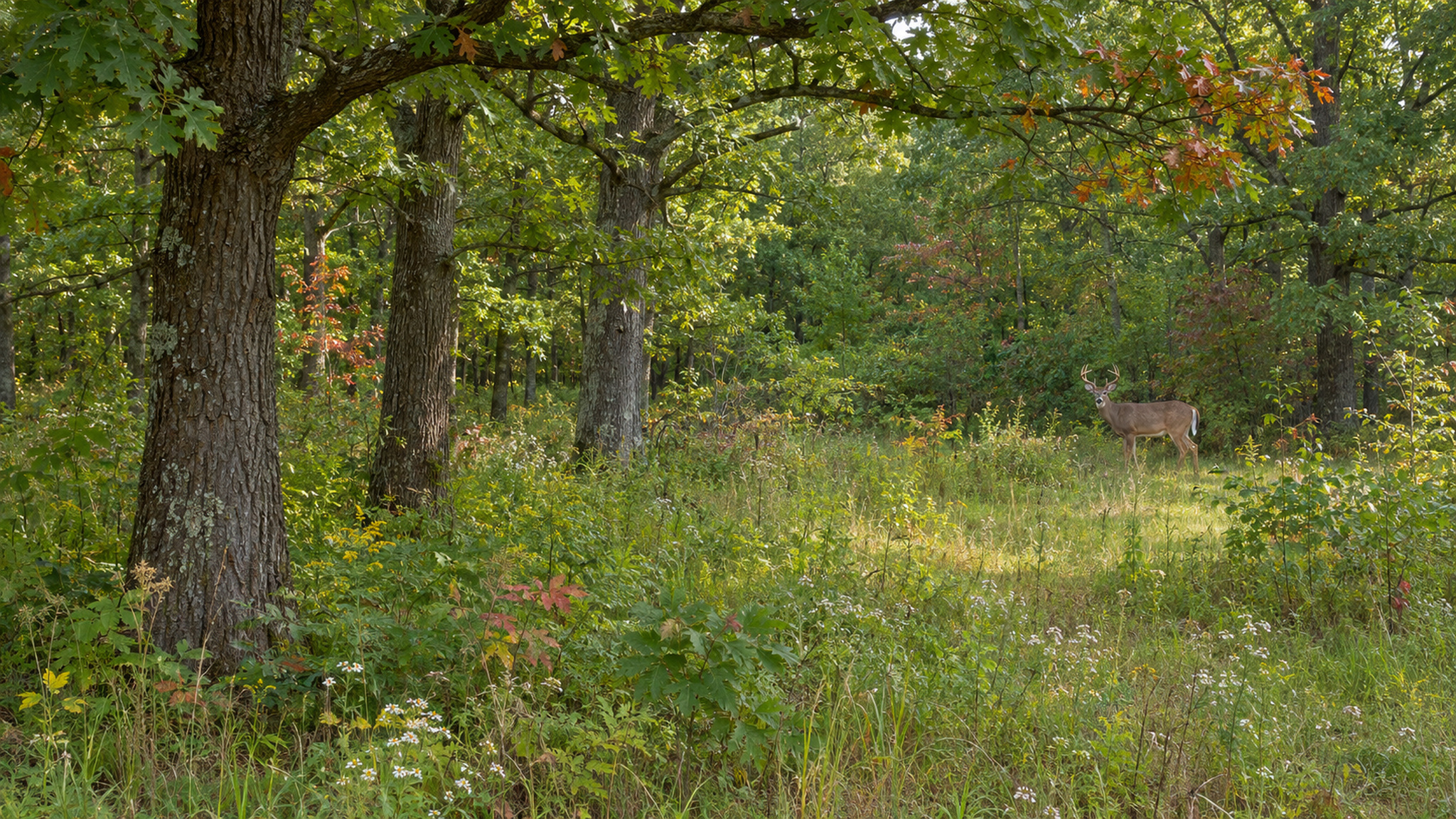
Better Deer Habitat Starts With What the Property Is Missing
A field of lush forage may photograph well while the surrounding woods offer little food within a deer’s reach. A secluded bedding area may be repeatedly disturbed by the route used to reach it. Improving habitat requires seeing those relationships before buying seed or starting equipment. Larger antlers can be one landowner interest, but a property treatment cannot guarantee bigger bucks: age, nutrition, genetics, population density, weather, and conditions beyond the boundary all influence the result. A stronger objective is a landscape that supports healthy deer through the seasons. Begin by identifying a limiting resource, choose a treatment suited to your region and site, and measure whether conditions improve.
Inventory the Foods Deer Can Actually Reach
Start with an inventory of available food rather than a list of projects. Separate leafy browse, broad-leaved herbaceous plants called forbs, soft fruits, and hard mast such as acorns. Record which are present within browsing reach and which seasons they serve. A mature oak canopy can supply an important autumn crop while offering little leafy forage near ground level. The same acreage can therefore look productive from above and still have a seasonal nutritional gap.
Identify several locally preferred plants and inspect their condition in different parts of the property. Compare reachable shoots with growth above browsing height, while allowing for differences in light and plant age. Repeated removal of fresh growth is a different observation from an isolated bitten twig. Use a regional plant guide so an abundant but little-used species does not dominate the assessment simply because it is easy to recognize.
Mississippi State University’s native deer forage guidance treats plant identification and browsing pressure as foundations of nutrition management. Carry that principle into a written seasonal inventory: resource, location, period of availability, and evidence of use. Leave unknown plants unidentified until checked. The result should reveal a missing food period or sustained pressure on preferred plants before money is committed to an opening or seed purchase.
Set Expectations for Antlers and Herd Health
Antler development reflects interacting influences rather than one product or planting. Mississippi State University Extension’s The Role of Genetics and Nutrition in Deer Management emphasizes appropriate density and improved nutrition as practical management priorities. A young buck does not become mature simply because forage improves, and an individual seen on one property may spend substantial time elsewhere. Evaluate habitat work through vegetation, browsing pressure, and appropriate herd indicators rather than treating one large deer as proof. This also keeps management useful during years when weather or neighboring activity changes which animals are visible.
Distinguish Forage Quantity From Forage Quality
Vegetation volume alone does not measure nutrition. Tender leaves and shoots differ from coarse mature stems, and the usable portion of a plant changes through its growing season. An opening filled with tall growth can contain less accessible desirable food than its appearance suggests. Evaluate which plant parts deer can reach and use, rather than recording only how green or dense the site looks.
Sunlight can increase understory production in suitable forests, but the response depends on the plants already present, soils, and subsequent browsing. A flush of invasive vegetation is not equivalent to a flush of preferred forage. Have a forester connect any canopy treatment to a desired regeneration response, including retention of valuable mast trees. Revisit the treated area to identify what actually grew before treating more acreage.
Learn the Native Foods Before Replacing Them
Native forbs, shrubs, vines, and regenerating woody plants can provide a substantial foundation for deer nutrition. Their value changes with species, growth stage, and season. Mississippi State University Extension’s Guide to Common Native Deer Forages in Mississippi and the Southeast stresses the importance of identifying plants and evaluating browsing pressure. Use a guide appropriate to your own region, because a southeastern plant list is not a universal prescription. Knowing what already grows helps distinguish a genuinely unproductive area from one that simply looks untidy to a person.
Use Food Plots to Fill a Defined Gap
A food plot can supplement native forage, but it should answer a seasonal need rather than become the entire habitat plan. Determine whether the goal is to provide nutrition during a particular stress period, support a management observation, or improve an existing opening. Different goals affect crop choice, location, and maintenance. A popular seed mixture cannot supply a useful answer until the problem is clear.
Test the soil and follow regional agricultural guidance before planting. Soil limitations, drainage, sunlight, available equipment, and realistic maintenance capacity can determine whether a crop establishes successfully. A small planting managed well may provide more dependable value than a large area that cannot be maintained. Include the costs of preparation and continued care in the decision.
Evaluate the plot in relation to native vegetation nearby. If preferred plants across the property are repeatedly browsed down, a new planting may be overwhelmed without addressing population pressure. If useful forage is already abundant but secure cover is scarce, another opening may solve the wrong problem. The best project is the one that addresses the limiting condition.
Do not confuse attracting deer to a visible spot with increasing the property’s nutritional capacity throughout the year. A successful-looking evening gathering can be valuable for observation without proving that the broader habitat improved. Judge the planting against its written purpose and the condition of the surrounding landscape. That distinction helps keep spending aligned with actual benefits.
Provide Cover That Fits the Seasonal Landscape
Cover offers more than visual concealment from a road. Deer need places to rest and move with suitable protection and limited disturbance, while regional winter conditions may create additional needs. Dense vegetation in one area may complement open feeding habitat elsewhere. Retain a useful mixture instead of making every part of the property look the same.
Regional context is particularly important here. Forest treatments recommended in a southern pine landscape may be unsuitable for northern winter habitat. Do not remove valuable cover because a photograph from another region shows deer using a newly opened stand. Ask how the proposed change affects the local annual cycle and nearby habitat connections.
Look for a Seasonal Bottleneck Before Adding Infrastructure
A nutrition problem may occur only during part of the year. A property rich in autumn mast can still lack useful summer growth or accessible winter browse. Compare the inventory with drought, leaf fall, crop harvest, and other locally important transitions. Existing water, cover, and access should remain on the map, but a new pond cannot fill a shortage of edible plants. Similarly, another autumn attraction plot does little for a shortage that occurs months earlier. Choose a project whose production window overlaps the documented gap, then account for establishment time and the possibility of crop failure.
Match Deer Numbers to the Habitat’s Capacity
Vegetation can reveal when demand is exceeding what the landscape supplies. Repeated browsing of preferred plants, poor regeneration, and a loss of accessible forage deserve closer assessment. Those signs need interpretation alongside soil, weather, plant composition, and other influences. A single damaged shrub cannot establish the condition of an entire herd.
University of Missouri Extension’s Nutritional Requirements of White-tailed Deer in Missouri connects excessive deer numbers with declining forage quantity and quality. Improving habitat and managing population pressure are related decisions. Adding food without evaluating deer density may deliver less benefit than expected. A qualified wildlife professional can help interpret observations and develop an appropriate local approach.
Harvest objectives should follow current rules and evidence about the population. Coordinate with neighbors when possible, since deer movements rarely follow ownership boundaries. Keep records that help evaluate the plan across several years. Avoid claiming that a particular antler rule or removal strategy will correct every property problem.
Read Condition at the Appropriate Scale
One impressive buck does not measure the nutritional condition of the deer using a property. Its age, movements, individual history, and the food available beyond the boundary all matter. Repeated observations across years are more useful when methods remain comparable. Camera photographs can document visible animals, but changing a camera location or adding an attractant changes which animals are recorded.
Use vegetation response alongside any agency-recommended herd indicators. Preferred plants recovering after a treatment supports a habitat conclusion even if no exceptional antlers appear that season. Conversely, repeated browsing that prevents regeneration deserves attention despite occasional large deer. Ask a wildlife professional which records are appropriate locally and how to interpret weather and age differences. This avoids turning a few photographs into an unsupported nutritional diagnosis.
Use Disturbance as a Skilled Management Tool
Prescribed fire, mowing, disking, selective herbicide work, and timber management can change vegetation, but they are not interchangeable treatments. Each affects different plants and carries timing, safety, and follow-up requirements. A treatment useful in one habitat may damage another or favor an invasive species. Work under a site-specific plan with appropriate training, permits, and professional help where needed. The objective is the desired vegetation response, not simply making the ground look worked.
Monitor What the Treatment Was Supposed to Change
Choose a few measures before beginning. Fixed photo points can document structure, plant checks can show whether desirable forage increased, and protected comparison areas may help reveal browsing effects when professionally designed. Camera observations can add context about use, but more photographs do not automatically establish a larger or healthier population. Placement and animal attraction can change detection.
Keep a management log with dates, weather context, costs, and follow-up work. Compare similar seasons rather than judging winter vegetation against a summer photograph. Record problems such as invasive regrowth or failed establishment as clearly as successes. A useful record supports a change in method when the original treatment does not deliver its purpose.
Budget for a Year-Round Forage Sequence
Start with one or two high-priority changes that fit your budget and available time. A small, durable improvement is easier to evaluate than several simultaneous projects with no follow-up capacity. Include professional advice, equipment needs, access, and future maintenance in the initial cost. This reduces the chance that an ambitious plan leaves unfinished work scattered across the property.
Sequence projects so that one does not undo another. For example, a locally suitable perennial forage may support one period while retained native browse supplies another; neither should be counted as productive through months when it is dormant or unavailable. A future timber operation may also affect a newly planted area. Discuss the sequence with the people doing the work. Good scheduling is part of habitat quality because it influences whether treatments can be carried out properly.
Set a review date and decide what evidence would justify expanding, repeating, or stopping a treatment. Some responses become visible quickly, while forest structure and herd condition can take longer to evaluate. Leave room to learn rather than committing every available acre to the first idea. A plan that adapts to results is more useful than one defended because it was expensive.
Make Healthier Habitat the Durable Result
A better deer property is a functioning seasonal landscape, not a collection of products. Useful forage, suitable cover, appropriate population pressure, connected space, and manageable human access work together. Larger bucks may interest the owner, but no isolated treatment guarantees the age or antlers of animals that will appear. Focus on changes that can be demonstrated: preferred plants recovering, needed cover retained, a seasonal gap reduced, or an overused area improving. Those results create a sounder foundation for healthy deer and more informed management year after year.
Coordinate the Boundary Without Losing the Property Focus
Neighbor discussions can reveal a seasonal resource your own map cannot show. One ownership may provide secure cover while another contains the most dependable summer forage. Ask about broad habitat objectives and planned work without assuming that neighboring owners share the same hunting preferences. Cooperation can begin with a practical issue such as an access route or an invasive-plant patch. Even a limited agreement can prevent one project from undermining another across the boundary.
Keep your own commitments realistic within that larger picture. You may not control the full area used by a deer, but you can improve a documented resource and maintain it well. Describe the expected benefit at that scale instead of promising a herd-wide transformation. This makes later evaluation more honest and helps neighbors discuss results without attributing every unusual sighting to one treatment. A connected landscape benefits from dependable local work, even when no individual owner can control the entire outcome.