Shotgun Chokes Explained Through Pattern Spread, Range, Ammunition, Species, Cover, Safety, and Field Testing
Shotgun chokes control how quickly a shot pattern opens after leaving the barrel. Cylinder, improved cylinder, modified, full, and specialty chokes all shape pattern density, but the name stamped on a tube is only a starting point. Hunters understand chokes best by patterning their own shotgun with real hunting loads at real distances, then matching the result to the species, cover, and shot angles they expect.
What a Choke Does
A choke changes pattern spread by constricting the shot column near the muzzle. Open chokes spread pellets faster and can help on close moving targets.
Tighter chokes hold pellets together longer and can add density at distance. The goal is a pattern that fits the hunt, not the tightest tube available.
Common Choke Names
Cylinder has little constriction and works at very close range. Improved cylinder adds modest control while staying fairly open.
Modified is a common middle option for many field situations. Full and extra-full chokes are tighter and often used for longer or specialized shots.
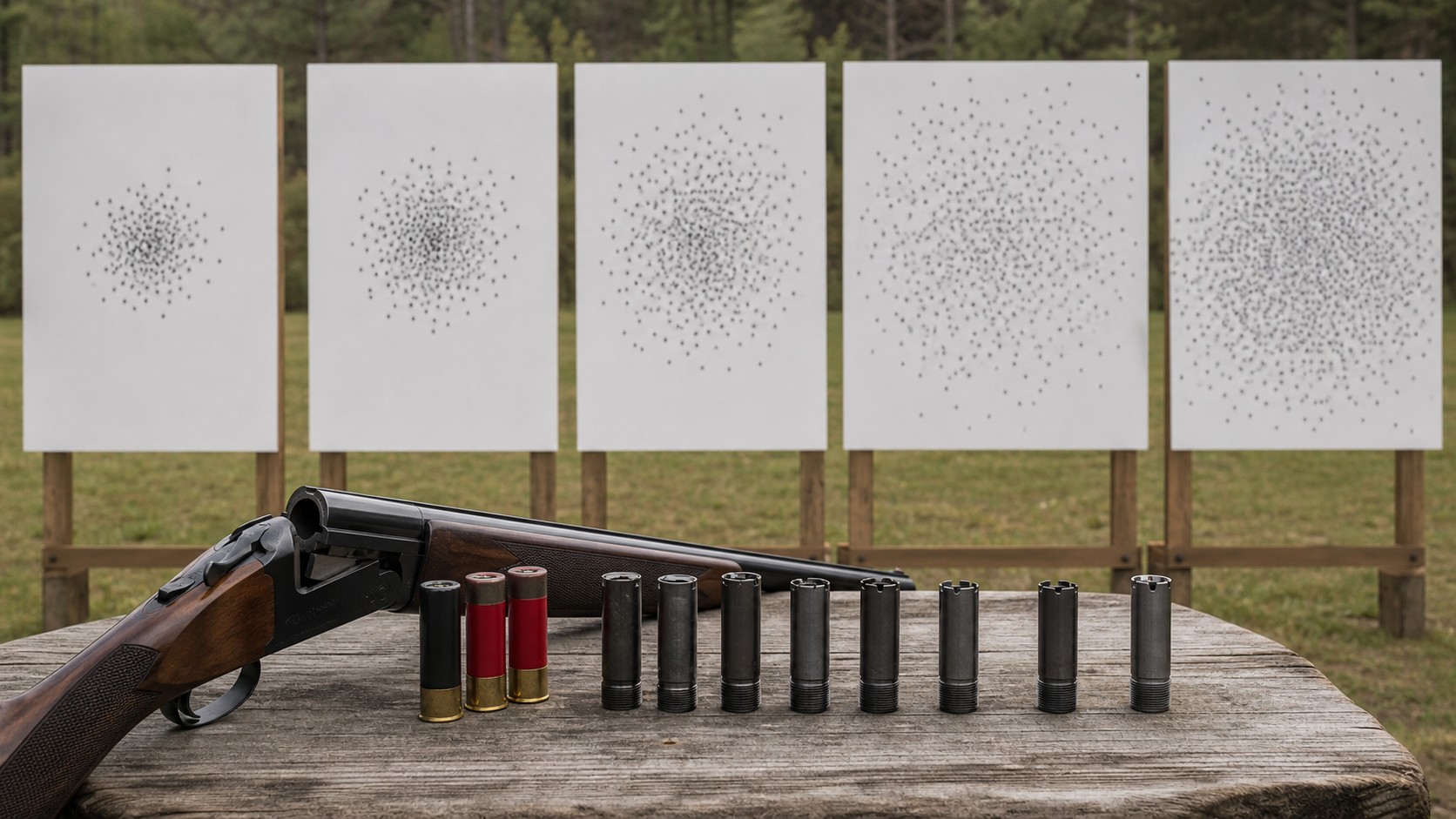
Pattern Beats Theory
Two shotguns with the same choke label can pattern differently. Shell brand, shot size, payload, wad, velocity, and shot material all matter.
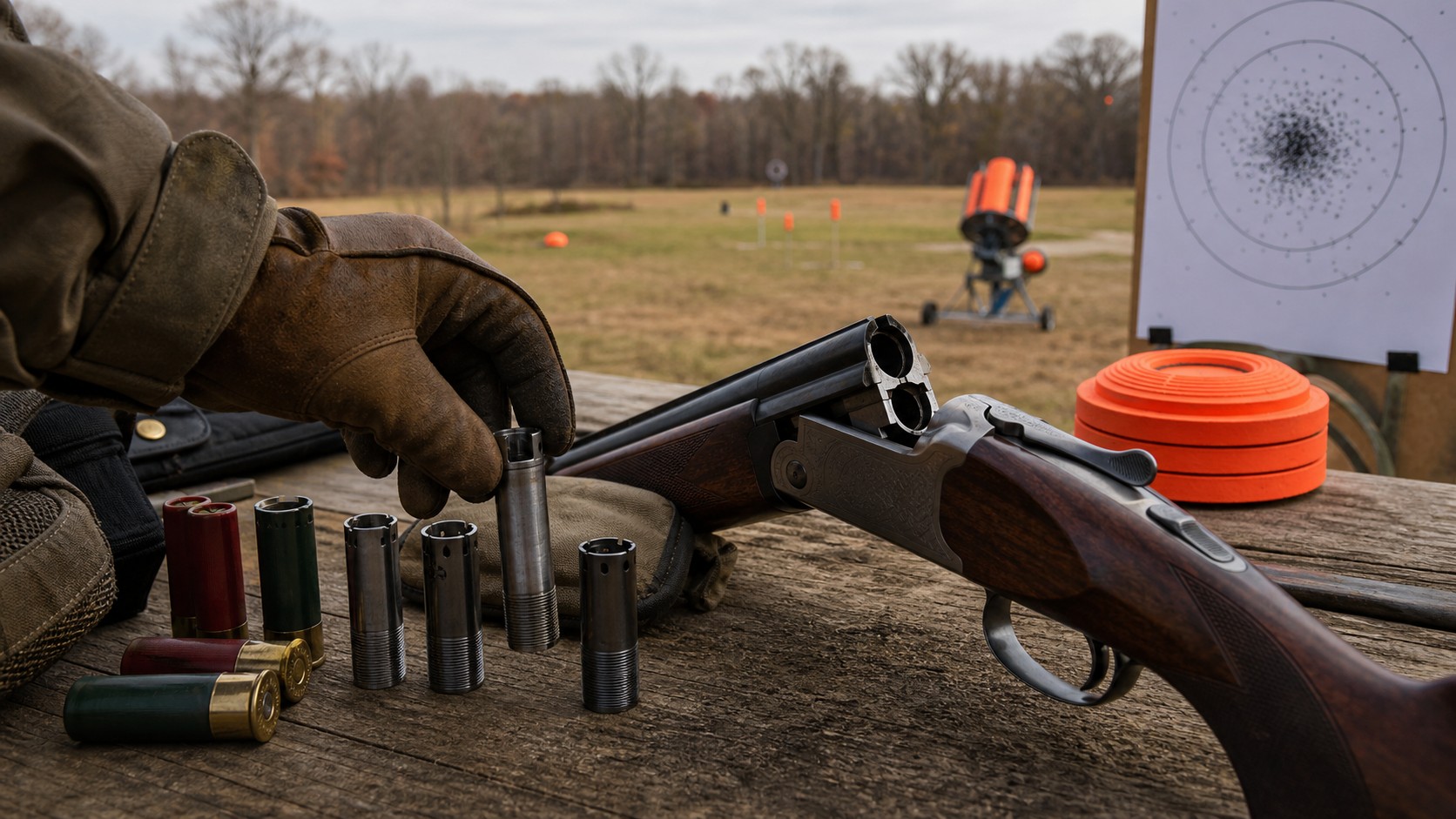
A pattern board reveals coverage, center of impact, gaps, and consistency. Real testing prevents false confidence.
Match the Species
Upland birds, waterfowl, turkeys, rabbits, squirrels, and predators all create different pattern needs. Close flushing birds may require an open pattern.
Turkeys often require tight patterns with tested loads. Species and hunting style guide choke selection together.
Account for Ammunition
Lead, steel, bismuth, and tungsten loads do not behave exactly the same. Some choke tubes have restrictions with certain shot materials.
Changing ammunition means the pattern needs another check. A safe combination follows firearm and choke-maker guidance.
Avoid Over-Choking
A very tight pattern can miss close birds or damage meat. Hunters often overestimate distance in the field.
Tighter does not automatically mean more ethical. The right choke supports clean hits at honest range.
Maintain Choke Tubes
Threads need cleaning and light care after wet or dirty hunts. A loose tube can create serious problems.
A seized tube can turn a simple change into a repair job. Routine checks keep the shotgun dependable.
Build a Personal Chart
Record choke, shell, distance, weather, target size, and pattern results. Keep pattern sheets or photos for future reference.
Notes make it easier to compare loads and seasons. A personal chart is more useful than a generic table.
How to Make Better Decisions About Shotgun Chokes Explained
Good judgment around shotgun chokes explained starts by slowing the decision down. In hunting, cabin work, collecting, wildlife observation, and outdoor craft, excitement can make a person trust the first clue too quickly. A better approach is to compare several clues before acting.
The first question is always purpose. A person looking at shotgun chokes explained should know whether the goal is field performance, safe use, historical accuracy, display value, wildlife understanding, or long-term ownership. Different goals create different standards.
The second question is setting. Weather, terrain, storage, local regulations, season dates, land access, animal behavior, and available tools can all change what counts as a good choice. Advice that works in one camp or region may not fit another.
The third question is consequence. A poor choice may waste money, damage a collectible, create an unsafe setup, disturb wildlife, violate a rule, or make a project harder to maintain. Thinking through those consequences before acting is part of responsible outdoor culture.
The best decisions are repeatable. If another careful person can inspect the same details and understand why the choice was made, the reasoning is stronger. That is true whether the subject is a piece of gear, an animal in the field, a cabin display, or a handmade replica.
Safety, Ethics, and Long-Term Value for Shotgun Chokes Explained
Safety should never be treated as a separate afterthought. For shotgun chokes explained, safe judgment may involve tool handling, firearm awareness, wildlife distance, weather planning, storage, display mounting, legal transport, or the condition of older materials.
Ethics matter because hunting culture depends on trust. Responsible hunters and outdoor enthusiasts respect seasons, property boundaries, fair chase principles, conservation needs, partners, dogs, and the animals themselves. Even decorative or historical projects should honor that broader responsibility.
Long-term value comes from care. Gear should be stored correctly, natural materials should be protected from moisture and heat, and display pieces should be mounted without causing avoidable damage. A good choice today should not create preventable problems next season.
Documentation helps too. Notes, photographs, measurements, receipts, sketches, maps, and maintenance records can preserve what was learned. They make future repairs, comparisons, and ownership decisions easier.
When uncertainty remains, restraint is usually the better move. Waiting for a clearer identification, better reference, safer shot, stronger mount, or more reliable source protects the person making the decision and the outdoor tradition connected to it.
Common Mistakes to Avoid With Shotgun Chokes Explained
One common mistake is treating appearance as proof. Something can look old, rugged, expensive, or field-ready and still fail under closer inspection. For shotgun chokes explained, surface impression should be tested against materials, context, construction, behavior, or documented use.
Another mistake is ignoring local conditions. Hunting and outdoor projects are shaped by region. Habitat, climate, game laws, building style, available materials, and community tradition all influence what makes sense.
Overcomplication is also a risk. A simple, well-built, well-understood setup often performs better than a complicated one that adds weight, cost, confusion, or maintenance without solving a real problem.
Copying without understanding can create weak results. A person may copy a display, gear list, replica, or hunting approach without knowing why it worked in the original setting. The better habit is to understand the principle first, then adapt it honestly.
The final mistake is failing to review the outcome. After a hunt, project, purchase, or display choice, it helps to ask what worked, what wore out, what confused people, what felt unsafe, and what should change next time. That reflection turns experience into skill.
How Shotgun Chokes Explained Fits Into Responsible Outdoor Culture
Responsible outdoor culture is built from more than success stories. It also includes patience, care for habitat, respect for property, honest discussion of mistakes, and a willingness to learn from people with deeper field experience. Shotgun Chokes Explained belongs inside that larger culture.
For beginners, the most useful lesson is that outdoor skill develops slowly. Reading sign, judging materials, understanding animal behavior, identifying old gear, or building a cabin display all improve through repeated observation. Quick answers are less valuable than habits that keep improving.
For experienced hunters and collectors, the challenge is often humility. Familiarity can make a person overlook small changes in law, land access, animal movement, material condition, or safety expectations. A careful expert keeps checking assumptions.
Conservation is part of the picture even when the article is not directly about taking game. Healthy habitat, ethical seasons, access to land, and respect for wildlife make hunting traditions possible. Outdoor projects should reinforce that respect rather than treating the landscape as a backdrop.
Good outdoor writing also avoids pretending every situation has one perfect answer. Terrain, weather, budget, local species, experience level, and intended use can all change the best choice. The strongest advice explains how to think, not only what to buy or do.
That thinking should include other people. Partners, landowners, guides, family members, guests, dogs, neighbors, and future owners may all be affected by a decision. A safe and practical choice is easier to defend when it considers more than the person making it.
Maintenance is another sign of respect. Cleaning, drying, sharpening, documenting, repairing, storing, and checking equipment may not feel exciting, but these habits protect money, history, safety, and performance.
Outdoor traditions survive when knowledge is passed on clearly. A person who learns something useful about shotgun chokes explained should be able to explain it to a younger hunter, a new collector, a cabin guest, or a curious reader without exaggeration.
The best result is confidence without carelessness. People should come away with a better sense of what to inspect, what to question, what to preserve, and when to slow down before acting.
Seen that way, shotgun chokes explained is not just a subject for one article. It is part of a larger practice of paying attention to land, animals, materials, tools, history, and the responsibilities that come with outdoor life.
Practical Review Points for Shotgun Chokes Explained
Before making a final choice about shotgun chokes explained, it helps to separate facts from preferences. Facts include measurements, condition, species behavior, legal requirements, material strength, documented history, weather, and land access. Preferences include style, tradition, budget, display taste, and personal comfort.
Both matter, but they should not be confused. A person may prefer a certain look, method, or setup, while the facts may show that another option is safer, more durable, more accurate, or more ethical. Good judgment leaves room for that correction.
Field notes can make the process better. Recording what was seen, tried, bought, built, repaired, or changed creates a memory that can be checked later. Over time, those notes reveal patterns that a single outing or project might hide.
Comparison also matters. Looking at more than one example of shotgun chokes explained helps prevent overconfidence. A collector can compare similar items, a hunter can compare covers, a builder can compare materials, and a cabin owner can compare how a room functions across seasons.
When people share knowledge responsibly, the whole community improves. Clear explanations, honest limits, and respect for safety help newer participants learn without copying bad habits or inflated claims.
The final review point is simple: the best outdoor decisions hold up after the excitement fades. If the choice still makes sense after inspection, use, weather, storage, and honest reflection, it is far more likely to be worth trusting.
Bottom Line on Shotgun Chokes
Shotgun chokes make sense when hunters think in patterns rather than labels. A choke is useful only when the actual pattern matches the animal, distance, ammunition, cover, and safety conditions of the hunt. Hunters gain confidence by testing the same gun, tube, and shell combination they plan to carry. The pattern board shows whether the setup leaves gaps, hits off center, opens too quickly, or stays too tight.
Choke choice also affects restraint. If the pattern does not deliver enough clean coverage at a given distance, the responsible answer is to shorten the shot, change the setup, or keep practicing. Good choke decisions combine equipment knowledge with field judgment. They account for target speed, cover, meat care, legal ammunition rules, and the hunter’s ability to judge range under pressure. A well-kept choke tube, a tested load, and honest notes give the hunter a practical system instead of guesswork.
Hunters can make the process easier by testing a few likely combinations rather than every possible tube and shell. A close-cover option, a general-purpose option, and a specialized long-pattern option are enough for many seasons. The key is to know what each setup does before birds, rabbits, or turkeys appear. That turns choke selection into preparation instead of a rushed decision at the truck.
Pattern testing also builds humility. A favorite load may not perform as expected, and a simple moderate choke may outshoot a more expensive specialty tube in a particular shotgun. Those discoveries are useful because they replace assumptions with evidence from the actual firearm.