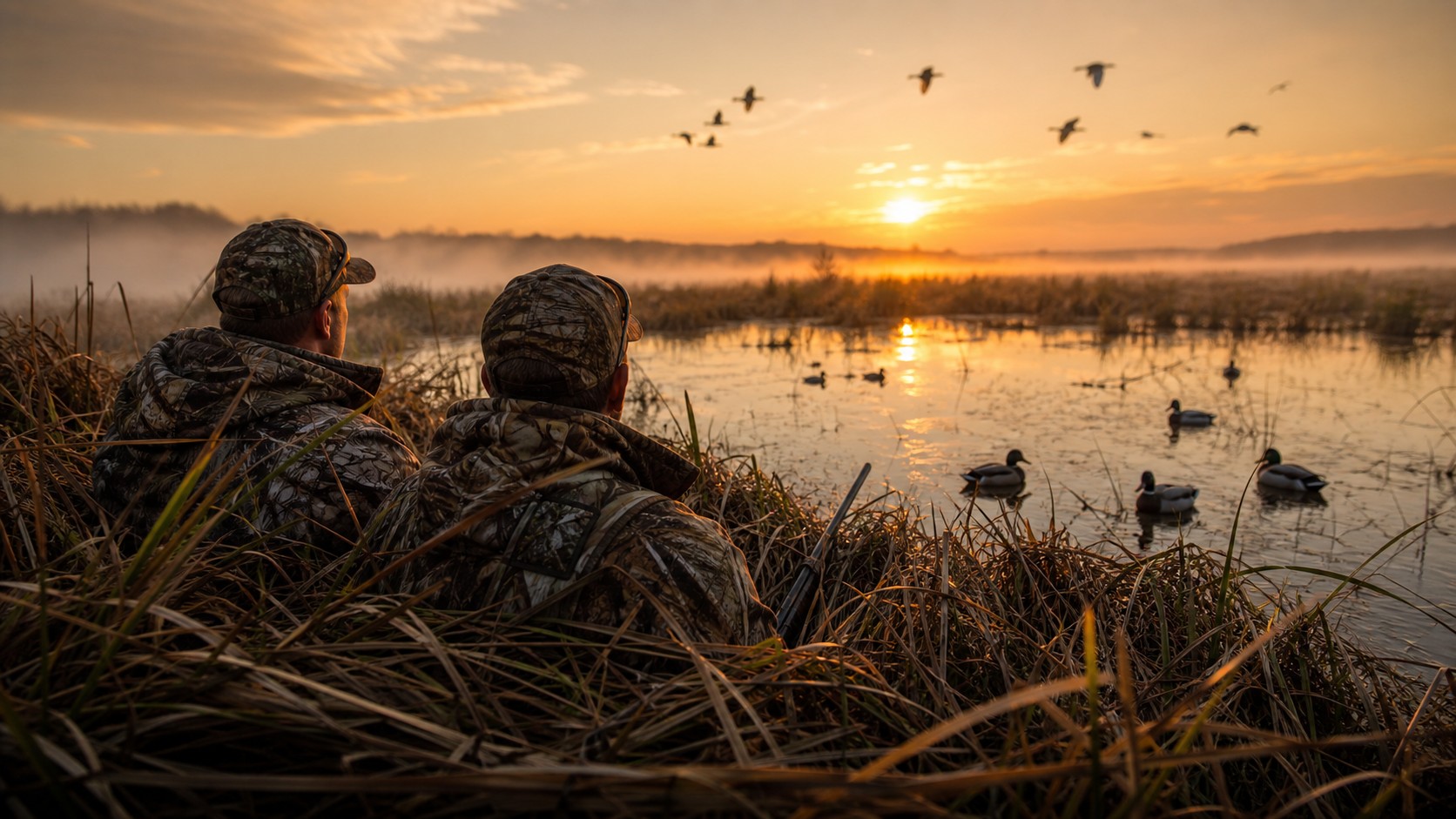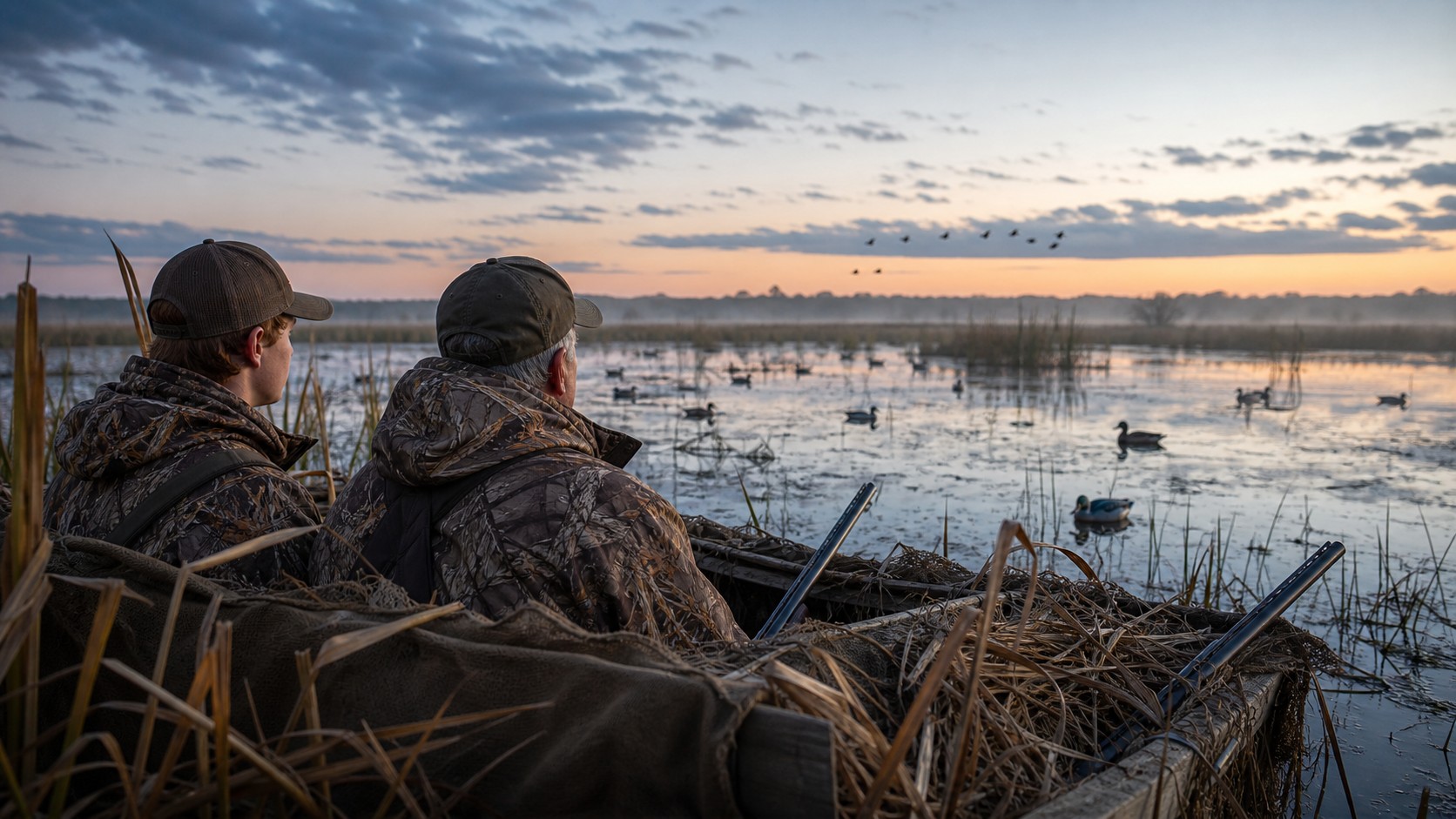
Start Duck Hunting With the Basics in Order
Duck hunting can feel complicated at first because so many details arrive at once: licenses, stamps, species identification, shooting hours, decoys, calls, blinds, dogs, waders, boats, and weather. A beginner does not need to master every tradition before the first morning, but the basics must be handled carefully. Good duck hunting starts with legal preparation, safe gun handling, honest scouting, solid concealment, and respect for birds, partners, dogs, and other hunters. When those pieces are in place, the marsh becomes far less confusing and much more rewarding.
A: Legal licenses and stamps, a safe shotgun setup, non-toxic shells, basic concealment, weather-appropriate clothing, and a clear recovery plan.
A: A small spread of one or two dozen decoys is enough for many beginner hunts if placed with a real landing pocket.
A: Calling helps, but beginners can succeed by scouting well, hiding properly, and using quiet simple sounds sparingly.
A: Not always, but they are common in marsh and shallow-water hunting where safe footing and insulation matter.
A: Rushing shots before identifying birds, checking lanes, and confirming range creates legal, ethical, and safety problems.
A: Learning with an experienced, safe mentor is strongly preferred because waterfowl hunting has many moving parts.
Legal Preparation Comes First
Before a beginner buys decoys or practices calling, the legal foundation needs to be clear. Duck hunting usually requires a hunting license, state waterfowl privileges, a federal duck stamp, HIP registration, and an understanding of season dates, shooting hours, bag limits, possession limits, species restrictions, and non-toxic shot rules. Regulations can change by flyway, state, zone, and date, so a screenshot from a friend or an old memory is not enough.
Species identification deserves special attention because ducks often move fast in low light. A hunter should study common local birds, drake and hen differences where limits depend on sex, and the silhouettes of ducks that may pass through the same marsh. If identification is uncertain, the shot should wait. Beginners build confidence by learning common species before the opener, then confirming those lessons with a mentor in the blind.
Legal preparation also includes access. Public marshes, boat launches, walk-in areas, refuges, and private permissions all have boundaries and rules. Know where hunting is allowed, where motors are restricted, how far blinds must be from one another, and whether retrieval can cross a line. A legal hunt feels calmer because the hunter is not guessing when birds finally appear.
A beginner should also understand why waterfowl rules feel stricter than many other seasons. Migratory birds cross state and national boundaries, so harvest is managed through a larger conservation framework. That means daily limits, possession limits, stamps, and species rules are not paperwork for its own sake. They are part of keeping seasons available and bird populations healthy.
Keep the regulations accessible in the blind. A printed booklet, downloaded agency page, or official app can settle questions before they become mistakes. When birds are moving quickly, nobody should be trying to remember whether a certain species limit changed this year.
Scouting Makes the First Hunt Easier
Scouting is the shortcut that is not really a shortcut. It replaces random hope with a reasoned setup. Beginners should watch where ducks land, not just where they fly. A flock passing high over a parking lot may be exciting, but the useful clue is the pocket, bend, pothole, flooded timber opening, or shoreline where birds actually finish.
Evening scouting can be especially helpful because birds may return to feeding or loafing areas after daily pressure fades. Wind direction, water level, ice, current, and human disturbance can all shift the pattern. A beginner who records those details learns why one spot works on Tuesday and fails on Saturday.
Scouting should include the route in. A marsh can look simple in daylight and confusing in the dark. Mark safe walking paths, boat lanes, shallow hazards, and places where an early approach might flush birds from the exact water you plan to hunt.
The best first-hunt plan is modest. Choose a spot that can be reached safely, hunted legally, and exited cleanly. A dramatic remote setup is less useful than a simple place where a new hunter can watch birds, practice discipline, and learn how ducks respond.
Scouting also teaches beginners what not to hunt. A roost full of resting birds may look tempting, but disturbing it can push ducks out of the area and hurt future hunts. Feeding spots, loafing pockets, and travel corridors should be understood separately. The goal is to hunt in a way that creates opportunity without needlessly blowing up the pattern.
Pay attention to other hunters during scouting. Boat traffic, parking pressure, permanent blinds, and popular walk-in trails can all change where ducks finish. Sometimes the best beginner spot is not the place with the most birds at sunset, but the place where birds drift after the obvious water gets busy.
Water depth is another practical scouting detail. A pocket that is perfect for decoys may be too deep to wade safely or too muddy for a beginner to cross in the dark. Safe footing matters more than reaching the prettiest-looking hole.
Good scouting also builds confidence. When a beginner knows why the blind is in that exact pocket, every later choice feels less random.
Gear Should Support Safety and Comfort
A beginner does not need every piece of waterfowl equipment on the market. Start with a shotgun that fits, non-toxic shells matched to the hunt, hearing and eye protection, licenses, weather-appropriate clothing, and a way to stay safe around water. Waders should fit correctly and be paired with insulation for cold conditions. They should also be treated as safety equipment, not just clothing.
Decoys, calls, blind bags, seats, gloves, headlamps, dry bags, and dog gear can be added as the hunter learns which style of hunting fits. A walk-in pothole hunt requires a different kit than a boat hunt, a flooded timber hunt, or a field hunt. Borrowing from a mentor for the first few mornings can prevent expensive mistakes.
Cold and wet conditions punish poor preparation. Extra gloves, a dry hat, a thermos, a compact first aid kit, and a phone in a waterproof bag may seem ordinary, but they keep the hunter functional. The person who is shivering, soaked, or fumbling with gear will struggle to make safe decisions.
Keep the blind bag organized. Shells, calls, license, snacks, and emergency items should have predictable places. Digging through a bag while birds circle creates movement and distraction.
Shotgun fit deserves honest attention. A gun that is too long, too heavy, or awkward to mount will make beginners slower and less consistent. Before hunting, practice shouldering the unloaded shotgun in hunting clothing and from a seated blind position. The motion should be controlled and safe, not rushed.
Waders require caution. Deep mud, current, ice, and steep banks can create real danger. A wading belt, slow steps, and awareness of bottom conditions are basic habits. Beginners should avoid testing unknown water alone, especially in cold weather.
Decoys should be manageable. Carrying too many blocks on a first walk-in hunt can turn the morning into a sweaty, noisy mess. A smaller spread that arrives quietly and gets placed well is more useful than a heavy load that exhausts the hunter before legal light.
Concealment and Decoys Work Together
Ducks must believe the scene before they commit. Decoys can suggest safety, but a poor hide ruins the message. Beginners often focus on the spread and forget that faces, hands, shiny gear, square blind edges, and constant head movement are easier for birds to catch than one slightly misplaced decoy.
Build the blind with local materials when allowed. Reeds, grass, brush, and shadow help the setup match the marsh. Brush should be refreshed as vegetation color changes through the season. A blind that looked natural in early October can look dark and strange after frost and wind flatten everything else.
Decoys should create a landing pocket. Instead of placing blocks evenly across the water, leave a clear opening where ducks can finish into the wind and where the hunter has a safe, ethical shot. Watch the first few groups. If birds land short, slide wide, or flare at the same place, the spread is giving useful feedback.
Motion can help on calm days, but it should not look frantic. A jerk cord, swimmer, or small ripple can make the spread feel alive. Too much mechanical movement can make pressured ducks cautious.
Concealment and decoys should be judged from the birds' view. If possible, step away and look back at the hide after setup. The problem is often obvious once the hunter stops seeing the blind from inside it.
A useful decoy spread tells a simple story. Resting birds near cover, feeders in shallow water, and an open pocket into the wind are easier for beginners to understand than complicated shapes copied without context. If the wind changes, the story may need to change as well.
Concealment should be checked after setup, not assumed. Stand where birds are likely to approach and look back at the blind. If faces, barrels, dog stands, or square edges are obvious to you, they will be obvious to ducks. Small fixes made before shooting time can save the morning.
Beginners should resist the urge to stand, point, and talk when birds circle. A quiet whisper from one person is better than everyone narrating the flock. Ducks often decide in the final seconds, and unnecessary movement can undo every good decision that came before.
Calling, Shooting, and Recovery
Calling is a tool, not a performance. Beginners should start quietly and watch how birds react. If ducks turn, drop, or cup after a simple quack or greeting, more sound may not be needed. If they flare when calling starts, silence may be the best adjustment.
Shooting should be limited to identified birds inside practiced range with safe lanes. The blind should agree on who calls the shot and which direction each hunter may swing. Low birds over dogs, boats, partners, or neighboring blinds are not worth the risk. A beginner should be praised for passing unsafe or uncertain shots because that restraint is part of becoming trustworthy.
Recovery is part of the hunt. Mark downed birds carefully, send a dog only when safe, or retrieve promptly with waders or a boat when conditions allow. Wounded ducks can disappear in cattails, current, flooded timber, or open water. A clean retrieve matters as much as the shot that started it.
After the hunt, clean up hulls, decoy line, snack wrappers, and brushed material that does not belong. Public marshes stay open and pleasant when hunters behave like stewards, not visitors who leave work for someone else.
Calling practice should happen away from the blind before the season. A beginner does not need a contest routine, but they should know how to make a clean quack, a simple greeting, and a softer content sound. More importantly, they should know when to stop. Silence can be the most mature call in the marsh.
Recovery plans should match the location. Open water, cattails, flooded timber, ice edges, and moving current all require different thinking. If retrieving a bird would be unsafe, the shot should not be taken. Ethical range is partly about whether the bird can be recovered.
Communication keeps a blind orderly. Decide who calls the shot, how birds will be marked, and when people may stand. Beginners relax when they know the plan, and relaxed hunters make cleaner choices.
What a Good First Season Teaches
A beginner's first duck season should build judgment. Some mornings will produce birds, and some will mostly produce lessons about wind, water, pressure, concealment, and timing. Both have value if the hunter pays attention. Keep short notes after each hunt: where birds landed, how they reacted, what the wind did, and what the setup looked like after sunrise.
Over time, duck hunting becomes less mysterious. The beginner starts to recognize when a flock is interested, when a spread looks wrong, when calling is helping, and when the hide needs work. That confidence is earned slowly. Start legal, stay safe, scout honestly, hide well, and let each morning teach the next one.
The first season should also teach respect for timing. Some mornings reward staying longer after the first flight, while others show that birds have shifted elsewhere. Learning when to adjust, when to wait, and when to leave a spot alone is part of becoming a waterfowler.
A beginner who ends the season safer, cleaner, and more observant has made real progress. Limits may come and go, but good habits compound. The marsh rewards hunters who pay attention to birds, weather, rules, and the people sharing the water.