Consistency Comes Before the Limit
Filling a duck limit consistently is not about one magic call, one oversized decoy spread, or one lucky cold front. It is about stacking many small decisions in the right order: scout where birds actually want to be, hide well enough to survive close inspection, set decoys with a landing plan, call with restraint, shoot only clean chances, and adapt when birds change their route. Limits are never guaranteed, and regulations must always come first, but hunters who focus on repeatable habits put themselves in better position when the marsh wakes up.
A: Scouting is usually the foundation because it puts the blind where ducks already want to finish.
A: No. Spread size should match water size, pressure, species, wind, and what local birds are doing.
A: Call less when birds are already committed, heavily pressured, close, or reacting negatively to sound.
A: Common causes include poor concealment, glare, movement, unnatural decoys, or a landing pocket that feels wrong.
A: Mark falls, use a trained dog where appropriate, communicate with partners, and avoid marginal shots.
A: Yes, but consistency usually comes from scouting pressure shifts and adapting faster than other hunters.
Scout the Finish, Not the Flyover
Ducks flying over a marsh are interesting, but ducks landing in a specific pocket are useful. Consistent hunters learn the difference. A flight line may create excitement at sunrise, yet those birds may be headed somewhere else entirely. The better scouting question is simple: where do ducks put their feet on the water, and why there?
Watch birds in the evening, after pressure settles, and during different wind conditions. Mark the exact corner, pothole, shoreline, flooded timber opening, or current seam where they finish. Note water depth, wind direction, sun angle, and access. If the spot only works with a north wind or a certain water level, that detail matters more than a vague memory of seeing ducks nearby.
Scouting should also account for what other hunters will do. On public water, the most obvious point, boat lane, or permanent blind may attract people before it attracts ducks. Watch how pressure moves birds after the first volley. A quiet secondary pocket can become better than the place that held birds before daylight.
Do not ignore small numbers. A dozen ducks dropping confidently into a hidden corner may be more valuable than hundreds trading high across a refuge boundary. Huntable birds are the ones that want to finish where you can legally set up. Scouting should identify commitment, not just abundance.
Concealment Beats Clever Gear
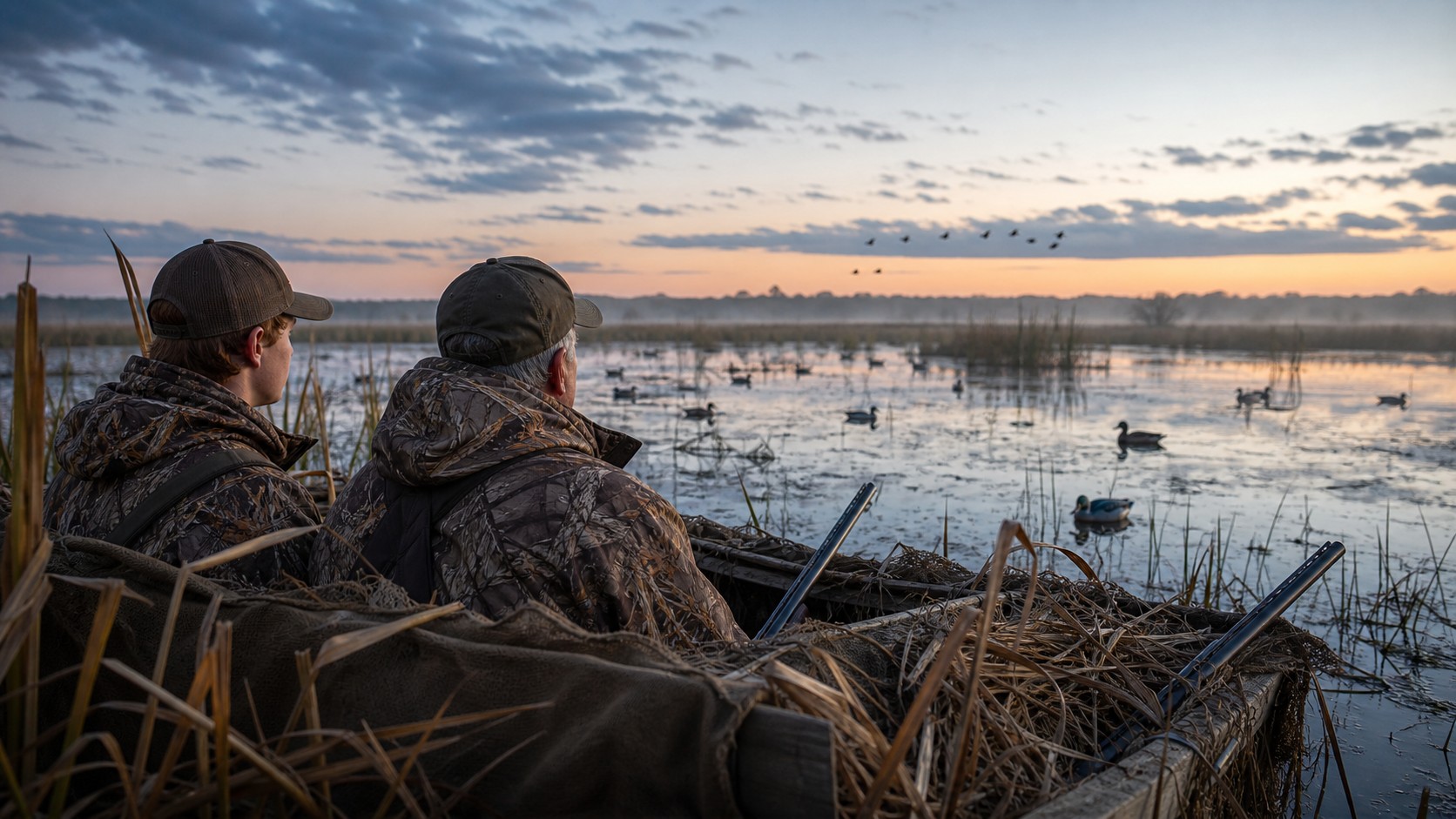
Ducks are skilled at finding what does not belong. A blind that looks square, shiny, too dark, too light, or full of movement can ruin an otherwise perfect setup. Hunters often buy more decoys before fixing the hide, but concealment is usually the cheaper and more powerful improvement.
Use vegetation from the area. Break up straight lines. Cover faces and hands. Keep dogs and gear below the profile. Watch for frost, mud shine, wet fabric, bright shell boxes, and repeated head movement. A bird that has survived several weeks of hunting pressure may not forgive one careless flash.
The hide also includes approach. If you flush birds from the exact pocket before legal light, you may spend the morning hoping new ducks replace the ones you pushed away. Quiet access, dim lights, and a route that avoids roosted birds can matter as much as the blind itself.
Concealment changes as the morning changes. A blind brushed in darkness may look perfect until the sun hits wet grass, a plastic edge, or a pale face. After the first flights, take a moment to look at the hide from the birds' likely approach direction if it is safe to do so. Small fixes can save the rest of the hunt.
Movement discipline is often harder than brushing. Hunters want to watch every circle, adjust calls, reach for coffee, or track birds overhead. Ducks circling close may catch those motions more easily than they see the blind itself. Assign roles when possible: one person watches, one calls, and everyone else stays still until the shot is called.
Dogs need concealment too. A restless dog sitting high on a stand can flare birds just like a hunter's face or shiny barrel. Train steadiness before the season and set the dog where it can mark falls without becoming the most visible part of the spread.
Build a Decoy Spread With a Landing Plan
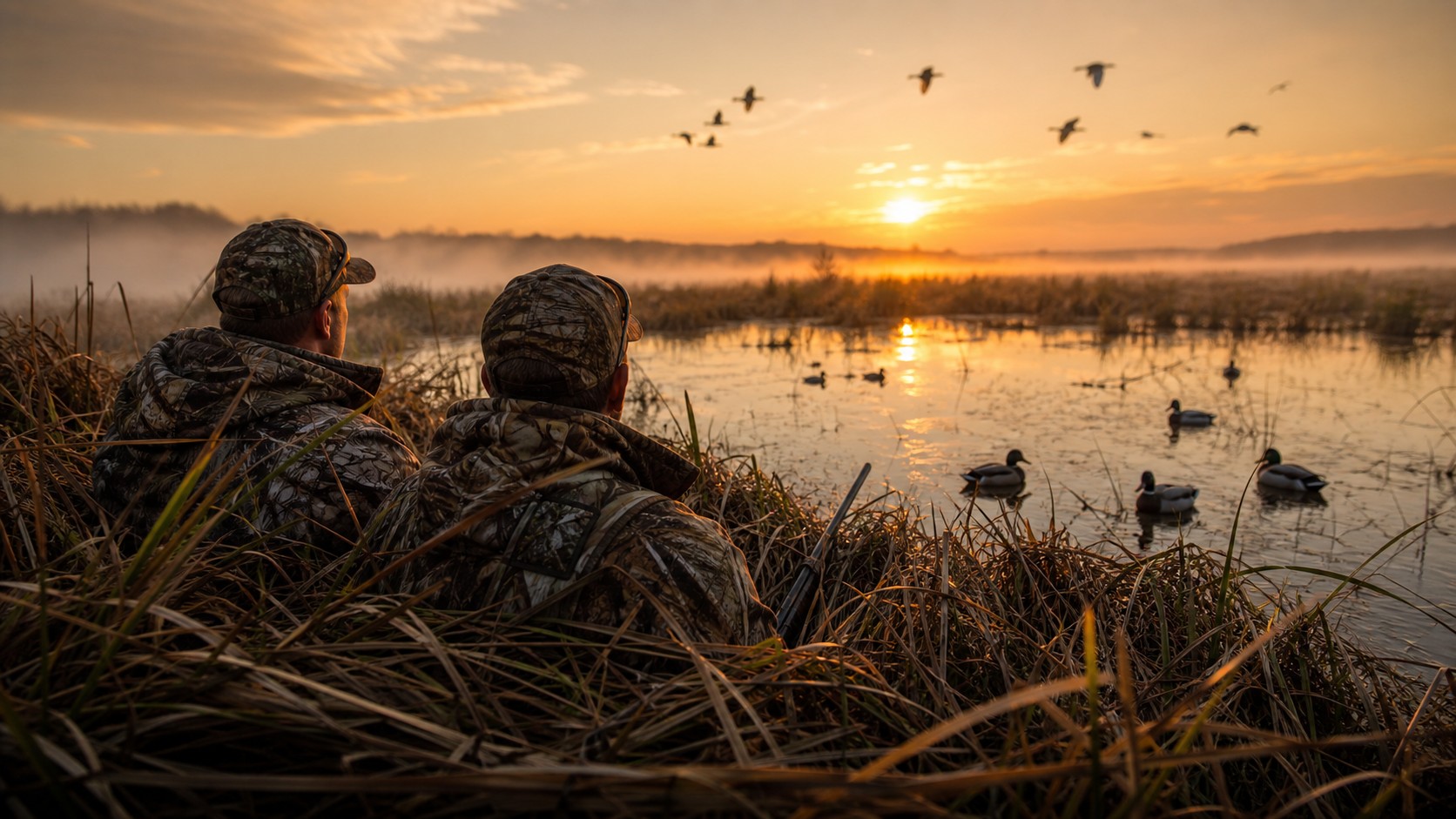
A decoy spread should not simply show ducks that other ducks are present. It should show them where to land. Wind direction is the starting point because ducks usually want to finish into the wind. Leave a pocket where you want the birds, then arrange decoys so the opening looks natural and safe.
Small spreads can be deadly on pressured local birds, timber holes, and tight marsh pockets. Large spreads can help on big water or migration days when visibility matters. Motion can add life, but too much spinning, splashing, or unnatural movement can hurt when birds are cautious. Watch the first few groups carefully. If they consistently slide wide, land short, or flare, adjust instead of blaming the birds.
Decoy realism is partly about posture. Feeders, resters, sleepers, and relaxed groups tell a calmer story than a stiff line of identical blocks. The spread should match the behavior ducks expect in that place at that time of day.
Think of the spread as traffic control. Decoys should guide birds toward a safe, open, shootable pocket. If the best-looking hole leaves birds landing behind the blind or outside ethical range, the spread is not helping. Adjust the shape until the natural finish point matches your safe shooting lane.
Species mix matters. Mallards, teal, divers, wood ducks, and geese do not always use water the same way. A spread that looks right for one situation may feel wrong in another. Match decoy number, spacing, and posture to the birds you are actually seeing rather than copying a layout from a different marsh.
Water movement can be decisive on calm days. A jerk cord, swimmer, or subtle ripple may add realism when every decoy sits frozen. The goal is not chaos. It is enough life to keep the spread from looking like plastic on glass.
Spacing should reflect bird mood and water type. Relaxed ducks on a quiet pothole may sit in loose family groups, while pressured birds may avoid a crowded pocket that feels trapped. On big water, visibility may require more spread. In timber or tight marsh, a handful of well-placed decoys can look more natural than a floating crowd.
Call to the Birds, Not to Yourself
Calling is one of the most enjoyable parts of duck hunting, which is exactly why it can become a problem. Hunters may call because they are excited, bored, or proud of a routine. Ducks only care whether the sound makes the setup more convincing.
Start by reading body language. Birds that turn, cup, or drop altitude may need only soft encouragement. Birds passing high may need a sharper greeting. Birds that flare, slide, or climb after calling are giving clear feedback. Late-season ducks especially may punish repetitive routines that sound like every blind they have already survived.
In a group, calling should be coordinated. Three hunters competing with different cadences can sound unnatural. Sometimes one caller with good timing is better than a blind full of noise.
Calling restraint is easier when the blind agrees on a plan. Before shooting time, decide who leads calling and how the group will respond to different bird behavior. Without that plan, every circling flock can trigger a noisy debate through duck calls. The birds hear confusion long before hunters admit it.
Cadence should change with distance. A loud hail may reach birds that are leaving, but the same sound can feel harsh when ducks are already close. Soft quacks, feeding chatter, or silence may be more convincing in the final turn. Volume control is as important as note quality.
Calling should stop when it is hurting the setup. If birds repeatedly flare after a certain sound, retire it for the morning. Pride has emptied many marshes. The best callers are not the loudest; they are the quickest to notice what the ducks are teaching.
Shot Discipline and Recovery
Consistent limits depend on clean opportunities. Stretching range, shooting into uncertain identification, or firing through poor angles can create lost birds and unsafe situations. Know your effective range because you have patterned the gun and practiced, not because the shell box made a promise.
Recovery begins before the shot. Choose landing pockets with retrieval in mind. Watch birds down until they are marked. Communicate with partners. Use a trained dog where appropriate and legal. If a bird sails, mark the line and recover immediately when safe. A hunter who loses track of birds in the excitement of a volley is not hunting as effectively as possible.
Legal limits require attention. Species, sex, daily bag limits, possession rules, shooting hours, and local restrictions must be understood before the first flock appears. When birds are moving fast, uncertainty should stop the shot.
Identification must happen before the gun comes up. Mixed flights can include species with different limits, hens and drakes, or birds that are not legal targets. Low light and excitement make mistakes more likely. If you cannot identify the bird confidently, it is not a shot to take.
A good blind keeps a visible count. Whether that is a mental system, a quiet verbal check, or a simple habit after each retrieve, everyone should know where the group stands. Limits are legal boundaries, not loose goals. The final bird should be chosen with the same care as the first.
Recovery tools should be ready before birds fall. A trained dog, boat, waders, long-handled net, or clear walking route may be needed depending on water depth and cover. Wounded birds can disappear quickly in cattails, current, or flooded timber. Ethical recovery is part of the setup.
Shooting lanes should be discussed with the same seriousness as decoy placement. In a tight blind, one hunter swinging through another person's lane can create danger quickly. Agree on arcs, call the shot clearly, and stop if birds are too low over a dog, boat, or neighboring blind. Order in the blind helps everyone hunt better.
Adapt Throughout the Morning
Duck hunts change quickly. Wind shifts, sun rises, pressure builds, birds learn the spread, and new flights appear from unexpected directions. The hunters who fill limits consistently are rarely passive. They move a few decoys, improve the hide, change calling, adjust shooting lanes, or relocate when the evidence says the original setup is wrong.
That does not mean frantic tinkering after every flock. It means paying attention. If three groups react the same negative way, they are telling you something. Consistency in duck hunting comes from respecting those signals, making practical changes, and keeping the hunt legal and clean from first light to pickup.
Adaptation should be deliberate. If birds finish short, close the pocket or move the blind. If they slide downwind, reconsider hide location or decoy shape. If they flare at the same distance, look for glare or movement. Changing everything at once makes it hard to learn; changing the likely problem teaches faster.
The best duck hunters also know when not to burn a spot. If birds are using a small roost or a fragile pocket, hunting it every possible morning may destroy the pattern. Rotating pressure, resting water, and leaving before every bird is educated can make future limits more likely than forcing one more volley today.
Consistency is built from restraint as much as aggression. Scout hard, hide better, call only when it helps, shoot cleanly, and leave the marsh in good shape. A limit taken that way is more than a number. It is proof that the whole system worked.