Seasonal Deer Migration Connects Habitats That Work at Different Times
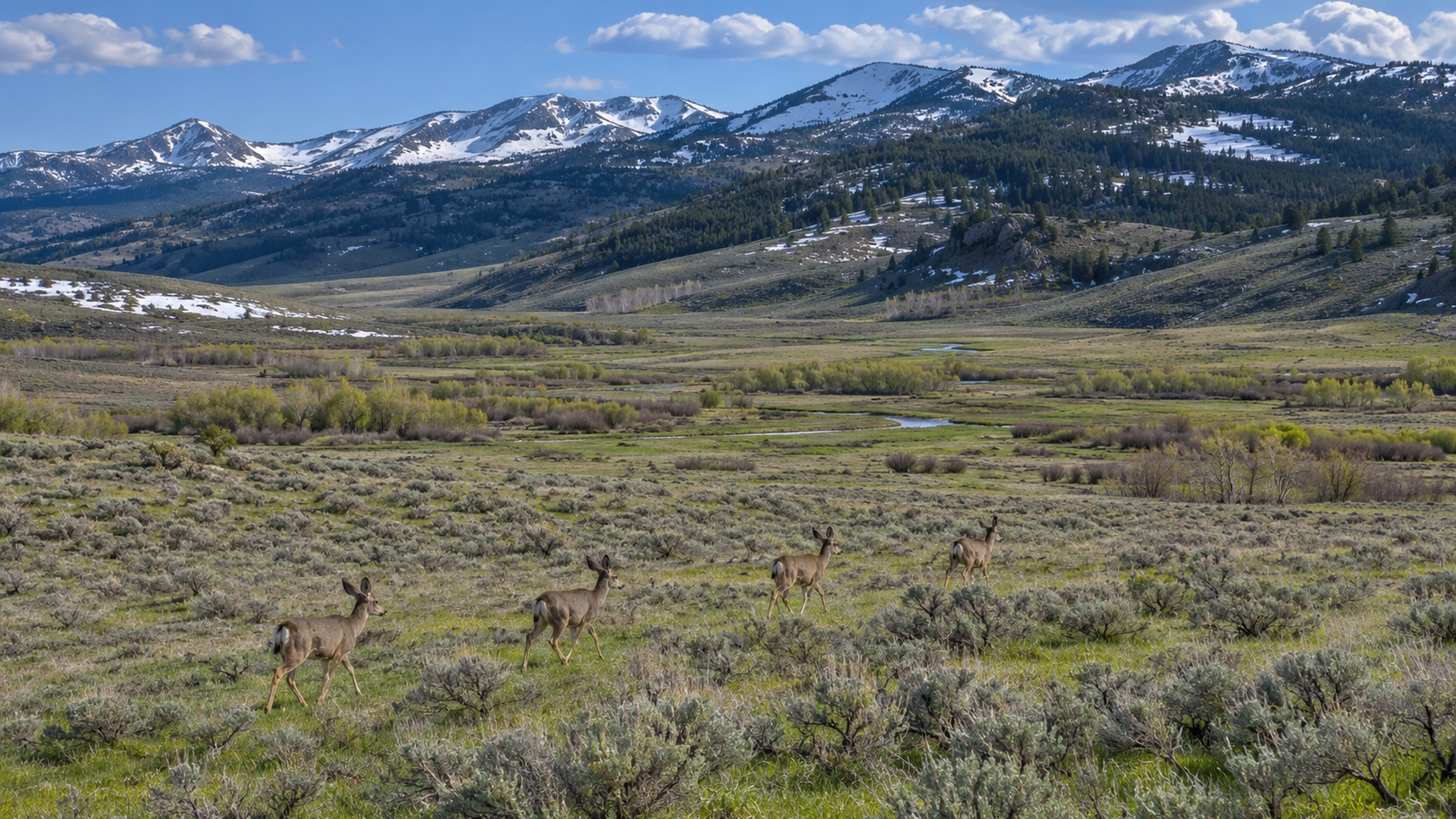
A mountain slope can provide excellent summer forage and become difficult country for deer once snow covers the plants. A lower valley may offer winter shelter while lacking the same summer feeding opportunities. Migration connects these seasonal advantages, allowing some deer populations to use a larger landscape than a single year-round home range would provide. Yet deer do not all migrate, and the movements of a western mule deer herd cannot simply be assigned to every whitetail neighborhood. Understanding the annual cycle begins by identifying the population, the seasonal ranges it uses, and the evidence behind any mapped route. From there, spring travel, summer residency, autumn movement, and winter concentration become parts of one connected system.
Distinguish Migration From Everyday Movement
Deer routinely travel among feeding, resting, and other resources. A migration involves seasonal movement between distinct ranges rather than an ordinary daily trip within the same general area. The distinction matters because the two movements raise different ecological and management issues. A local shift after crop harvest may be important to a hunter without representing the seasonal journey described in a migration study.
Some populations include both migratory and resident individuals. Distance and timing can also vary among animals that migrate. Avoid treating the longest documented route as the normal experience of every deer in the region. A useful explanation identifies which animals were studied and what range of behavior the evidence supports. A map becomes much more informative when its population and study context remain attached.
Species names alone are not sufficient. Mule deer are prominent in western migration research, while whitetails can show different movement strategies across their range. Geography, habitat distribution, climate, and individual experience all matter. Ask about the actual herd or local population before moving from a broad species description to a claim about one property.
Spring Opens a Moving Window of Forage
Spring changes the landscape unevenly. Lower ground may become green while higher elevations retain snow, creating a progression of feeding opportunities rather than a simultaneous regional event. Migrating deer can use this changing availability as they move toward summer range. The USGS assessment of migration and climate discusses how snow conditions and vegetation development influence these movements. The important idea is a changing opportunity across space, not a universal departure date. A warm valley does not establish that every higher passage is ready or that every individual will travel at once.
A Journey Can Include Long Pauses
The line between winter and summer range can conceal the most important part of a migration. Deer may spend meaningful periods feeding at stopovers instead of moving continuously toward the endpoint. Those places help animals use resources along the route, and they can deserve attention alongside the corridor itself. A journey is more than the distance covered.
Research on mule deer stopover ecology shows why pauses belong in an account of migration. A conservation plan that protects only a thin connecting line may miss habitat used during those pauses. For an observer, a group lingering in one area can be consistent with ongoing migration rather than proof that the journey has ended. Interpretation depends on repeated movement evidence and the surrounding seasonal context.
Summer Range Supports More Than a Destination Point
After arrival, deer use a summer landscape that must provide suitable forage and cover. For females with young, the distribution of shelter and feeding opportunities is particularly relevant. The endpoint of a mapped journey should therefore be understood as habitat used over time, not merely a dot where a collar stopped moving north or uphill.
Conditions within that range continue changing. Drying vegetation, water availability, disturbance, and weather can alter local use without creating a second large migration. Keep the scales separate when reading observations. Movement within summer range can be ecologically meaningful while remaining different from travel between seasonal ranges.
A hunter or wildlife watcher may see only a narrow part of this summer system. One meadow or camera location cannot represent the entire range. If deer stop appearing there, the conclusion may concern the observation site rather than a population-wide departure. Reliable interpretation leaves room for movements that were not observed.
Autumn Travel Reflects More Than a Calendar
Autumn can change access to forage and increase the costs of remaining on summer range. Snow, temperature, plant condition, and individual circumstances contribute to the setting in which deer move. The return journey need not reproduce the spring trip at the same pace. It should not be reduced to one memorable storm or a date that worked in a previous hunting season.
Local research is the best starting point for understanding a particular herd. The USGS western ungulate migration reports document distinct seasonal ranges and corridors for studied populations. Their value lies partly in showing how many different movement systems exist. Use the report appropriate to the herd and retain its sampling limitations when describing the findings.
Winter Range Has Its Own Constraints
Winter habitat can reduce exposure to difficult conditions and provide access to remaining food, but it is not unlimited refuge. Snow depth, available forage, shelter, and disturbance can influence how much of the landscape is usable. Deer concentrated on a visible patch may have fewer alternatives than they appear to have from a road. Observe from a distance and respect seasonal closures or agency requests intended to reduce disturbance. A clear view is an opportunity to learn, not a reason to approach until animals move. Protecting winter habitat is part of maintaining the annual migration system because a successful journey still requires a usable place to spend the season.
Routes Connect More Than Two Patches of Ground
A migration corridor passes through a landscape of ownerships, roads, fences, development, and other land uses. Its function depends on whether animals can continue using the connection when they need it. Protecting summer habitat alone cannot preserve a journey if the route becomes impassable. The same is true when winter habitat remains but important stopovers are lost.
Some obstacles create immediate crossing hazards, while others change how animals can approach or pause along the route. Evaluate the specific mechanism instead of assuming every fence, road, or building has an identical effect. A practical conservation response depends on where movement occurs and what limits it. Coordination across neighboring properties can matter more than an isolated improvement that does not connect to the larger system.
Understand What Collar Data Can Show
GPS collars provide repeated positions from selected animals, allowing researchers to identify movement patterns that occasional sightings could miss. Those positions are still a sample. The number and type of animals collared, the timing of locations, the study years, and the analytical method affect the result. A published route should be read with that information rather than treated as an exact track for every animal.
The USGS’s sixth western migration volume includes study-specific descriptions of animals, data collection, and corridor analysis. Those details help readers distinguish observed movement from the area estimated to represent wider use. A shaded polygon can summarize a pattern without proving that every acre is crossed equally often.
Maps also have purposes. A corridor map prepared for landscape planning may not be suitable for predicting a sighting or identifying a legal hunting location. Ownership and access rules are separate layers. Keep ecological interpretation, navigation, and permission distinct so a useful scientific resource does not become an unsupported claim about where someone may go.
Read Variability as Part of the System
A migration can remain recognizable while timing, route use, or distance differs among years. Environmental conditions do not repeat exactly, and individuals need not respond identically. A late arrival does not automatically mean the route has failed. Neither does one unusual year establish a permanent new pattern.
Look for repeated evidence and an explanation that matches the scale of the change. A regional weather anomaly, a new obstacle, and a camera moved to another crossing are very different reasons for an apparent shift. Before assigning a cause, ask what was measured consistently and what changed in the observation process. This distinction matters to researchers and to people simply trying to understand deer near home.
Climate Change Adds Several Possible Responses
Changing climate can affect snow, vegetation timing, drought, and the relationship among seasonal habitats. Possible responses include altered timing, changes in route or distance, and variation in whether some animals migrate in a given year. These are possibilities to investigate rather than one inevitable outcome for all deer. A longer growing season does not automatically remove every benefit of migration. Use current research for the population and distinguish a mechanism supported by evidence from an attractive explanation for one local observation.
Translate the Annual Cycle Into Better Observation
Begin with the right population and a clear distinction between local travel and seasonal migration. Consult agency research, identify the seasonal habitats involved, and learn which parts of the route have actually been documented. When observing, record the date, location, group, conditions, and source of the information. Avoid assuming that several deer moving in one direction prove a major seasonal passage.
Respect the animals’ need to complete the cycle. Follow land access rules, honor closures, keep distance from winter concentrations and young animals, and avoid interfering with crossings. If you report a possible barrier or unusual mortality, use the responsible wildlife agency’s reporting channel and provide factual details. Useful information describes what happened without overstating the cause.
The annual story is a connected one. Spring opportunity, stopover feeding, summer habitat, autumn travel, and winter constraints all contribute to whether migration remains workable. Seeing those links changes the way a landscape is understood. An ordinary valley crossing may be a small part of a much larger seasonal system that depends on many places continuing to function together.
Ask What a Seasonal Observation Could Mean
Imagine seeing deer cross a valley on several evenings in November. The timing may be consistent with a seasonal movement, but the observation could also reflect local travel between food and cover. To distinguish those explanations, look for information at the relevant scale. A known winter range, repeated collar evidence, and documented connections through the valley can supply context that the evening sightings lack. Even then, identify the observation as one part of that context rather than claiming to recognize every individual as a migrant. The useful habit is to ask which additional evidence would change the interpretation and whether that evidence is realistically available.
Now consider a road crossing near the same location. A cluster of sightings can indicate repeated use, but observations made only from a convenient roadside position may exaggerate the apparent importance of that particular gap. Animals could also cross elsewhere outside your view. A factual report should describe dates, locations, direction, and the conditions under which the sightings occurred. Researchers or managers can then compare the information with broader evidence. This is how local knowledge becomes useful without pretending to be a complete migration study. The annual cycle remains the framework, while each observation retains the limits of the place and time in which it was made.