A Flyway Is a Broad Migration System, Not a Lane in the Sky
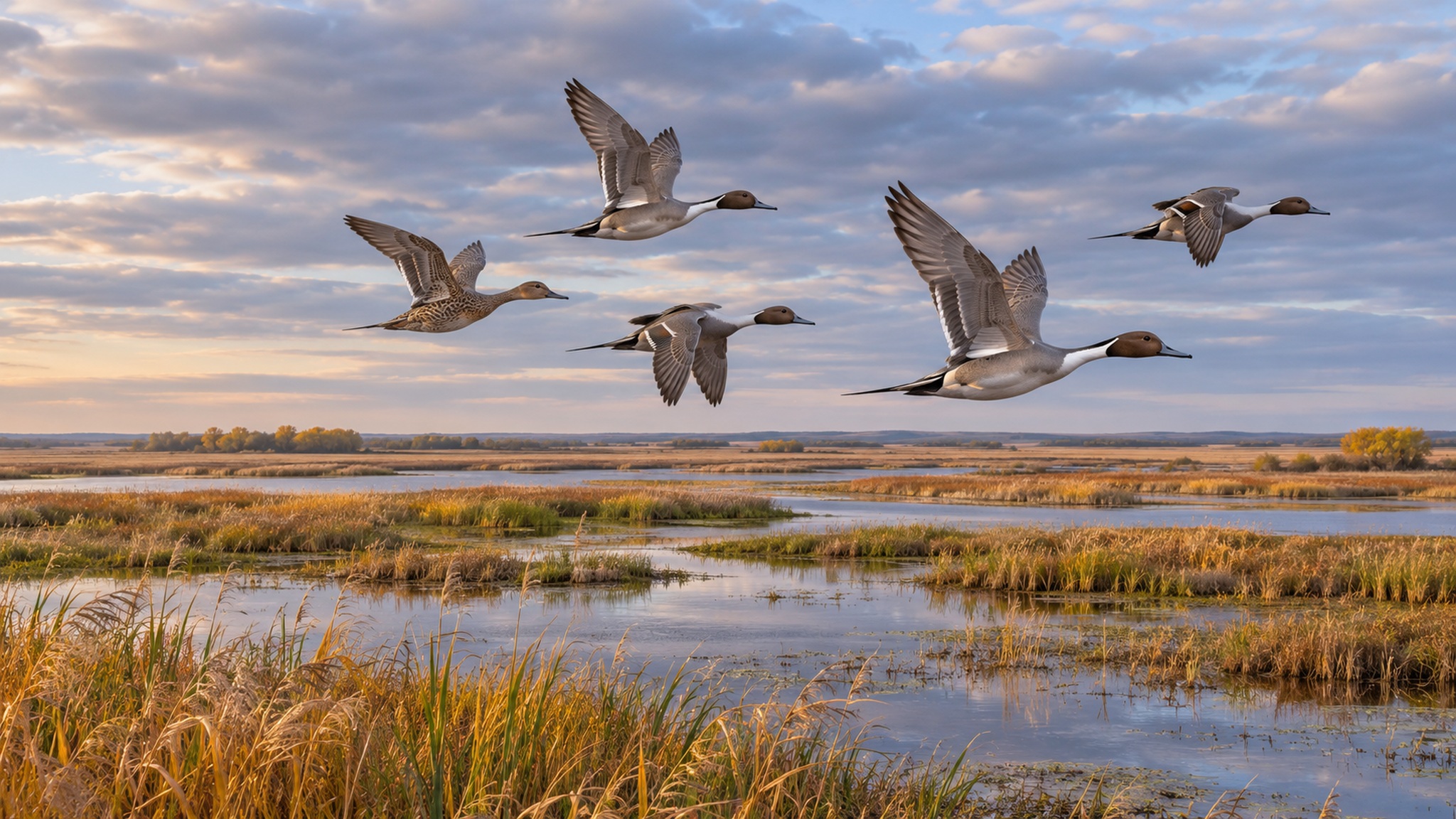
When a flock of ducks passes overhead, the movement looks direct: birds approach, cross the horizon, and disappear. The annual journey behind that brief view is more complicated. Waterfowl connect breeding areas, feeding and resting places, molting habitat, and wintering grounds through movements that differ among species and populations. North America’s named flyways help people organize that complexity, but birds do not follow painted boundaries or identical schedules. Understanding migration means looking at the biological reasons for travel, the resources that make it possible, and the evidence used to describe routes. The result is a more useful explanation of why birds arrive, pause, change direction, or remain elsewhere when a familiar wetland seems ready for them.
Start With the Annual Requirements of a Bird
Waterfowl need different things at different stages of the year. Breeding places must support reproduction, while other areas may provide food, refuge, or accessible water when conditions change. Migration connects those opportunities across space. It also has costs: flight uses energy, travel exposes birds to hazards, and arriving at an unsuitable place can leave few immediate options. The annual cycle therefore cannot be understood as a simple preference for warm weather. A useful explanation asks what resource or life-history need makes one location valuable now and another location valuable later. That perspective works across many waterfowl groups while leaving room for important differences among ducks, geese, swans, and the populations within them.
The Four North American Flyways
The Pacific, Central, Mississippi, and Atlantic flyways provide a broad framework for waterfowl management and migration discussion. They organize regional connections rather than four sealed channels through which every bird must pass. The U.S. Fish and Wildlife Service’s fall migration overview describes these major systems and the habitat supporting birds along them. Geographically, Pacific management includes the West Coast, Central includes the Great Plains, Mississippi connects the Great Lakes region with the lower Mississippi and Gulf, and Atlantic includes the eastern seaboard. These examples describe administrative geography, not a requirement that every bird follow a state boundary.
The framework should not replace species-specific knowledge. Birds can cross the lines shown on simplified maps, and populations using the same broad region may connect different breeding and wintering areas. A flyway label is the beginning of an explanation rather than a precise itinerary. When reading a map, ask whether it represents a management region, documented population movement, or a simplified educational illustration. Those products can all be useful while answering different questions.
Internal Timing Meets External Conditions
Seasonal changes in day length contribute to the timing systems underlying migration. Weather, food, water availability, and individual condition then influence the circumstances in which movement occurs. Avoid choosing one influence as the explanation for every departure. The same storm can affect a small early migrant and a cold-tolerant bird differently.
The Ducks Unlimited discussion of fall migration explains the importance of seasonal timing and the energetic demands of travel. A calendar can suggest when a species often moves through a region without promising arrival at one wetland. A useful forecast must remain conditional because the landscape beyond the observation site also matters.
Individual birds do not need to make identical decisions for a recognizable seasonal pattern to exist. Age, experience, family association, and condition can contribute to variation. A flock appearing early is not necessarily evidence that the whole migration has advanced. Separate a notable observation from a conclusion about the broader population.
Wind Changes the Cost of a Flight
A bird moving through air experiences conditions different from a person standing on a sheltered shore. Wind direction, speed, and conditions along the intended route can affect the energetic cost and practical timing of flight. A useful tailwind may support movement, while unfavorable conditions can contribute to delay or a different route. That does not make every windy night a migration event at your location. Birds must also be present, prepared to travel, and connected to suitable destinations. Treat wind as part of a larger explanation, and distinguish conditions on the ground from those encountered along the flight path.
Stopovers Make the Journey Possible
A migration route needs places where birds can feed and rest. Some sites support a brief pause, while others can hold birds for longer periods. Their value depends on food, water, disturbance, safety, and the alternatives available nearby. A familiar stopover may function differently in a dry year than in a year with abundant shallow wetlands.
Think of the route as a connected network rather than a collection of famous destinations. Losing one site can increase the distance or difficulty of reaching the next usable resource. Improving one wetland helps most when it supports the needs of birds arriving at that stage of the journey. The timing and quality of habitat therefore matter alongside its acreage. A wet place is not automatically suitable for every species throughout the year.
Different Waterfowl Need Different Feeding Places
Shallow-water feeding ducks, diving ducks, and geese do not use every landscape in the same way. Water depth, food type, vegetation, open-water conditions, and access to nearby feeding areas influence habitat value. Avoid describing a wetland as ideal for waterfowl without specifying which birds and which seasonal needs you mean. A place crowded with one species can be unsuitable for another. This diversity helps explain why migration observations vary among nearby wetlands even when the weather appears identical. The relevant difference may be below the water surface or in the surrounding feeding landscape rather than in the sky.
Spring and Fall Are Different Journeys
Spring movement connects wintering areas with places where birds can breed. Arrival timing interacts with local habitat conditions and the seasonal availability of food. The journey occurs in a landscape changing toward warmer conditions, but not every northern destination becomes usable simultaneously. Conditions along the way can matter as much as conditions at the final breeding area.
Fall follows breeding and, for many birds, other seasonal demands such as molt. Populations can include inexperienced young birds alongside adults, and the availability of habitat changes as the season progresses. Food and open water can hold birds in one region while deterioration elsewhere contributes to movement. These circumstances create a journey with different constraints from the spring passage.
Comparing the two seasons requires more than reversing an arrow on a map. Timing, route use, flock composition, and stopover needs may differ. Keep the actual species and population in view when seeking a detailed explanation. A broad annual diagram is useful for orientation, but it cannot capture every important stage of a bird’s year.
Molt Adds Another Important Movement
Feather replacement is part of the annual cycle and can affect where waterfowl spend time. For many species, the replacement of flight feathers includes a period when birds cannot fly. Suitable habitat during that stage must meet needs that differ from those of an actively migrating flock. Movements associated with molt can therefore deserve attention alongside the more familiar spring and fall journeys.
For an observer, this is a reminder that a seasonal gathering does not always have one obvious explanation. Birds resting on a lake may be using it for reasons that cannot be established from a distant count. Consult reliable species information before assigning the group a role in the migration story. Life stage matters as well as location.
How Researchers Reconstruct Routes
Band recoveries, marked-bird observations, tracking devices, and surveys provide different kinds of evidence about movement. A band encounter can link two places without revealing every stop between them. A tracking device can provide a more detailed sequence for an individual while still representing only a sample. Survey counts describe birds seen under a particular method at a particular time.
No method makes all uncertainty disappear. Equipment, sampling choices, reporting patterns, and the animals selected can influence what becomes visible. Read the study description before treating a route or timing estimate as universal. The strongest interpretation stays close to what the method actually measured.
Combining evidence can reveal a more complete picture than relying on one source. Researchers may compare individual tracks with population surveys and habitat conditions to understand how movements fit together. A reader can use the same discipline at a smaller scale: keep observations, data gaps, and interpretations separate. That makes migration science easier to understand without oversimplifying it.
A Quiet Marsh Does Not Mean Migration Failed
Birds may use another nearby wetland, remain farther north, pass without stopping, or occupy habitat outside the observer’s view. A low count at one familiar place supports a conclusion about that observation, not automatically about the whole flyway. Check water, food, visibility, disturbance, and the timing of the visit before choosing an explanation. Several comparable observations are more informative than one disappointing morning. Even then, population-wide conclusions require evidence collected at the appropriate scale. A local absence can be ecologically interesting while remaining only one small piece of the annual movement system.
Follow the Habitat Connection Through the Whole Year
Migration depends on more than a spectacular flight. Breeding habitat, stopovers, molting areas, wintering sites, and the connections among them all contribute to the annual cycle. Conservation work should therefore ask which needs a project supports and when that support is available. Restoring water without suitable food or protecting a feeding place without adequate refuge may leave part of the problem unresolved.
For hunters and wildlife watchers, understanding those connections improves expectations and observation. Learn the species, read regional information carefully, and record what is actually present without forcing each sighting into a fixed route. Follow current access and hunting rules separately from migration forecasts. The science explains movement; it does not replace legal authorization or field identification. A flyway becomes meaningful when it is understood as a living network of seasonal opportunities and constraints rather than a simple line across a continent.
Turn a Local Watch Into a Better Scientific Observation
Choose a fixed observation place with lawful access and a view that can be described consistently. Record the date, time, weather, visible water conditions, and which parts of the wetland are obscured. Separate birds resting on the site from birds merely passing overhead. That distinction matters because arrival in the air and use of the habitat are different events. If a mixed flock cannot be identified confidently, record the uncertainty rather than distributing every bird among guessed species.
Repeat visits under comparable conditions when practical. A count from a bright open shoreline cannot be compared casually with a foggy morning when half the same wetland is hidden. Record departures from the usual method, including a changed viewpoint or shorter visit. These details do not make casual observation equivalent to a formal survey. They do make the observations easier to interpret and less likely to support a false story about a sudden change in migration.
Review patterns across the record before connecting them to a weather event or habitat change. Ask whether the birds became more numerous, more visible, or simply easier to identify. Consider the condition of nearby wetlands and information collected at a broader regional scale. A good explanation can remain modest: a site held more observed pintails during a particular period, or overhead movement increased without a similar increase in birds staying. Those are useful findings because they describe something the observations can actually establish. They also provide a better starting point for future learning than an unsupported declaration that the entire flyway shifted.