The Best Exotic-Game Destination Depends on the Hunt You Want
Exotic game hunting in the United States ranges from private Texas properties to New Mexico desert draws, Hawaiian island hunts, and introduced deer in eastern wetlands. Those opportunities share a broad label, but they differ sharply in access, terrain, species, cost, and the time required to secure permission. A destination that works beautifully for a hunter with flexible dates and a guide may be a poor fit for someone seeking a self-directed public-land adventure. Start by deciding what matters most: a particular species, a free-ranging setting, a predictable booking, a demanding landscape, or an unusual experience close to home. Then compare regions against those priorities rather than treating every exotic hunt as the same product.
Define Exotic Before You Make a Shortlist
In everyday hunting conversation, exotic usually describes a species introduced beyond its native range. Legal classifications are more specific and can vary by jurisdiction. A deer called exotic on a travel website may be managed under a state’s ordinary deer framework, while another introduced species has a separate draw or private-property system. The label alone tells you almost nothing about the license, season, equipment, or access you need.
It also tells you little about the experience. Some opportunities involve free-ranging populations across large landscapes, while others operate inside private enclosures with varying management practices. Ask how animals move, how access works, and what the property actually offers. A clear description allows you to choose according to your own goals and fair-chase standards without relying on an attractive but incomplete advertisement.
Texas for Private-Property Variety
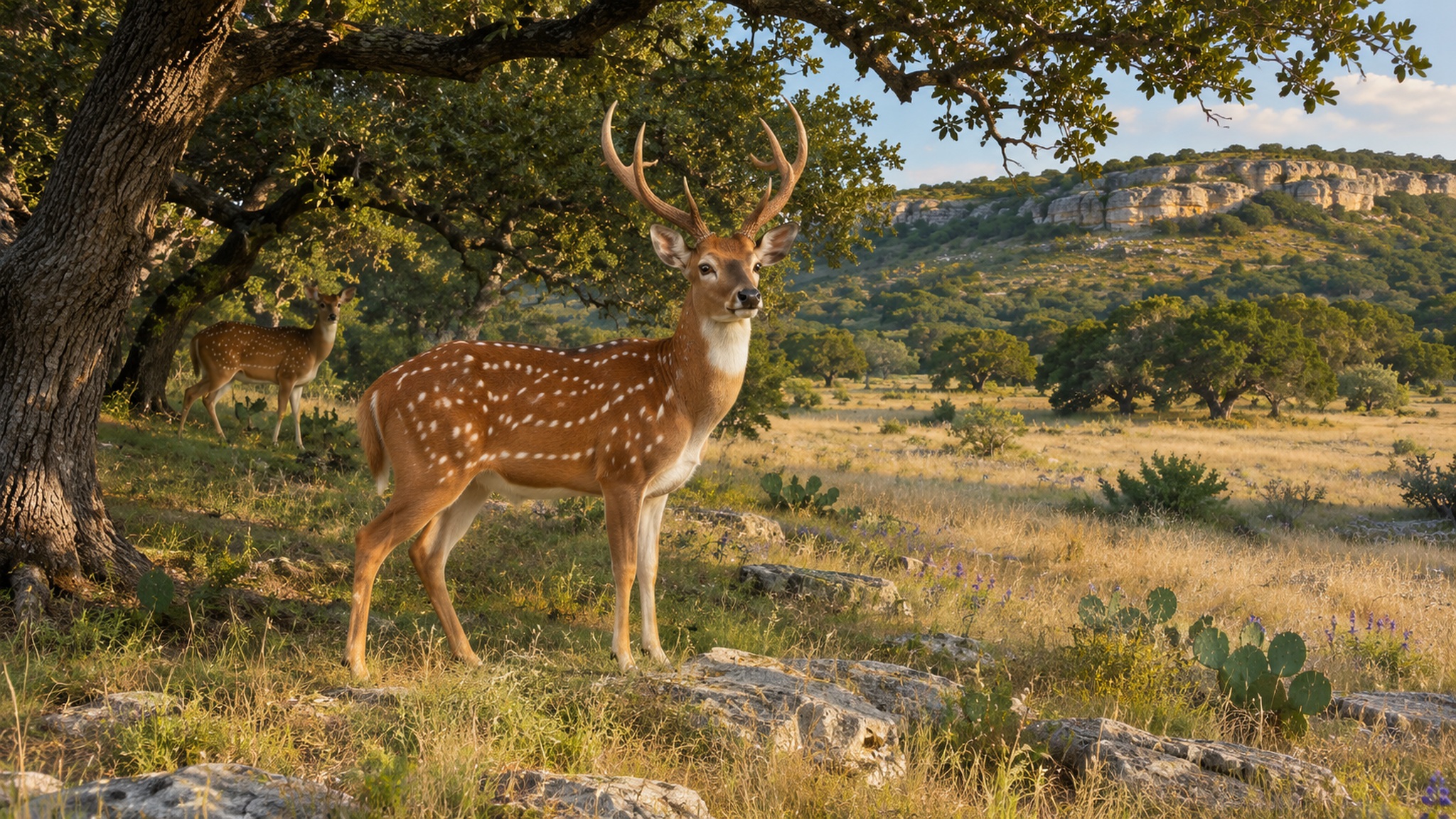
Texas deserves consideration when species variety and a bookable private-land arrangement are priorities. Axis deer, blackbuck, nilgai, fallow deer, and aoudad are among the introduced animals associated with the state, although availability differs substantially by property and region. The Texas Parks and Wildlife Department’s exotic-species page explains the relevant classification and broad private-property provisions. A valid hunting license and appropriate landowner permission remain fundamental. Treat an operator’s offering as a specific agreement, not as a statewide promise that every species is readily available. Ask which animals are currently present, whether the hunt is free-ranging or enclosed, and what fees apply to the intended harvest.
Match the Texas Region to the Terrain
The Hill Country can appeal to hunters interested in deer among oak cover, limestone ridges, and grass openings. A private property may provide relatively convenient lodging and transport, but the actual route can still involve loose footing and thorny vegetation. Ask for a candid description of a normal hunting day and what physical adjustments are possible. Species availability should be verified directly rather than inferred from a regional reputation.
South Texas opportunities can involve brush, heat, and different access and recovery demands. The practical issue may be seeing into dense cover rather than hiking a dramatic slope. A remote property also changes the value of reliable communication, vehicle access, and cooling facilities. Those details should be resolved while comparing trips, especially for a hunter flying home with meat.
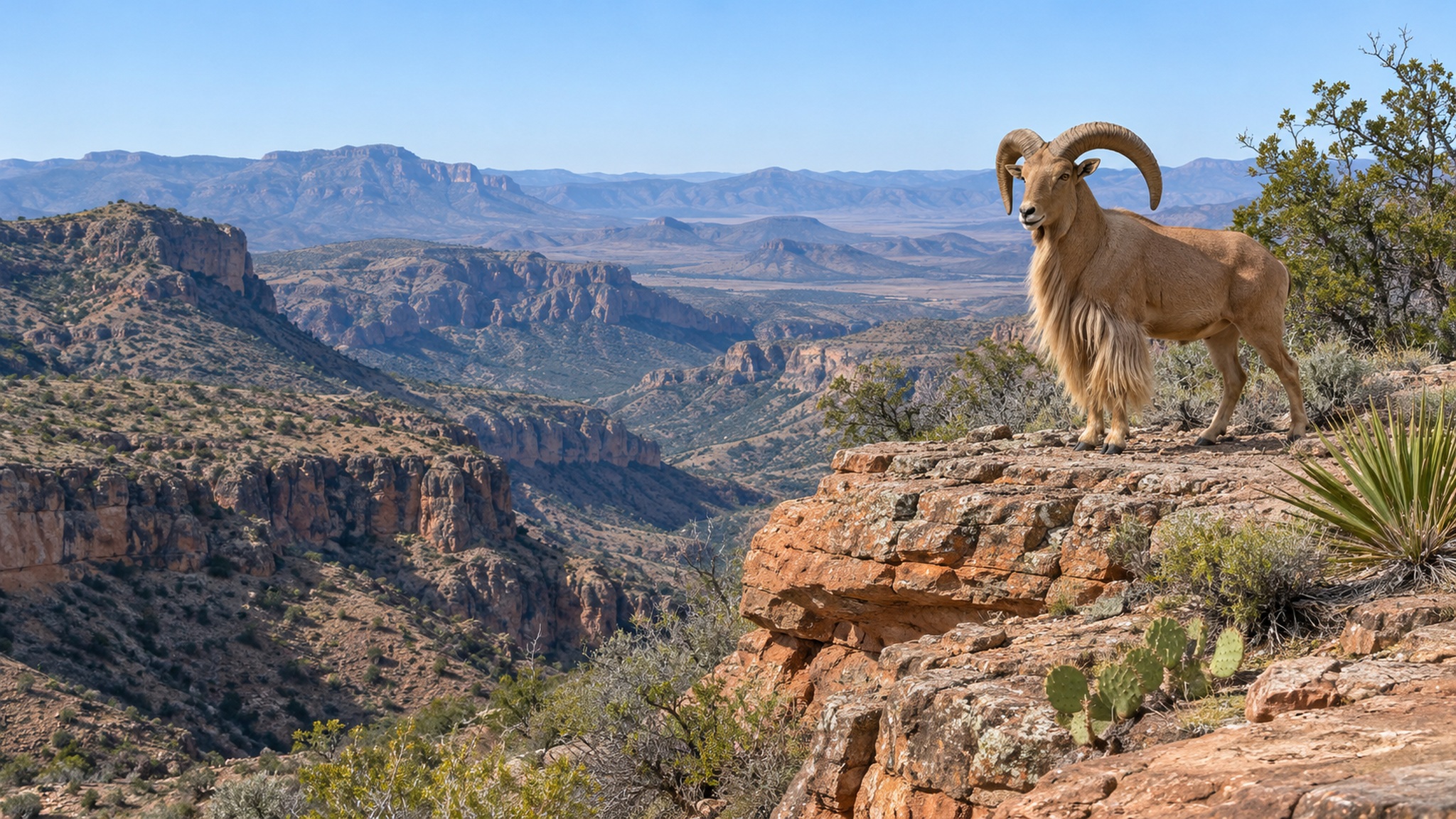
West Texas aoudad hunting offers a different landscape, often associated with broken desert mountains. Long views do not make the terrain easy to cross, and a brief approach can involve substantial climbing. Discuss water, temperature, recovery, and your physical limits with the operator. Choose this kind of trip for the country as well as the animal, and verify that the actual property matches the experience you have imagined.
New Mexico for Draw-Based Desert Opportunities
New Mexico offers introduced species including oryx, Persian ibex, and Barbary sheep. The state’s official hunting portal and current rules are the proper starting point for understanding available hunts. Opportunities can differ by species, hunt area, land ownership, and license type. Do not assume a general hunting license or a familiar public-land boundary authorizes the hunt you want.
This region suits hunters willing to organize around an application system and the conditions of a specific opportunity. Research the current draw, any relevant access restrictions, and the practical demands of the terrain before committing to nonrefundable travel. Some opportunities can have special scheduling or access procedures that affect how much scouting and flexibility are possible. A successful application is the beginning of logistical planning rather than the end.
Hawaiʻi for an Island Hunting Experience
Hawaiʻi combines introduced game mammals with island-specific terrain and management systems. Axis deer and mouflon are associated with Lānaʻi, while hunting opportunities elsewhere depend on the island, species, land, and current rules. The state hunting program provides the official route to announcements and local information. Check the exact hunt year, permitted area, application process, and access conditions. An island may contain deer without offering the particular public opportunity a visitor expects. Private access is a separate arrangement and needs the same careful discussion of permission, costs, and responsibilities as a mainland hunt.
Budget Extra Attention for Island Logistics
Flights, ground transport, lodging, equipment transport, and meat handling make an island trip a larger project than the hunt dates alone suggest. Resolve these pieces before paying for the most restrictive part of the itinerary. If a permit depends on a draw, distinguish a tentative travel plan from a confirmed booking. A flexible reservation can be worth more than a small saving that creates an expensive problem later.
Contact the relevant wildlife office about current conditions rather than relying solely on a map downloaded years ago. Boundaries, closures, access arrangements, and check-in procedures can change. Ask how weather might affect the route and what communication is available where you will hunt. Respect local communities and private property during both the hunting and travel portions of the trip.
Think through the entire journey home. A cooler that works for a drive does not automatically solve airline packaging, weight, or delay concerns. Confirm current carrier requirements and have a lawful plan if meat cannot travel as expected. Those arrangements are part of choosing the destination, not an inconvenience to sort out after a successful day.
Maryland’s Eastern Shore for Sika Deer
Introduced sika deer provide a distinctly different experience on Maryland’s lower Eastern Shore. The Maryland Department of Natural Resources’ species account describes their establishment and association with marshes and wetlands. This is a useful shortlist option for a hunter interested in introduced deer without a western mountain or island setting. It is still a real hunt in complex cover rather than a convenient novelty.
Study the rules for the exact public area or private property you intend to use. Marsh channels, mud, vegetation, and changing water conditions can make navigation and recovery demanding. Ask what access is practical for your experience and avoid treating a short line on a map as an easy walk. The landscape is a central part of the choice, especially if your prior deer hunting has taken place mainly in dry upland woods.
Florida’s St. Vincent Island for a Specialized Sambar Hunt
St. Vincent National Wildlife Refuge offers a highly specific introduced-sambar opportunity with limited-entry conditions. Start with the refuge hunting information and the current hunt brochure, which takes precedence over general descriptions of earlier seasons. Boat access, primitive camping, supplies, authorized equipment, and permitted entry times can make the logistics as distinctive as the deer. This destination belongs on a shortlist for hunters who value an unusual, demanding public opportunity and accept uncertainty. It is a poor choice for someone expecting a simple booked outing with a high-confidence outcome. Application timing and permit availability must be established before travel plans become commitments.
Screen Operators and Ecological Claims
For a commercial hunt, request a clear description of land access, animal origin, guiding, fees, cancellation, and recovery obligations. Ask for recent references relevant to the experience you want, rather than only trophy photographs. An operator should be able to explain what is included and what is uncertain. Be cautious when direct logistical inquiries receive only promises of an unforgettable result.
Introduced animals can create real management concerns, but a conservation claim still needs a specific explanation. Ask how the hunt relates to habitat objectives or population management and whether those outcomes are monitored. Hunting a nonnative species is not, by itself, proof of ecological benefit. Choose arrangements whose practices you understand and whose account of the experience remains honest.
Compare Access Models Before Comparing Prices
A private booking, a public draw, and a self-directed hunt on an authorized area distribute cost and uncertainty differently. The private booking may provide services and a clearer date but require a larger financial commitment. A draw can make access the central uncertainty, while an independent trip may shift more responsibility for scouting and logistics to the hunter. None is automatically the best value for every person.
Write down the complete expected trip, including travel, licenses, permits, lodging, guiding, harvest charges, processing, and equipment transport. Use current written quotations where commercial services are involved. Avoid comparing a bare license fee with an all-inclusive hunt price. They represent different portions of the total expense, and a misleading comparison can make a supposedly affordable option unexpectedly costly.
Include the cost of time and flexibility. An extra travel day, uncertain draw outcome, or difficult recovery may be easy for one hunter to accommodate and impossible for another. The right destination fits your actual calendar and capabilities. A species you admire is a reason to research a place, but it is not enough to make the trip workable.
Use a Two-Stage Shortlist
First eliminate destinations that fail a nonnegotiable requirement. That might be an access model you do not want, terrain beyond your current ability, dates that cannot work, or a species authorization that is not available. This first stage should be practical and unsentimental. A spectacular setting does not compensate for a trip you cannot lawfully or comfortably undertake. Keep the reason for each elimination so a change in circumstances can be assessed later without starting the research again.
Then compare the remaining destinations on the experience you value most. Ask what you would enjoy if the hunt produced no harvest: learning a marsh, exploring desert mountains, observing an unfamiliar deer species, or spending time with a trusted guide. That does not make results irrelevant. It makes the decision less dependent on a promise nobody can responsibly guarantee. Contact the relevant agency or operator with a short list of unresolved details, and compare the answers against the current official documents. Once the choice is made, preserve those documents with the itinerary and agreements. A careful shortlist becomes a practical plan when every essential condition has an answer and the remaining uncertainty is understood.
Choose the Place You Are Prepared to Hunt
Your shortlist should now contain reasons as well as names. Texas may suit private-property variety, New Mexico a particular desert species and application process, Hawaiʻi an island experience, Maryland a marshland sika hunt, and St. Vincent a specialized sambar opportunity. These are distinct options rather than a universal ranking. Verify the current official rules for the exact hunt, match the terrain to your ability, and make recovery and travel plans concrete. The best place is the one where your goals, authorization, preparation, and expectations fit the real conditions on the ground.