The Wild Turkey Comeback Began With a Change in Method
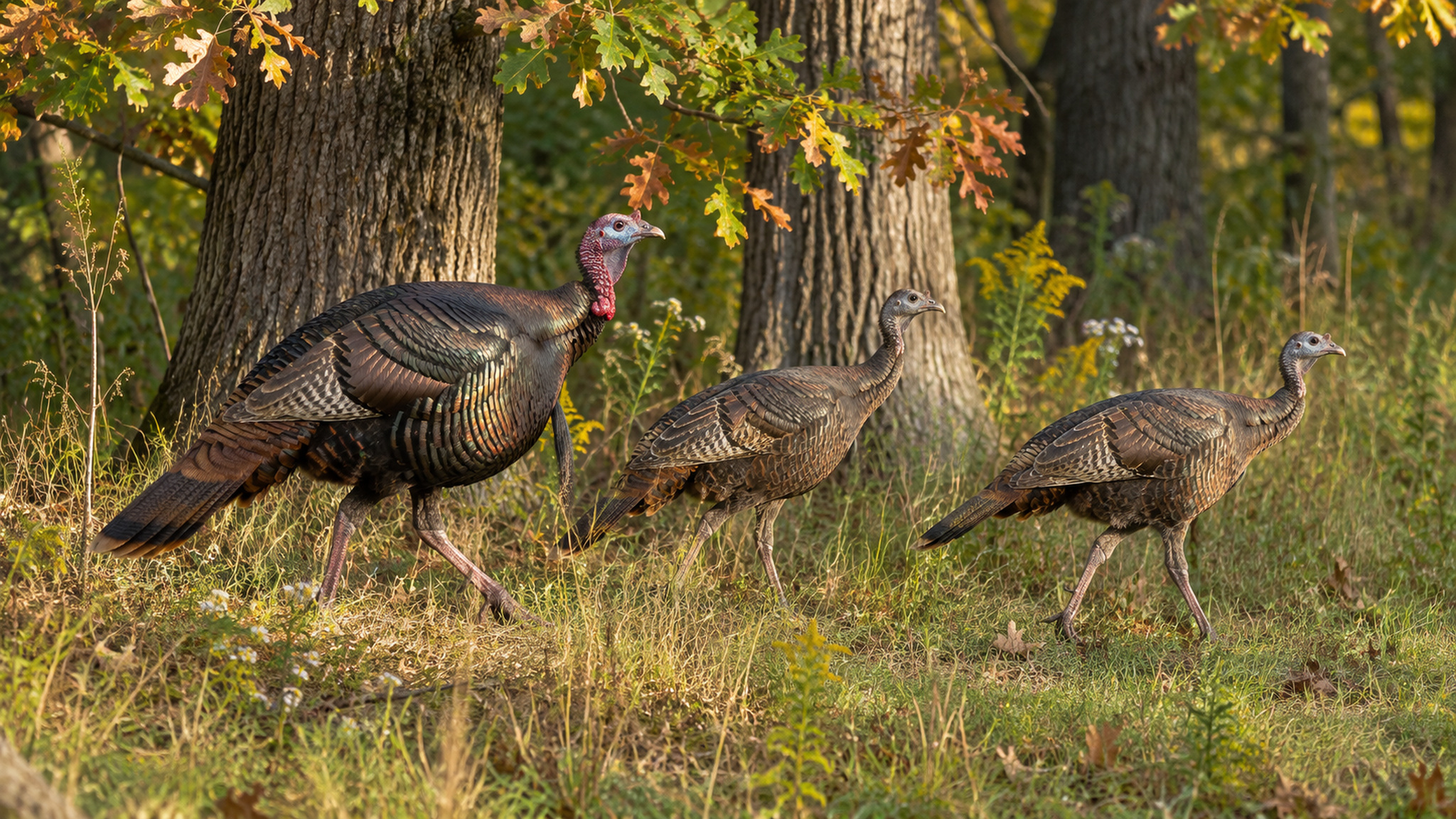
A flock feeding along an American woodland edge can make the wild turkey’s return look inevitable. It was the result of difficult decisions, changing landscapes, cooperation, and a willingness to abandon approaches that did not work. The central correction is especially important: North America’s broad wild turkey restoration was not primarily a success of captive conservation breeding. Wildlife agencies achieved their breakthrough by moving genuinely wild birds from established populations into suitable places where turkeys had disappeared. Protecting those birds, improving habitat, and following their progress helped turn releases into self-sustaining populations. Understanding that distinction gives hunters and landowners a more useful conservation lesson than the familiar idea that raising more animals automatically solves a wildlife shortage.
Distinguish Restoration From Captive Breeding
Captive breeding produces animals under managed human care, sometimes for later release. Trap-and-transfer instead relocates free-ranging animals that already possess the behaviors needed to live outside captivity. Both belong within the larger field of wildlife conservation, but they solve different problems. Calling the turkey comeback a breeding-program success hides the practical change that made much of the restoration possible.
The distinction does not diminish the effort of earlier workers. It explains why wildlife management must evaluate outcomes rather than defend an appealing technique. An operation can produce many birds while producing very few surviving wild breeders. Restoration asks the harder question: will the released population persist and reproduce without repeated replacement?
Understand What Had Been Lost
Wild turkeys disappeared from extensive parts of their former range as land clearing and excessive killing reduced populations. The exact history differed by region, so a single continental storyline cannot explain every local loss. Connecticut’s Department of Energy and Environmental Protection describes forest clearing and severe winters in its own account of the species’ disappearance. Other landscapes experienced different combinations of habitat change and exploitation. These regional differences matter because a successful return requires understanding why a population vanished and whether those pressures have changed.
Why Releasing Pen-Raised Birds Disappointed
Early restoration efforts often treated the problem as a supply shortage: produce turkeys, release them, and wait for the population to grow. The birds looked like the desired species, but appearance did not establish their ability to survive. Life in confinement does not reproduce the learning, social experience, and selection pressures encountered by wild flocks. A release could therefore look impressive on the day it happened while contributing little to lasting restoration.
Maryland’s Department of Natural Resources explains these limitations in its publication Not a Good Idea! Birds raised in captivity can lack important wild behavior, while captive conditions favor characteristics that are unhelpful after release. The agency also identifies disease concerns associated with releasing pen-raised birds. These are reasons to evaluate the biological suitability of animals, rather than assuming that every turkey is an interchangeable building block.
That history should not be stretched into a claim that all conservation breeding is ineffective. Some species recovery programs depend on carefully managed breeding when alternatives are limited. The turkey example supports a narrower conclusion: the successful method must match the species, the remaining wild population, and the conditions at the release site.
Wild Birds Changed the Prospects
Agency crews developed ways to capture groups of wild turkeys and move them to selected restoration areas. Net systems made it possible to capture birds that could not readily be obtained through earlier methods. Those birds arrived with experience finding food, avoiding danger, and living within wild social groups. Capture and transport still involved risks, and successful establishment was never guaranteed.
Connecticut’s official species account identifies live capture and translocation as its restoration breakthrough after artificial propagation had largely failed. Between 1975 and 1992, the state released 356 wild birds at 18 sites. Connecticut DEEP reports that releases and subsequent expansion restored turkeys to all 169 towns. Those figures describe a documented restoration history, not a current census or a claim that every town has equal abundance. The important outcome was not merely that birds were delivered to release sites. New populations survived, reproduced, and spread through available habitat.
Choose a Destination That Can Support a Population
A release area has to provide a functioning annual home rather than an attractive spring photograph. Turkeys need resources for feeding, nesting, brood rearing, escape, and roosting, and those requirements change with season and life stage. A site with adult birds’ favorite food can still lack suitable conditions for young poults. Evaluating connected habitat around the release location is therefore more useful than judging one field in isolation. The question is whether the landscape can support the whole life cycle, including difficult weather and periods when familiar foods are unavailable.
Let Habitat Work Continue After the Release
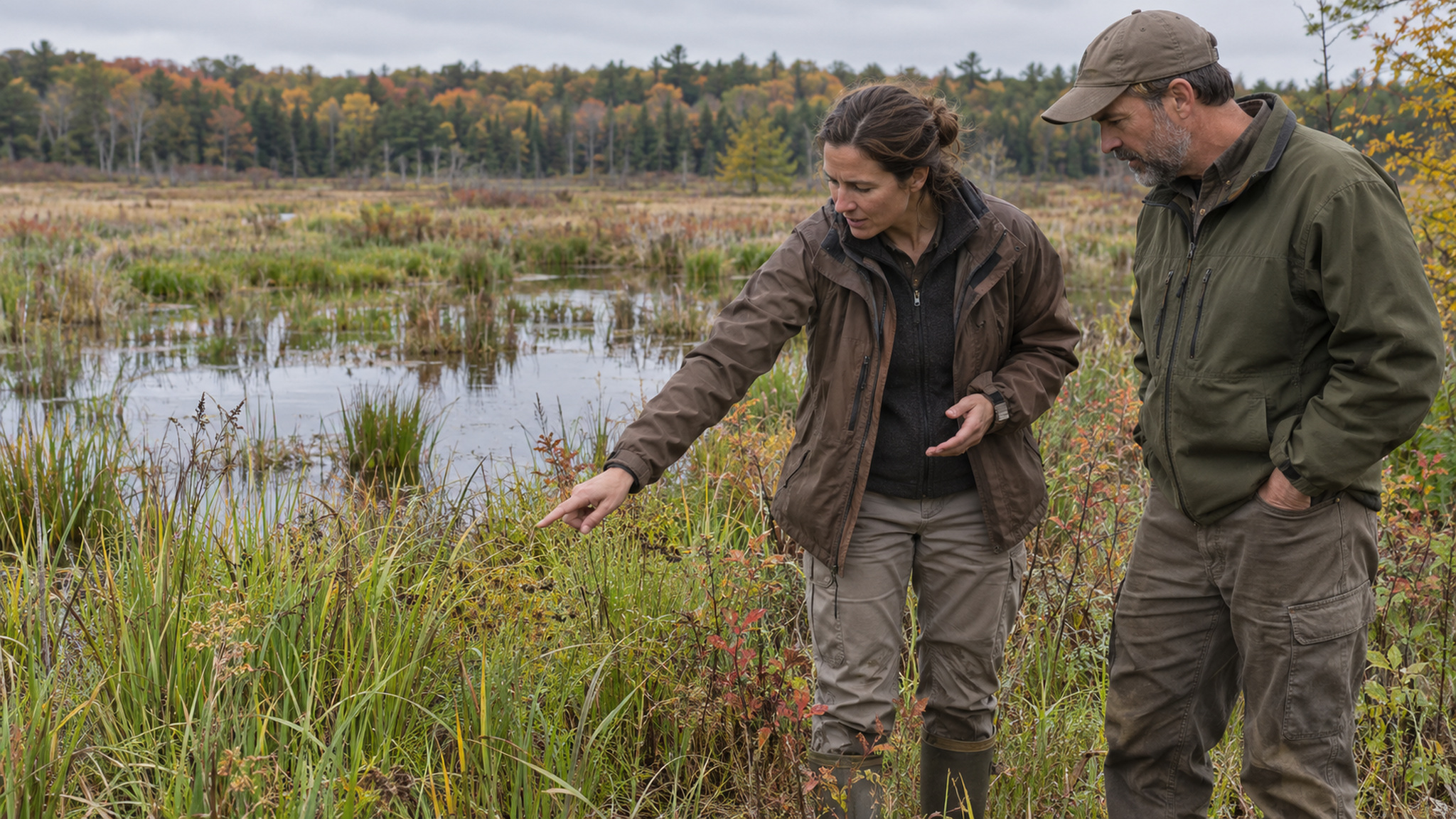
Restoration does not end when a transport crate opens. Vegetation changes, land ownership changes, and a productive opening can become unsuitable if management stops. Nesting cover and brood habitat require attention alongside the trees and openings that people readily associate with turkeys. Maintaining a useful mixture of conditions can involve cooperating across property boundaries.
For a landowner, the practical first step is to identify what is scarce locally. A property surrounded by closed-canopy forest presents different opportunities from one surrounded by intensively managed open ground. An agency biologist or qualified land manager can help connect a proposed treatment to a biological purpose. A written objective also makes it easier to judge whether the work actually improved conditions.
Habitat treatments have their own timing, cost, and disturbance consequences. Cutting, mowing, or burning without understanding the site can damage the resources someone intended to improve. Restoration history is a reason to seek informed management, not a recipe for applying the same treatment everywhere.
Protection Gave Small Populations Room to Establish
Newly established populations can be vulnerable even when their founding birds are well suited to wild life. Hunting regulations, enforcement, and cooperation from landowners helped create conditions in which recovery could proceed. Opening a season is a management decision that depends on the population and the jurisdiction, rather than an automatic reward after a release.
Conservative management also requires public patience. People may see birds returning before a population can support the uses they hope to enjoy. Explaining that difference helps maintain support for protection during establishment. It places long-term persistence ahead of an immediate opportunity.
Cooperation Turned Isolated Successes Into a Larger Recovery
Wildlife does not recover neatly within administrative boundaries. Agencies exchanged expertise and worked with partners as suitable source populations became available. Landowners provided places where birds could be protected and habitat could be maintained. Hunters and conservation organizations supplied advocacy, labor, and financial support alongside the work of professional staff. The comeback is best understood as a network of contributions rather than the achievement of a single group.
Measure Establishment Instead of Celebrating Deliveries
A useful restoration record separates effort from outcome. Captures, transport trips, and released birds describe what a program did. Survival, reproduction, distribution, and population persistence describe what happened afterward. Reporting both makes it possible to recognize a technique that works and replace one that repeatedly disappoints.
Monitoring also has limits that should remain visible. Seeing a flock once does not establish annual recruitment, and hearing fewer gobbles during one visit does not establish a population collapse. Weather, observer effort, access, and animal behavior can affect what people detect. Managers need repeated observations and appropriate survey methods to interpret change.
Public reports are most useful when readers understand what each measure can support. A distribution map may demonstrate expansion without describing abundance within every occupied area. A count conducted along selected routes has a different meaning from a census of all birds. Respecting those distinctions protects the credibility of both successes and warnings.
A Historic Comeback Does Not Guarantee Today’s Trend
Restoration and ongoing management answer different questions. A species can return across a broad range and later decline in particular places. Land-use changes, reproductive conditions, weather, disease, and other interacting pressures may require investigation. The existence of a successful historical method does not establish that repeating releases would solve every present-day concern.
Hunters should therefore distinguish local agency assessments from memories of exceptional seasons. Changes in personal access, calling conditions, or hunting effort can alter what one person encounters. A careful response combines field experience with the broader evidence available to managers. This approach allows people to value the recovery while taking new problems seriously.
What Landowners Can Contribute Without Moving Birds
Private citizens should not imitate agency capture or relocation operations. Wildlife possession, transport, release, disease screening, and animal welfare are regulated matters, and moving birds can create problems that extend beyond a property. Contact the responsible wildlife agency before considering any action involving live turkeys. For most landowners, conserving useful habitat and reducing avoidable disturbance provide a more appropriate place to begin. Maryland’s guidance specifically directs attention toward habitat improvement rather than releasing pen-raised birds.
Read the Comeback as a Lesson in Adaptation
The most valuable feature of the turkey story is the willingness to learn from failure. Raising birds was an understandable idea, yet repeated effort could not substitute for evidence about wild survival. Capturing and relocating wild birds changed the biological starting conditions. Suitable habitat and protection then gave those animals a chance to establish populations.
That sequence offers a practical standard for evaluating modern conservation claims. Ask what problem an action addresses, why it should work for the species, and what evidence would demonstrate success. Consider whether the information comes from a comparable landscape and whether the proposed follow-up extends long enough to detect establishment rather than temporary survival. A transparent plan should make those distinctions understandable to supporters before field operations begin, not only after the results are known. Distinguish a compelling photograph from a lasting biological outcome. These questions keep restoration focused on functioning wild populations.
They also help explain why a recovery story belongs to people with different interests. Hunters may value renewed opportunity, birdwatchers may value seeing a flock, and landowners may value a richer landscape. All depend on populations that can persist through ordinary ecological challenges. Calling the achievement wild turkey restoration gives the successful method its proper place while leaving room for the continuing work that healthy populations require.
Use Local History to Set the Next Conservation Priority
Someone interested in a particular county should look beyond the broad national narrative. State agency histories, management plans, habitat guidance, and current monitoring reports can explain whether the local challenge is establishment, habitat quality, recruitment, or another concern. Comparing those documents prevents an old solution from being applied automatically to a new problem. It also reveals where public effort can complement work already underway.
A useful volunteer project has a defined purpose, an agreed method, and someone responsible for follow-through. Maintaining a habitat treatment, recording observations under an agency protocol, or helping landowners understand management goals can be less dramatic than a wildlife release. Those tasks are often what connect an initial success to long-term stewardship. The turkey comeback remains inspiring precisely because its lesson is practical: choose methods that fit wild animals, evaluate the results, and keep managing the conditions on which recovery depends.
Keep the Method and the Mission Separate
One final distinction helps readers assess future proposals: the mission can remain the same while the method changes. Restoring a viable wild population was the objective both before and after agencies improved their techniques. Abandoning an unsuccessful practice did not abandon conservation; it made the work more responsive to evidence. When a project is proposed today, consider whether supporters have described the desired population outcome clearly enough to evaluate it independently of the chosen activity. That habit prevents loyalty to a technique from replacing attention to the animals themselves, and it makes room for honest revision when a reasonable first attempt fails.