Recognizing Wildlife Voices Starts With Listening Before Naming
A hunter may hear an elk bugle, a turkey yelp, a deer snort, and a coyote chorus without seeing any of their makers. Learning those voices adds useful information, but a sound is rarely a complete identification or a reliable translation of an animal’s intentions. Distance, echoes, vegetation, overlapping callers, and human imitation can all change the impression. Begin by describing what you hear: its rhythm, pitch changes, texture, repetition, and setting. Then compare it with trustworthy recordings and the species that plausibly occur nearby. This guide focuses on recognizing natural vocalizations and understanding their limits. Choosing a commercial call or deliberately attracting wildlife is a separate subject, with its own legal and disturbance considerations.
Describe a Sound in Several Dimensions
A useful listening description includes more than whether a call is high or low. Notice how it starts, whether the pitch rises or falls, how long the sound lasts, and what follows it. A clear whistle ending in rougher sounds differs from an even series of short notes. Rhythm often remains recognizable when distance makes the tone less distinct.
Also listen to the spaces between sounds. Repeated phrases, alternating callers, and irregular bursts can help distinguish possibilities. Resist choosing a species after the first fragment and ignoring everything that follows. A description written before identification preserves what you actually heard rather than what you later expected to hear.
Use the Setting Without Letting It Dictate the Answer
Region, habitat, season, and time of day help narrow the possibilities. An elk-like whistle deserves a different starting list in known elk country than in a suburban woodland far outside the local population’s range. Yet setting is supporting evidence, not proof. Animals occur in unexpected places, recordings can be played by people, and several species can produce surprisingly similar sounds. Keep more than one possibility available until the details support a narrower conclusion. Knowing when a species is commonly vocal can improve interpretation without establishing that every sound at that hour comes from it.
Elk Bugles and the Sounds Around Them
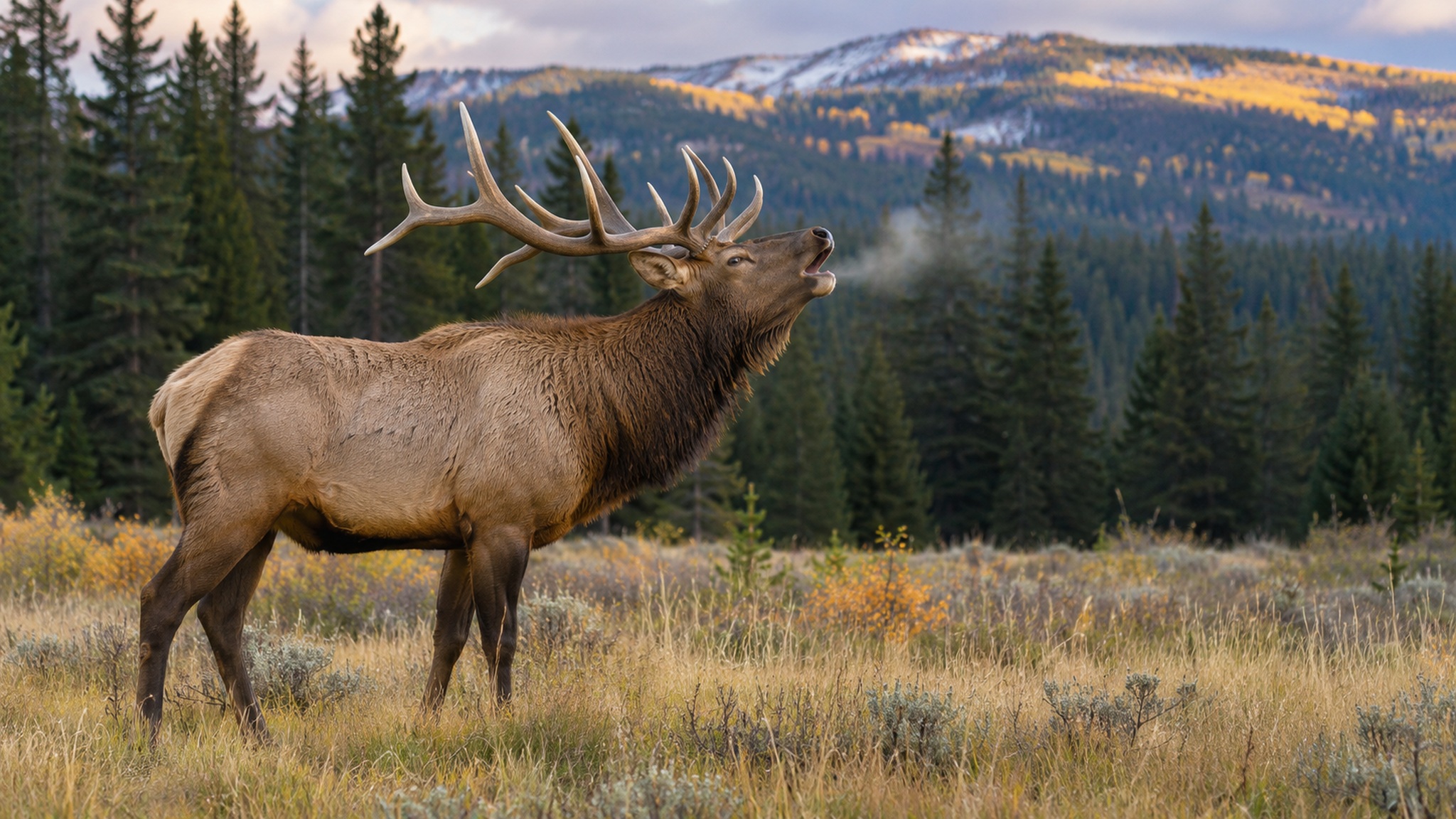
The bull elk bugle is among North America’s most recognizable wildlife vocalizations. A typical phrase begins with a low, rough sound, rises into a high whistle, and may finish with lower grunts. Washington Department of Fish and Wildlife describes this progression in its elk account. Individual examples vary, so the rise and change in texture are more useful learning features than one written imitation. Listen to complete recordings rather than memorizing one dramatic clip. The National Park Service elk sound gallery provides a dependable place to begin.
Elk also make softer sounds, and a distant group may not present the familiar bugle at all. Recognition improves when you study the range of voices associated with the species. Keep the call’s acoustic identity separate from a precise behavioral interpretation. Hearing a bugle does not by itself establish the bull’s size, exact distance, or willingness to approach another sound.
Mountain terrain complicates direction. A call can reflect from a slope or carry across a drainage in a way that makes its source seem displaced. Use repeated observations and visible landmarks without treating one impression as a pinpoint location. If elk become visible, observe from an appropriate distance and avoid approaching closely simply to confirm the sound.
Deer Grunts, Bleats, and Alarm Sounds
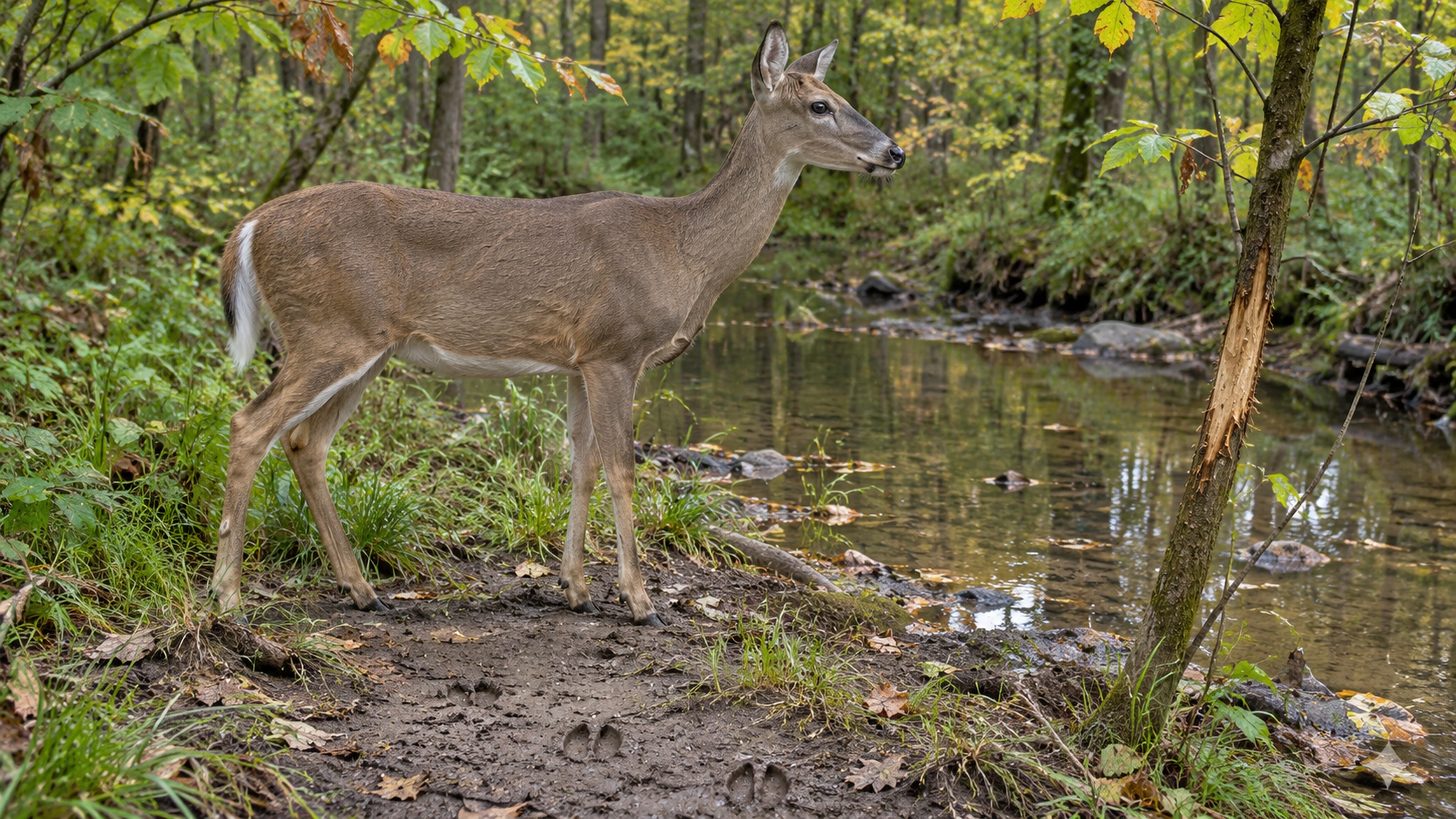
Deer can produce contact, breeding-related, and alarm-associated sounds, including grunts, bleats, and forceful snorts. The sound you hear may be brief, quiet, or partly masked by vegetation. A single rough noise in cover should not automatically become a precise statement about a buck. Compare the sequence and setting with several examples and preserve uncertainty when the fragment is incomplete.
An alarm-associated sound can indicate that something has drawn attention without telling you exactly what caused it. Another person, a predator, a scent, or an unfamiliar movement may be involved. Avoid assuming every snort is directed at you or that the maker’s next action is predictable. The useful observation concerns the sound and the visible situation, not an invented account of the animal’s thoughts.
Wild Turkeys Have More Than a Gobble
A turkey gobble is a loud, rapidly tumbling phrase with a throaty, descending quality. Yelps form repeated distinct notes; clucks are short individual notes, while purrs have a softer rolling quality. The Cornell Lab of Ornithology sound collection lets listeners compare these structures rather than learning only their names. Learn them through recordings with reliable identification and context. Listen for how notes are grouped instead of translating a written imitation literally. Different individuals and circumstances can produce variation, and a human caller may be present during hunting season. Hearing a convincing turkey sound therefore never replaces identifying the actual bird and the surrounding situation. A voice can direct attention; it cannot authorize a shot or establish that the source is wildlife.
Coyote Choruses Are Harder to Count Than They Sound
Coyotes use howls and a varied set of shorter vocalizations. A chorus can contain overlapping changes in pitch and rhythm that make the number of animals difficult to judge. The Missouri Department of Conservation coyote account includes sound examples and describes several vocal types. Compare the structure of the chorus with these references rather than converting each audible note into another animal.
Domestic dogs belong among the alternatives in many landscapes. Distance and echoes can further complicate the comparison. A recording may help later review, but the honest result can remain probable coyote vocalization rather than a precise count or location. Do not approach a chorus or disturb denning animals simply to settle an identification.
Waterfowl Voices Differ Among Species and Sexes
The familiar loud duck quack does not represent every duck voice. Female mallards produce the classic quacking sound, while males have quieter, raspier calls. The Cornell Lab of Ornithology mallard sound recordings demonstrate why learning only one stereotyped voice leaves gaps in identification.
Geese, ducks, and swans also differ among species, and a mixed flock can layer several voices. Listen for repeated phrases from the same apparent source rather than blending the whole group into one imagined call. When possible, compare the sound with a visible bird that is clearly making it. That connection offers stronger learning than assigning a distant flock’s entire soundscape to its most obvious species.
Water and open spaces can change how far sounds seem to carry. Loudness is therefore a poor standalone distance measure. A call may be audible when the bird remains beyond a clear view, and another bird nearby may remain quiet. Keep sound recognition, visual identification, and distance judgment as separate tasks.
Learn Owls and Other Voices That Share Hunting Hours
Owls can be conspicuous at dawn, dusk, and night, but not every owl gives the same familiar hoot. A great horned owl often gives low hoots in an uneven, stuttering sequence, with closer notes followed by more separated ones. Compare that whole rhythm with the Cornell Lab’s identified recordings; pitch alone does not separate every owl. Learning the whole phrase and spacing helps prevent a generic owl label from standing in for an actual identification. Other birds, mammals, and even mechanical sounds can complicate the nighttime soundscape. An unsettling or unfamiliar voice is a reason to listen carefully rather than invent an extraordinary explanation.
Understand How Sound Travels Through the Landscape
Vegetation, wind, terrain, buildings, and the position of the listener all affect what reaches your ears. Higher-frequency details may become less clear with distance or obstruction, leaving a fragment that resembles another species. A reflected sound can seem to come from an unexpected direction. Moving a short distance on safe, permitted ground may change the impression without changing the animal.
Human hearing also has limits. Fatigue, attention, hearing protection, and individual hearing differences affect detection. Preserve necessary hearing and other safety protection rather than removing it to solve an identification. If you cannot hear a detail another observer reports, compare recordings or descriptions later. Lack of personal detection does not prove the sound was absent.
Use Recordings and Identification Apps as References
A phone recording can preserve rhythm and repetition even when its microphone does not capture every detail. Record passively from your existing position when lawful and appropriate. Keep the device from rubbing against clothing, and speak contextual information afterward rather than over the sound itself. Do not pursue an animal or enter restricted ground merely to obtain a cleaner file. Automated suggestions can help generate possibilities, but a suggested species is not a verified identification. Compare the recording with reliable examples, local range information, and any visual evidence you actually obtained.
Build a Small Listening Practice
Choose a few local species rather than trying to memorize an entire continent at once. Listen to several recordings of each, including ordinary and less dramatic examples. Then compare similar sounds side by side and describe the differences in plain language. The point is to build recognition of structure rather than a collection of written syllables that fail when a real animal varies the phrase.
During field outings, keep a brief record of date, habitat, conditions, description, and confidence. Mark sounds as confirmed only when the evidence supports that label. A probable identification can remain useful without becoming certain later through repetition in memory. Revisit unresolved recordings with a knowledgeable local observer or a dependable reference.
Let the skill improve observation rather than create pressure to provoke a response. Passive listening reveals natural behavior and leaves room for quiet animals, distant callers, and unresolved fragments. Calls provide information, but they do not carry every answer a hunter might want. Knowing which parts you recognize and which parts remain uncertain is what makes the listening useful.
Separate Recognition From Translation
People often want a wildlife voice to provide a sentence: the animal is challenging a rival, warning its young, or answering the listener. Some vocalizations have well-studied associations, but a field observer still needs context before assigning a precise meaning. Recognizing an elk bugle is a different achievement from explaining why that bull called at that moment. Keep those achievements separate in your record. A trustworthy description can identify the sound, note other visible animals, and leave the immediate function unresolved. That gives later interpretation a firmer foundation than a dramatic translation based only on tone.
The same restraint applies to apparent responses. A turkey calling after a loud noise may have reacted to it, but timing alone does not establish every detail of the interaction. A coyote chorus beginning after you arrive does not prove it concerns you. Listen for repeated patterns, consult reliable behavioral information, and avoid turning one sequence into a rule for every future outing. Recognition grows through comparison, while behavioral interpretation requires a different and often broader set of observations. Both become more dependable when the boundary between them remains clear.
Respect Quiet as Part of the Soundscape
Periods without obvious calling can still be valuable observation time. Birds and mammals may be present but quiet, sounds may be masked by wind, or your position may prevent them from reaching you clearly. Record the conditions rather than writing that the area contained no animals. Listen to ordinary background sounds as well: flowing water, moving leaves, wingbeats, and distant human activity can explain what was difficult to hear. This practice helps you recognize the limits of a session and choose better comparisons later. It also reduces the urge to make wildlife vocalize just to produce a result. A quiet visit can teach the shape of a place’s soundscape, while a later call becomes easier to describe against a background you already know. Compare quiet visits as carefully as vocal ones, especially when weather or nearby activity differs. The absence of a detected call can be worth recording without becoming a claim that a species was absent. Clear descriptions of listening conditions make later comparisons more useful.