What Defines Big Game in North America
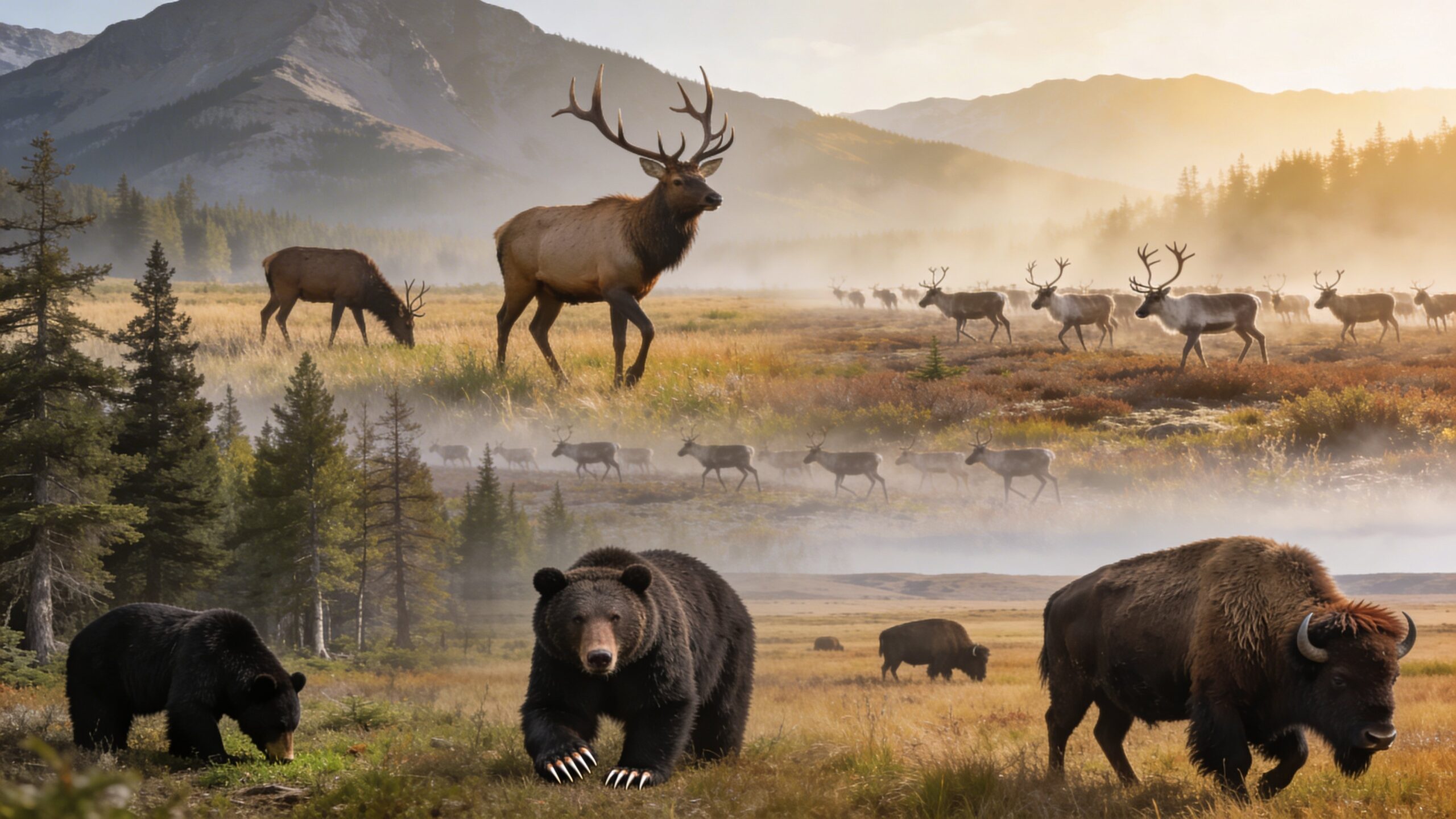
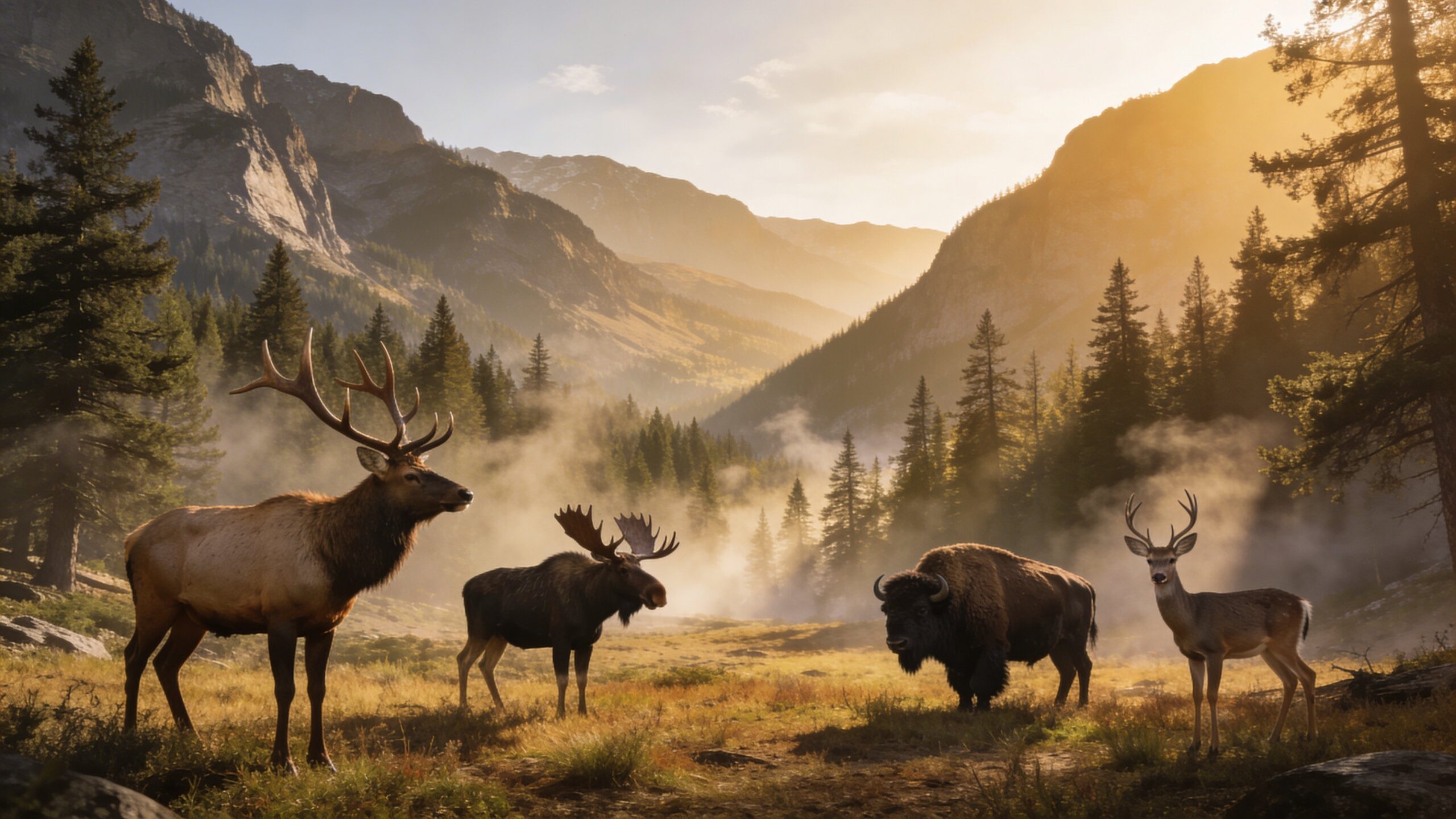
The term “big game” carries both biological and cultural weight across North America. It typically refers to large, free-ranging mammals that occupy expansive habitats and play a critical role in ecosystem balance. These species are defined not just by their size, but by their ecological influence, behavioral complexity, and the landscapes they help shape. From dense forests and alpine ridges to sweeping plains and Arctic tundra, big game animals are woven into the identity of the continent itself. Unlike smaller wildlife, big game species tend to have longer lifespans, slower reproduction rates, and broader home ranges. These traits make them both resilient and vulnerable, requiring intact ecosystems and careful management. Understanding big game means looking beyond individual species and recognizing the interconnected systems they support.
A: Large mammals like deer, elk, moose, bears, and bison.
A: Across forests, plains, mountains, and tundra.
A: They help maintain ecosystem balance.
A: Not all, but many species do seasonally.
A: Yes, species like bears and mountain lions qualify.
A: Through fat reserves, migration, and behavioral changes.
A: The breeding season for many ungulates.
A: Many are stable due to conservation efforts.
A: Some species like deer can.
A: Habitat loss and environmental changes.
The Major Big Game Categories
North American big game animals can be broadly grouped into several categories, each representing a different ecological niche. Ungulates, or hoofed mammals, dominate the category and include deer, elk, moose, bison, and pronghorn. These animals are primarily herbivores and serve as the backbone of many food webs, influencing vegetation patterns and providing prey for large predators.
Carnivorous big game species, such as bears and mountain lions, represent the apex of the food chain. Their presence regulates herbivore populations and maintains ecological balance. Meanwhile, specialized species like bighorn sheep and mountain goats occupy rugged, high-elevation environments, showcasing unique adaptations to extreme terrain. Each category contributes to a broader ecological mosaic, where survival depends on both competition and coexistence.
Deer Family: The Foundation of Big Game
The deer family, known scientifically as Cervidae, forms the core of North American big game. Species such as white-tailed deer, mule deer, elk, moose, and caribou vary widely in size and behavior, yet share common traits like antler growth and seasonal migration.
White-tailed deer are the most widespread, thriving in forests, farmland edges, and even suburban environments. Their adaptability has allowed them to flourish across a wide range of climates. Mule deer, by contrast, favor more open and rugged terrain, often found in western landscapes where they navigate steep hillsides with ease.
Elk represent a larger and more socially complex species, often forming herds that move seasonally between feeding and breeding grounds. Moose stand at the extreme end of the spectrum, towering over other deer species and favoring wetlands and boreal forests where they feed on aquatic vegetation. Caribou, known for their long-distance migrations, embody survival on a massive scale, traveling hundreds of miles in response to seasonal changes.
Bovids of North America: Strength and Scale
The bovids, including bison and bighorn sheep, showcase power, endurance, and adaptation. American bison once roamed the Great Plains in vast numbers, shaping grassland ecosystems through grazing and movement. Today, they remain a symbol of resilience and ecological restoration, with herds reestablished in protected areas.
Bighorn sheep inhabit steep, rocky landscapes where agility is essential. Their curved horns and muscular builds allow them to navigate cliffs that would be inaccessible to most predators. These animals demonstrate how physical traits evolve in response to environmental pressures, creating species perfectly suited to their surroundings. Pronghorn, though not true antelope, represent another unique branch of North American big game. Their unmatched speed is a relic of ancient predator-prey dynamics, allowing them to outrun threats across open plains.
Apex Predators and Their Role
Predatory big game animals such as bears and mountain lions occupy a critical role in maintaining ecological balance. Black bears and grizzly bears are omnivores, capable of adapting their diets based on availability. Their foraging behaviors influence plant growth, seed dispersal, and even soil composition.
Mountain lions, also known as cougars, are stealth predators that rely on ambush tactics. Their presence helps regulate deer populations, preventing overgrazing and promoting healthier ecosystems. These predators operate largely unseen, yet their influence extends across entire landscapes.
The relationship between predators and prey is not one of simple dominance but of equilibrium. When predator populations decline, herbivore numbers can surge, leading to habitat degradation. Conversely, balanced predator populations contribute to biodiversity and ecosystem stability.
Habitats That Shape Big Game Species
North America’s diverse geography creates a wide range of habitats, each supporting different big game species. Forests provide cover and food for deer and bears, while grasslands sustain grazing animals like bison and pronghorn. Mountain regions host specialized species that thrive in thin air and rugged terrain.
In northern regions, boreal forests and tundra environments challenge animals with extreme cold and seasonal food scarcity. Species like caribou and moose have evolved thick insulation and efficient metabolisms to survive these conditions. In contrast, desert environments require adaptations for heat management and water conservation, shaping species that can endure harsh climates. These habitats are not static; they shift with seasons, weather patterns, and long-term climate changes. Big game animals respond through migration, behavioral changes, and physiological adaptations.
Migration and Movement Patterns
Migration is one of the defining characteristics of many big game species. Elk, caribou, and mule deer often travel long distances between seasonal ranges, following food availability and avoiding harsh conditions. These movements are guided by instinct, environmental cues, and learned behavior passed through generations.
Migration routes are critical to survival, yet increasingly threatened by human development. Roads, fences, and urban expansion can disrupt traditional pathways, forcing animals to adapt or face declining populations. Protecting migration corridors has become a key focus in conservation efforts.
Movement patterns also influence predator-prey dynamics, as predators track herds and adjust their strategies accordingly. This constant motion creates a dynamic balance within ecosystems.
Seasonal Behavior and the Rut
Seasonal changes bring dramatic shifts in big game behavior. One of the most notable periods is the rut, or breeding season, when animals become more active and competitive. Male deer, elk, and other species engage in displays of strength, including antler clashes and vocalizations.
During this time, animals often move more frequently and take greater risks, driven by reproductive instincts. These behaviors not only ensure the continuation of species but also shape social structures within populations. Outside of the rut, big game animals focus on survival, conserving energy during winter and maximizing feeding during warmer months. These seasonal rhythms define their lives and influence their interactions with the environment.
Adaptations for Survival
Big game animals possess a range of adaptations that allow them to thrive in diverse environments. Physical traits such as thick fur, large body size, and specialized limbs provide protection against climate and terrain challenges. Behavioral adaptations, including migration and herd formation, enhance survival in changing conditions.
Diet plays a crucial role as well. Herbivores adjust feeding habits based on available vegetation, while predators adapt hunting strategies to match prey behavior. These adaptations are not static but evolve over time, reflecting the pressures of environment and competition.
The resilience of big game species lies in their ability to balance stability with flexibility, maintaining core traits while adapting to new challenges.
Conservation and the Future of Big Game
The story of North American big game is closely tied to conservation. Many species once faced severe population declines due to overhunting and habitat loss. Through coordinated efforts involving wildlife management, habitat protection, and public awareness, populations have rebounded in many areas.
Conservation today focuses on maintaining balance, ensuring that species can coexist with human activity. This includes managing populations, protecting critical habitats, and addressing emerging challenges such as climate change and urban expansion. The future of big game depends on continued stewardship. As landscapes evolve, so too must the strategies used to protect these animals and the ecosystems they inhabit.
Why Big Game Animals Matter
Big game animals are more than individual species; they are indicators of ecosystem health and symbols of the natural world. Their presence reflects the integrity of habitats, the balance of food webs, and the success of conservation efforts.
They also hold cultural significance, shaping traditions, economies, and identities across North America. From indigenous practices to modern wildlife observation, big game animals connect people to the land in meaningful ways.
Understanding these animals is not just about knowledge but about perspective. It reveals the complexity of nature and the importance of preserving it for future generations.
The Bottom Line
North American big game animals represent a dynamic and interconnected system of life, spanning diverse habitats and ecological roles. From the smallest deer to the largest moose, from grazing herds to solitary predators, each species contributes to a broader story of survival and balance.
This ultimate species breakdown highlights not only what these animals are, but how they live, adapt, and shape the world around them. In understanding big game, we gain insight into the landscapes they inhabit and the delicate equilibrium that sustains them.