The Continent Built for Wild Pursuit
If you could design a place to test hunters—truly test them—you might end up drawing a map that looks a lot like North America. It has vast deserts where heat and mirage make distances lie, endless forests that swallow sound, alpine basins where wind changes its mind every five minutes, and frozen river bottoms where a single track can feel like a compass arrow. It also has an incredible variety of big game animals, each with its own behaviors, seasons, and habitats. That variety is the magic. It’s also what makes big game hunting here so addictive. This guide is meant to be a true “big picture” roadmap. Not a gear list disguised as an article, and not a motivational speech with no practical value. You’ll learn how big game hunting works across North America, how to think about species and regions, how seasons influence animal movement, what tactics hold up in real country, and what ethical hunting actually looks like from planning through meat care. Whether you’re brand new or sharpening your strategy for a dream hunt, the goal is the same: hunt with clarity, confidence, and respect.
A: Scout smart, hunt wind, glass early/late, and work bedding edges midday.
A: Match terrain, travel time, budget, and your preferred hunt style.
A: Scouting—finding animals beats perfect gear in empty country.
A: The distance you can hit consistently from field positions under stress.
A: Using home-region tactics without adapting to the new landscape.
A: Dawn and dusk often offer the best movement and visibility.
A: Mark the spot, listen, then track carefully using evidence and patience.
A: Cool it fast, keep it clean, use game bags, and plan pack-out time.
A: Animals shift into thicker cover, steeper terrain, or overlooked pockets.
A: Treat each hunt as skill-building—patterns and discipline compound over seasons.
What Counts as Big Game in North America
Big game is a practical term with a cultural weight. In most places, it includes deer (whitetail, mule deer, blacktail), elk, moose, caribou, pronghorn, bighorn sheep, mountain goat, black bear, and sometimes brown/grizzly bear where legal. It can also include species like javelina in certain regions, and a few additional categories depending on local management.
These animals are managed carefully because they’re valuable wildlife resources. That means seasons are structured around biology—rut periods, winter survival, migration timing—and tags are often limited to match population goals. When people say big game hunting is “more complicated,” this is why. It’s not just you and the woods. It’s you, the woods, the animal, and a management system designed to keep those animals thriving for the future.
The Three Pillars: Habitat, Pressure, and Timing
Across all species and regions, three forces shape your odds more than anything else: habitat, hunting pressure, and timing. Habitat is where animals can meet their needs—food, water, security cover, and travel routes that connect them. Pressure is what humans do to that habitat: road traffic, hiking, hunting, and even recreational use. Timing is how those factors interact with seasons, weather, and breeding cycles. When a hunt goes quiet, it’s usually because one of those pillars changed. Maybe pressure increased and animals shifted into thicker cover. Maybe a warm spell changed feeding times. Maybe snow pushed animals down in elevation. Great hunters don’t panic when the woods feel empty. They diagnose which pillar changed and adjust accordingly.
Regions of North America and How They Hunt
North America isn’t one hunting environment—it’s dozens. Understanding regional character helps you choose tactics that actually fit the landscape.
In the Rocky Mountains and high country of the West, elk and mule deer are often hunted through a combination of glassing, hiking, and wind-based approaches. Elevation, thermals, and weather can change daily patterns fast. In the Pacific Northwest, thick timber and constant moisture can turn hunts into close-range chess matches where sound and movement matter more than long-range optics. In the desert Southwest, visibility can be enormous, but water and shade become the magnets that pull animals into predictable zones. In the Great Plains and pronghorn country, distance and terrain subtlety become the challenge—there may be cover, but it’s usually low and sparse, and your approach has to be clever. In the East and Midwest, whitetail hunting often centers around edges, funnels, and controlled access where small terrain features and wind direction decide encounters.
The biggest lesson for traveling hunters is this: don’t bring one region’s tactics into another region unchanged. A strategy that shines in open basins can fail completely in jungle-thick timber. The best hunters adapt to what the land is asking for.
Seasons, Rut, and Weather: Why Animals Move When They Move
In many parts of North America, the most dramatic hunting behavior change comes from the rut. During breeding periods, animals become more visible, more vocal, and more aggressive. Bulls bugle, bucks chase, and movement can increase during daylight. This doesn’t mean the rut is “easy,” but it often means patterns are louder and more readable. Outside the rut, animals can become cautious and predictable in a different way. Feeding and bedding cycles tighten. Pressure has stronger effects. Weather can override everything. Cold snaps can create more daytime movement. Heat can push animals into shade and water early. Snow can open fresh tracking opportunities and also trigger migration. Wind can reshape where animals bed and how they travel. A hunter who watches weather like a strategy tool gains an advantage across every species.
Scouting in North America: Finding Animals Before You Hunt Them
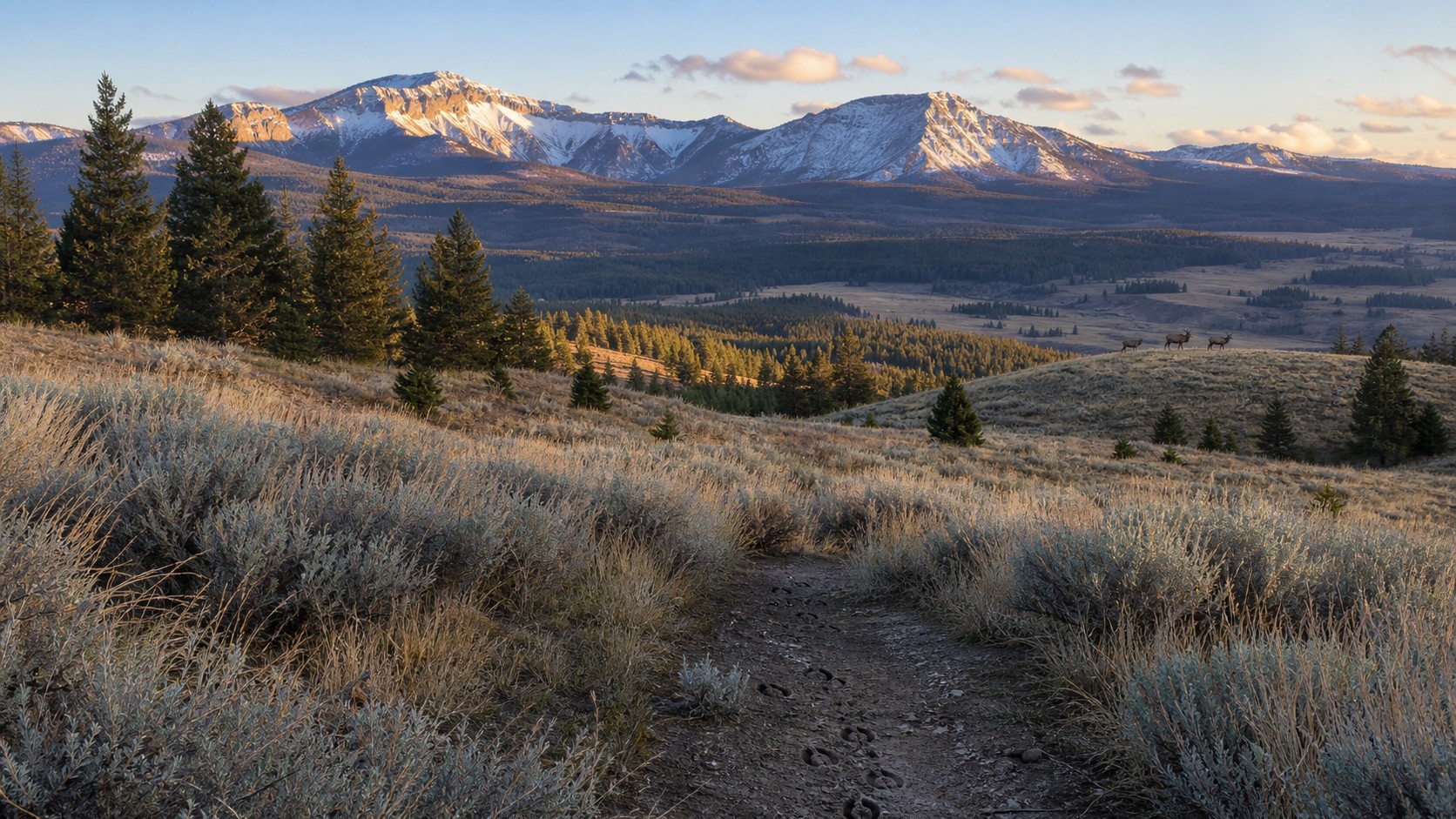
Scouting is the universal multiplier. The best gear in the world can’t help you if you’re hunting empty country. North American big game animals leave sign constantly, but that sign only matters if you understand freshness and context. Tracks, droppings, beds, rubs, wallows, trails, feeding sign, and water use can all tell you where animals are and what they’re doing.
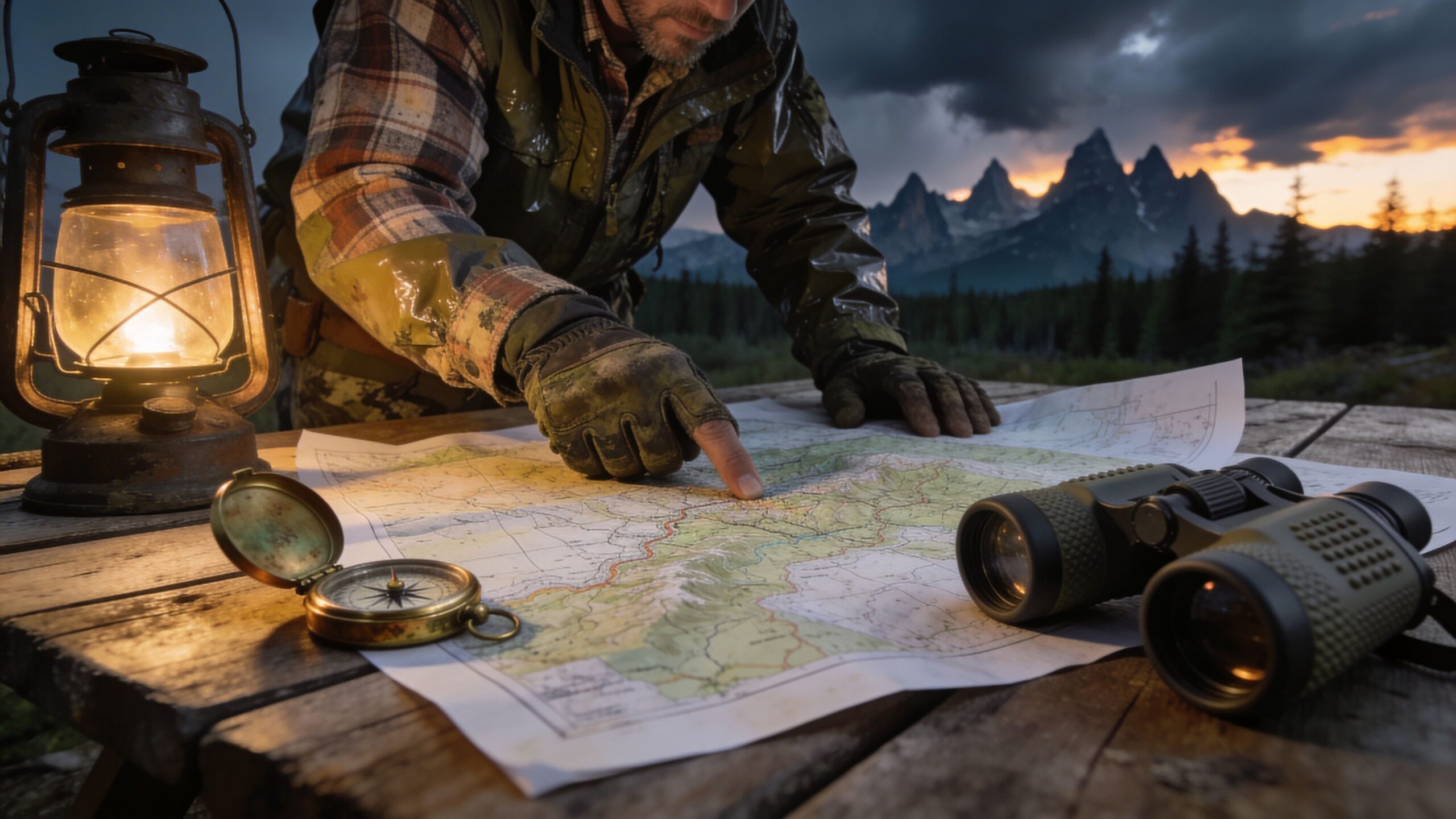
Digital scouting has become its own skill. Maps and imagery let you identify likely feeding areas, bedding cover, travel corridors, saddles, benches, creek bottoms, and access points. The goal is to reduce the landscape into a few high-probability zones, then confirm those zones with fresh sign on the ground. For beginners, the biggest scouting mistake is trying to learn an entire unit at once. Choose two or three zones you can truly understand, then hunt them with focus.
Wind and Scent: The Invisible Fence
If there’s a single lesson that separates casual hunting from consistent success, it’s wind. Big game animals—especially mature ones—treat scent like an alarm system. You can be invisible visually, but if your scent hits them, the encounter ends. In open country, animals may spot you. In timber, they may smell you before you ever see them. Thermals add complexity in mountainous terrain. Cool air often moves downhill in the morning; warm air often rises in the afternoon. This can create situations where your scent “pools” in basins or drifts into bedding cover without you realizing it. Hunters who constantly check wind and plan routes that protect scent advantage are simply playing a different game.
Tactics That Work Across Species
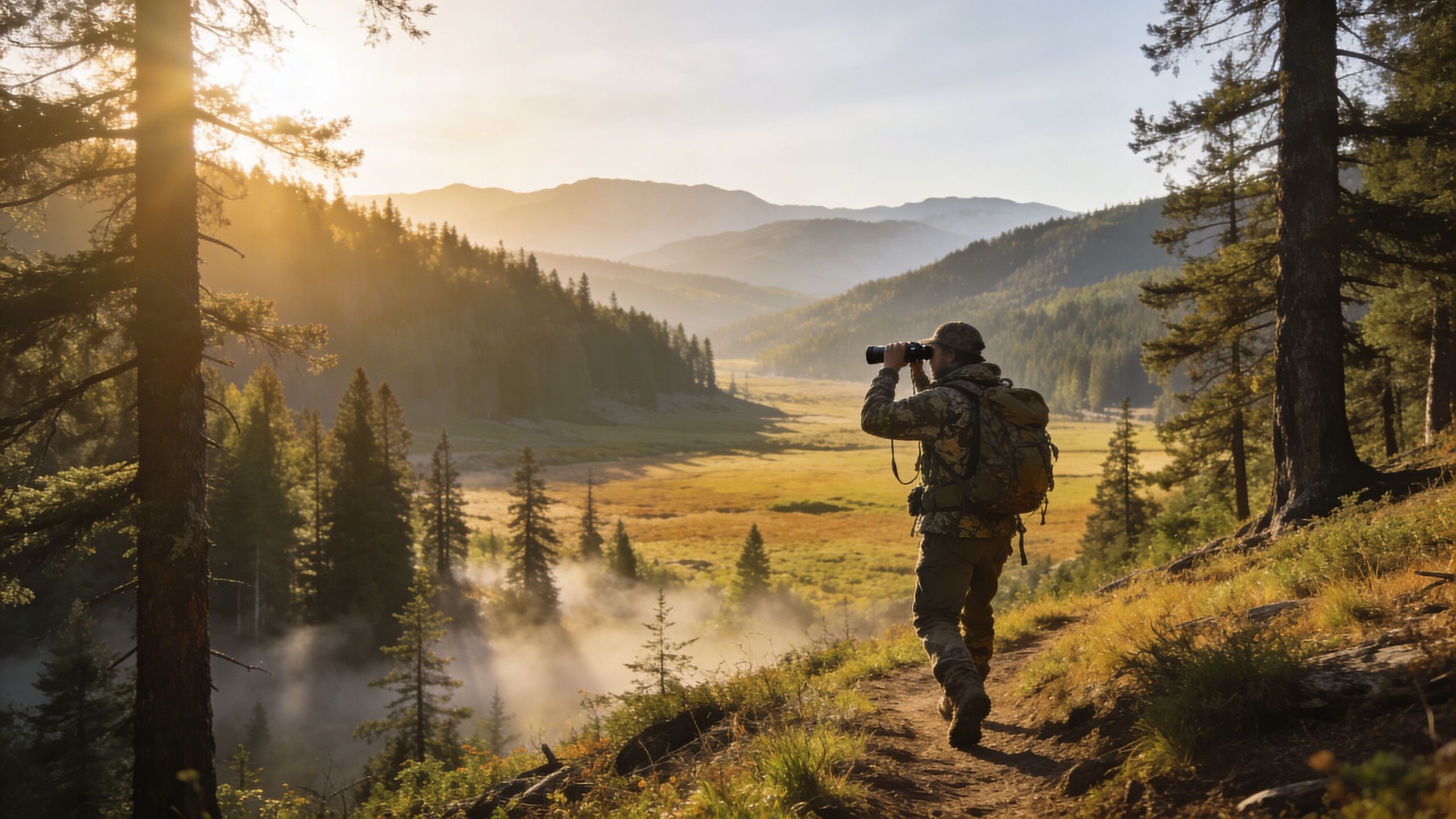
Even with regional differences, a few tactics hold up nearly everywhere. One is glassing with purpose. Instead of scanning randomly, you glass likely habitat at the times animals are likely to be there. Another is moving slower than you think you need to. Big game encounters often happen because the hunter was quiet and patient long enough for an animal to reveal itself.
Still hunting—slow movement with frequent pauses—can be devastatingly effective in thick cover. Spot-and-stalk is powerful in open terrain when you use the land to hide your approach. Ambush-style hunting can be effective when you identify funnels or travel corridors connected to food and bedding. The best tactic is the one your terrain supports and you can execute consistently.
The Big Game Gear System: Essentials Without the Noise
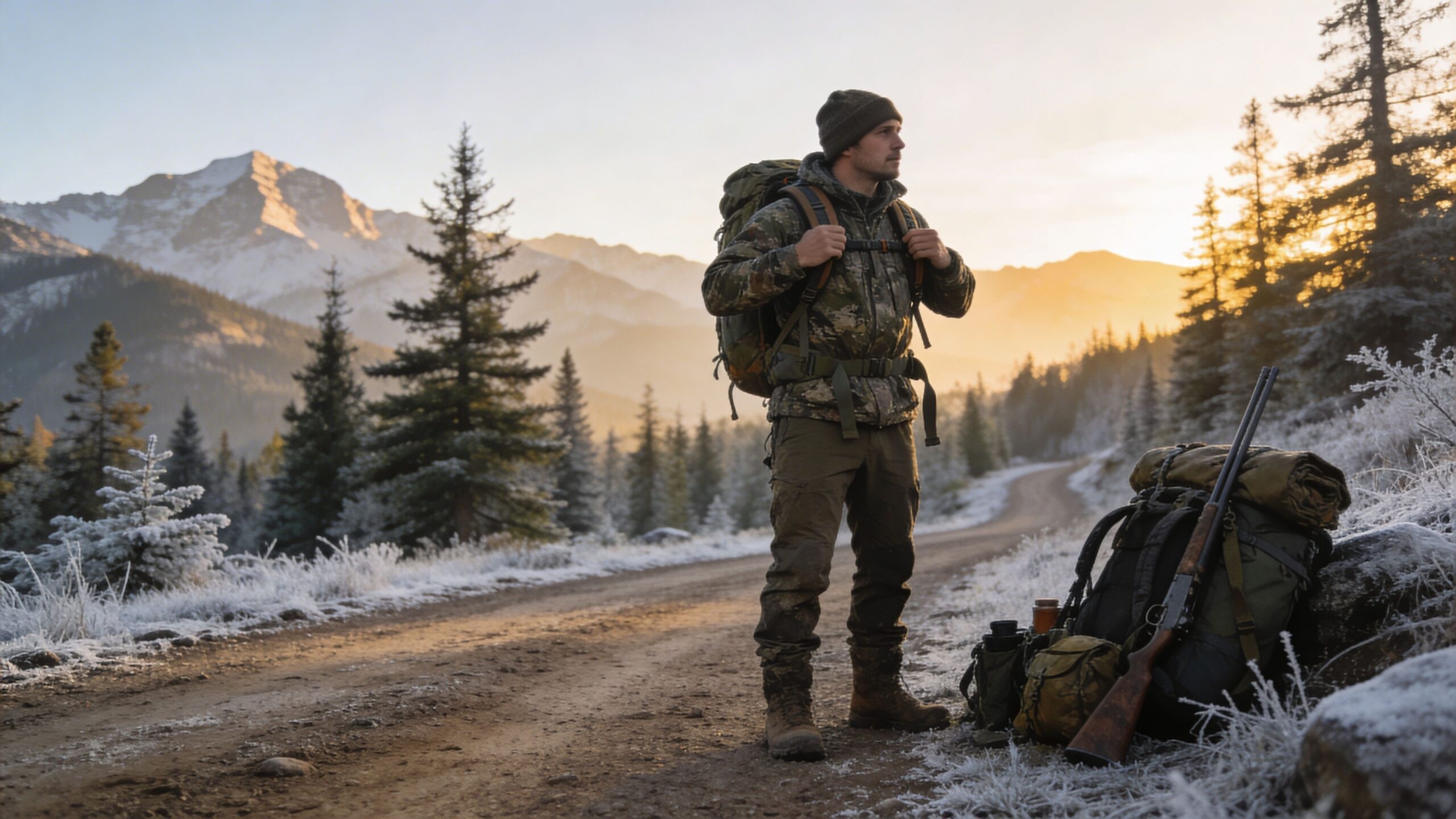
Big game gear doesn’t need to be complicated. It needs to be reliable and tested. Boots and a pack often matter more than beginners expect. A comfortable boot prevents the hunt from becoming a blister-management project. A supportive pack makes long days and potential pack-outs realistic instead of miserable.
Your clothing system should be layered so you can regulate heat while moving and stay warm while glassing or sitting. Navigation should include offline maps and a simple backup. Light matters for early starts and late recoveries. Hydration and food matter for decision-making; hunger and dehydration turn small problems into big ones.
Weapon and optics choices should match your hunting style and your distances. The best setup is the one you understand and can use under pressure, not the one that looks impressive online.
Ethics: The Real Standard of Success
In North America, big game hunting carries a responsibility that starts long before the shot. Ethical hunting means selecting a hunt you can handle, understanding the rules, and preparing to make clean decisions. It means choosing an effective range you can consistently shoot from field positions, not from a bench on your best day. It means passing shots that don’t offer a high probability of a quick harvest. It also means committing to recovery and meat care with seriousness. An ethical hunter is not someone who never misses or never struggles. An ethical hunter is someone who plans, practices, respects the animal, and takes responsibility for outcomes.
After the Shot: Tracking and Recovery as a Skill
Tracking is not optional in big game hunting; it’s part of the job. Even well-hit animals can travel. Beginners often rush forward too quickly, pushing wounded animals farther. A calm approach helps. Mark where the animal stood, note its direction of travel, and listen. Then evaluate sign at the impact site: blood, hair, tracks, and disturbed vegetation. The goal is to follow evidence, not emotion.
Different regions and conditions change tracking. Snow can be an honest teacher. Dry ground can make you rely on subtle disturbances. Thick brush can hide animals just yards away. The consistent rule is patience and discipline. Recovery is where professionalism shows.
Meat Care: Turning a Harvest Into a Gift
A big game harvest is only complete when the meat is cared for. Heat is the enemy. Cooling meat quickly is the priority, especially in warmer weather or early seasons. Keeping meat clean and protected matters just as much. Game bags, shade, airflow, and smart packing decisions preserve quality. If you’re hunting far from the truck, plan your pack-out before you ever pull the trigger. Know your route. Know how long it will take. Know how you’ll keep meat cool during multiple trips. North America’s backcountry is generous, but it requires respect. Meat care is one of the most meaningful ways to show that respect.
Building Your North American Hunt Plan
The “ultimate guide” isn’t a checklist—it’s a mindset. Choose species and terrain that match your reality. Learn the rules. Scout smart. Manage wind. Keep tactics simple. Practice ethical shooting. Plan for recovery and meat care. Then hunt with patience and focus. North America offers endless possibilities, but the best hunts aren’t always the farthest or fanciest. The best hunts are the ones where your preparation meets the landscape and everything suddenly makes sense.
Big game hunting in North America is a lifelong craft. Every season teaches something new, and every landscape has its own lessons. If you treat the hunt as a skill you can build—step by step—you’ll never run out of adventure, challenge, or purpose.