Welcome to the Hunt That Changes You
Big game hunting has a reputation. It’s the kind of pursuit people describe with big words: “hard,” “intense,” “life-changing.” And they’re not exaggerating. When you hunt animals that can vanish into timber with a single snapped twig, when weather flips from sunshine to sleet in an hour, and when the outcome depends on decisions you make while tired and cold, you start to see why big game hunting earns its place in outdoor tradition. But here’s the truth beginners need most: you don’t have to know everything to start. You just need to know what matters first. Big game hunting is a chain of simple skills stacked in the right order. Learn the rules, learn the animals, learn your terrain, practice ethical shooting, and plan your hunt like a problem you can solve. This guide is designed to make the whole process feel clear and achievable, while still capturing the adventure that makes big game hunting unforgettable.
A: No—reliable boots, a good pack, and a proven weapon setup matter most.
A: Keep it simple: hunt mornings and evenings hard, then work bedding edges midday.
A: Use the distance you can hit consistently from field positions, not benchrest.
A: Wind—animals will smell you long before you see them.
A: Move to a new zone based on fresh sign instead of waiting in dead areas.
A: Mark the spot, listen, then track carefully with patience and evidence.
A: It can be—plan distance, time, and meat cooling before the shot happens.
A: Use offline maps, mark waypoints, and carry a compass backup.
A: Dawn and dusk reveal feeding movement; midday scouting finds beds and travel routes.
A: Build skills: find fresh sign, close distance ethically, and learn the animal’s patterns.
What “Big Game” Means and Why It Matters
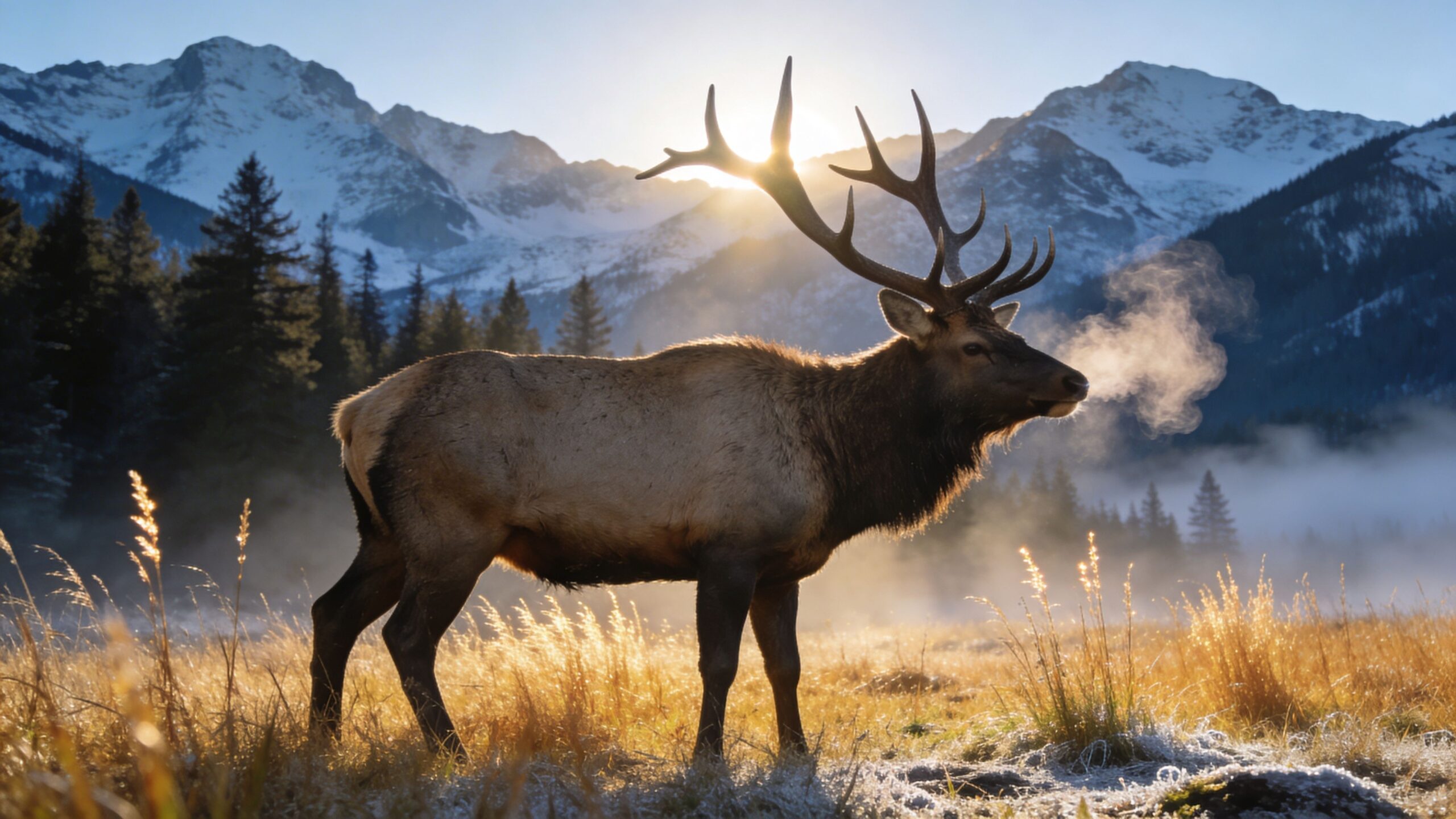
“Big game” usually refers to larger hunted species such as deer, elk, moose, bear, pronghorn, and similar animals depending on your region. These hunts often involve special tags, strict seasons, and careful regulations because the animals are managed as valuable wildlife resources. Big game hunting is closely tied to conservation. License and tag revenue funds habitat work, research, enforcement, and wildlife management in many places. When you step into big game hunting, you’re joining a system designed to protect and sustain wild populations. For beginners, the practical difference is that big game hunting asks for more preparation than small game. The animals are more wary, the terrain can be tougher, and the responsibilities after a harvest—especially meat care—are bigger. That’s not meant to scare you off. It’s meant to help you respect the hunt and plan with intention.
Start With the Rules: Tags, Seasons, and Legal Basics
The most important skill a beginner can develop is being “legally fluent.” Big game regulations can change by year, unit, and weapon season. Some hunts are over-the-counter, meaning you can buy a tag without a draw. Others require applying for limited-entry tags. Some systems use preference points, others use bonus points, and many combine different rules depending on species.
Begin by focusing on a handful of essentials: what species you’re hunting, where you can hunt it, what dates are legal, what weapon is legal during that season, and how tagging must be done. Pay attention to shooting hours, blaze requirements, and rules around transporting meat. In many areas, there are also regulations tied to disease management and carcass disposal. Beginners often overlook these details until it matters most, which is exactly when you don’t want to be learning them. A confident hunter knows the rules before they step into the woods. It protects wildlife, protects you, and keeps the hunt simple instead of stressful.
Choosing Your First Species: The Smart Beginner Approach
Your first big game hunt should be chosen with realism, not ego. Many beginners aim straight at the hardest quarry in the hardest terrain because it sounds heroic. There’s nothing wrong with ambition, but your first season is best used as a learning engine. That means choosing an opportunity where you’ll see animals, find sign, and get repeated chances to practice real hunting decisions.
If you live in or near big game country, you may be able to hunt locally and build familiarity quickly. If you’re traveling, consider how much time you truly have. A three-day hunt in a brand-new unit can still be great, but it should be planned around simple goals: learn access, locate fresh sign, and execute a disciplined approach.
Your beginner “win condition” doesn’t have to be a filled tag. It can be finding the herd, getting into range without being detected, or learning how animals use wind and terrain. Those wins stack, and they make the next season far more productive.
Understanding Animal Behavior: The Pattern Behind the Mystery
Big game animals aren’t random. They are governed by needs: food, water, security cover, and breeding behavior. The daily rhythm is often predictable. Many species feed early and late, then bed during the middle of the day in cover where they can stay cool and safe. Weather affects movement. Cold snaps can increase daylight activity. Heavy pressure from hunters can push animals deeper into cover or into overlooked pockets.
Learning basic behavior helps you stop “hunting feelings” and start hunting patterns. If you know an animal feeds in open country at dawn, your morning strategy becomes obvious: glass feeding areas early, then intercept movement toward bedding cover. If you know a mature animal prefers wind advantage, you stop walking into places where your scent will betray you.
When you combine animal behavior with terrain knowledge, the hunt becomes a puzzle with clues instead of a long walk with hope.
Scouting: The Skill That Makes Everything Easier
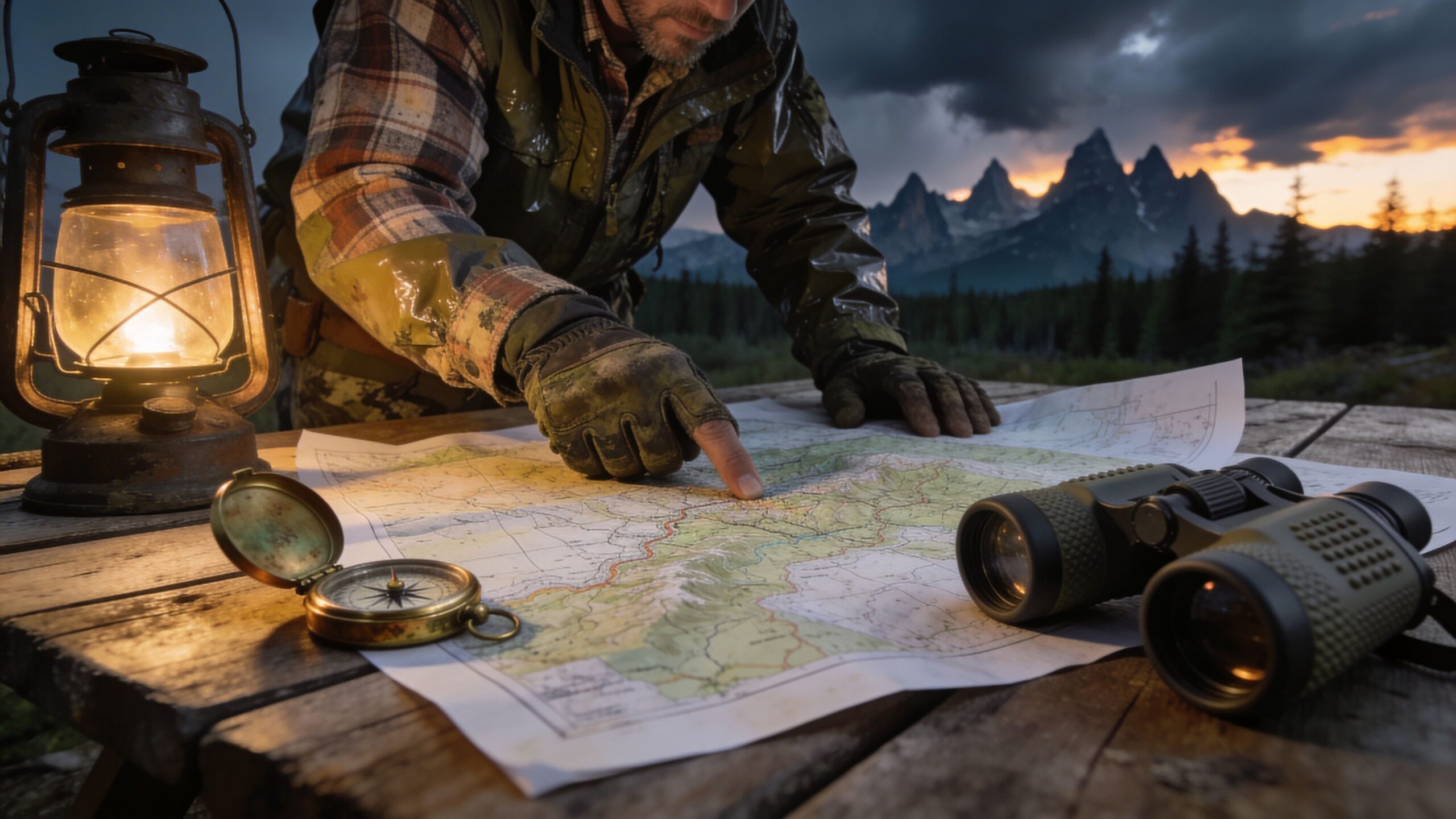
Scouting is where beginners can leap forward faster than they think. You don’t need decades of experience to scout effectively. You need a system. Start with maps and imagery to identify likely feeding areas, bedding cover, water sources, and travel corridors. Look for saddles, benches, ridge connections, creek bottoms, and edges where timber meets open ground. These are natural movement pathways.
If you can scout in person before the season, focus on freshness of sign. Tracks, droppings, rubs, beds, trails, and feeding sign tell you where animals are using the landscape now. Old sign is interesting but less useful. Fresh sign is momentum. If you can’t scout in person, arrive early enough to scout before opening morning. Even one extra day can transform the hunt. A great beginner move is to choose two or three “focus zones” instead of trying to learn the entire unit. Master a smaller area and you’ll make better decisions.
The Wind Factor: The Beginner Lesson That Changes Everything
Most beginners underestimate wind. Big game animals live through their noses. You can wear the perfect camouflage and move like a ghost, but if your scent hits the animal, the hunt is over before you know it. Wind direction should influence everything: where you walk, where you glass, where you sit, and how you approach.
In mountains, thermals complicate the picture. Cool air often flows downhill in the morning, and warm air rises in the afternoon. That means your scent can travel in ways that feel counterintuitive. The beginner advantage here is simple awareness. If you’re constantly checking wind and choosing routes that keep your scent away from likely bedding cover, you’ll immediately hunt more like a professional.
Gear for Beginners: What You Actually Need
Beginner gear planning often swings between extremes: either minimalism that leaves you cold and unprepared, or overbuying that turns your pack into a moving storage unit. The best beginner setup is practical and tested.
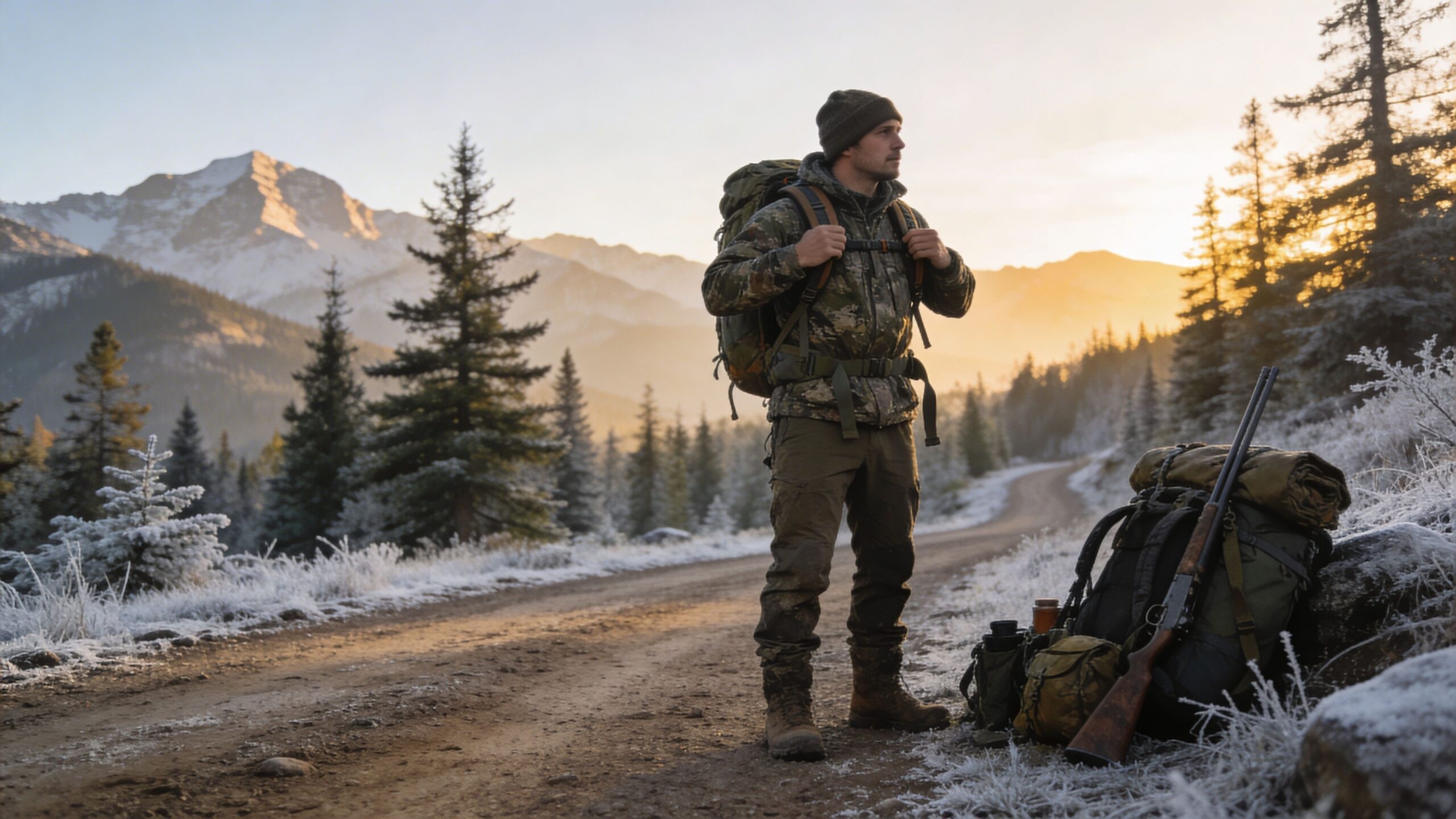
Start with boots and a pack because they decide how far and how comfortably you can hunt. Then build a clothing system around layers: a base layer, an insulating layer, and a weather layer. Add reliable navigation with offline maps and a compass backup. Add a headlamp. Add hydration and food you can actually eat when you’re tired. Then build your hunting-specific essentials: optics if your terrain demands glassing, a rangefinder if your hunting style includes longer shots, and a field dressing kit with game bags for clean meat care.
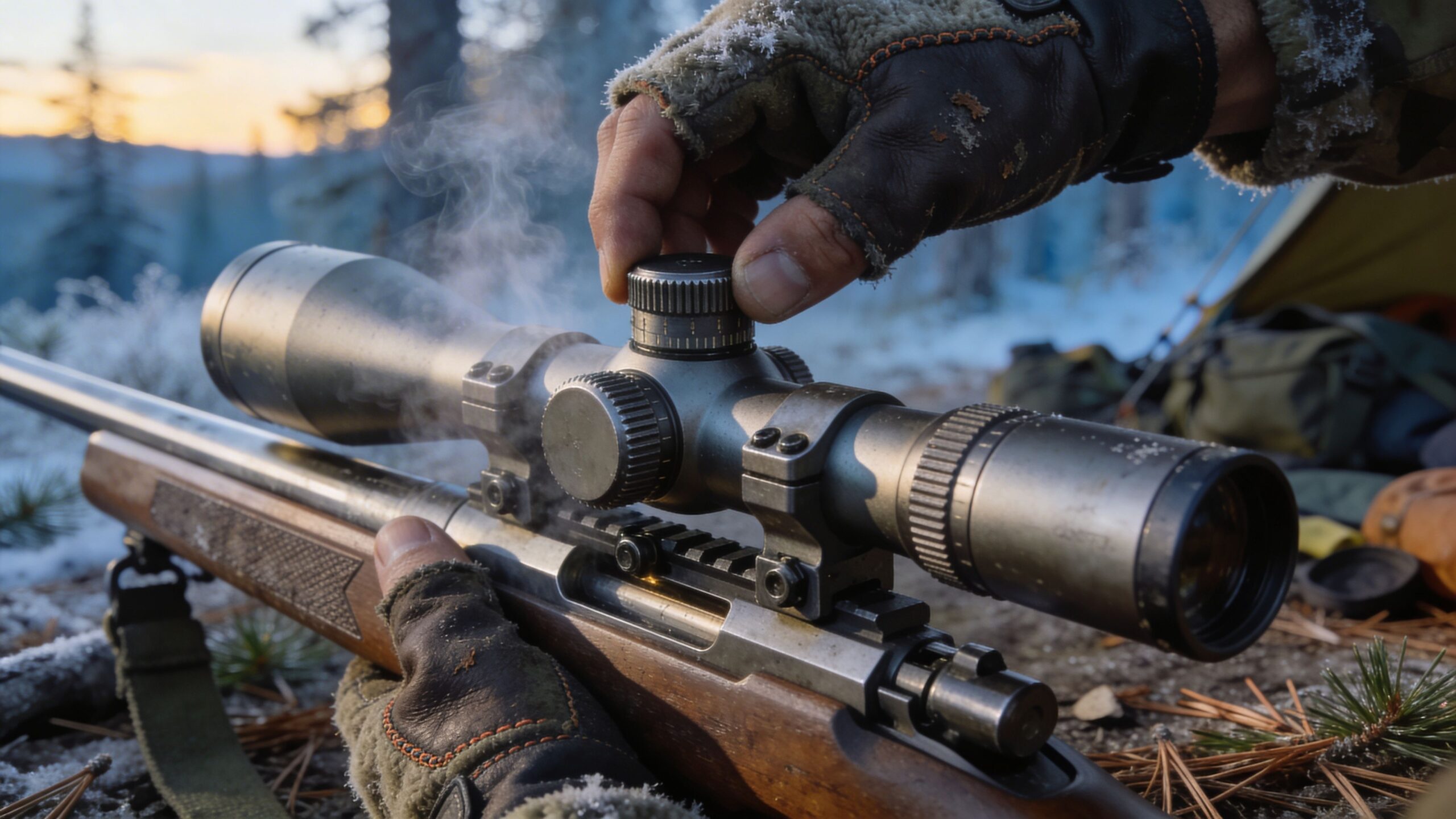
Your weapon system matters most. Whether you hunt with rifle or bow, the key is confidence. Beginners do best with a setup that’s simple, proven, and familiar—something you can operate smoothly even with cold hands and a fast heartbeat.
Shooting Ethics: How to Set a Realistic Effective Range
One of the most important beginner skills is knowing when not to shoot. Ethical hunting is not about being timid. It’s about respecting the animal and making sure your ability matches the opportunity. Your effective range is not your best group on a calm day from a bench. Your effective range is what you can hit repeatedly from field positions under real stress.
Practice from positions you’ll actually use: prone off a pack, sitting, kneeling, and standing with support. Practice with your hunting ammunition. Practice with your hunting clothes. Learn what your rifle does at realistic distances and what your bow does in real wind and angle conditions. When you decide your distance limits before the hunt, you remove a huge amount of pressure during the moment. Instead of debating, you simply execute the plan you already chose.
Shot Placement and After-the-Shot Discipline
Big game animals are large, and they can cover surprising distance even after a good shot. The most dependable target area is typically the heart-lung region behind the shoulder. The goal is a quick, humane harvest and a clean recovery.
After the shot, discipline matters. Many beginners rush forward immediately, which can push a wounded animal farther. A calm approach is better. Mark where the animal was standing, note where it ran, and listen. Then move carefully to the impact site and look for evidence. Blood, hair, tracks, and disturbed ground tell you what happened next.
If you’re unsure about the hit, patience can be the difference between recovery and a lost animal. The best hunters treat tracking as part of the hunt, not an afterthought.
Meat Care: The Part Beginners Forget to Plan
If you harvest an animal, your responsibilities increase immediately. Big game meat is a treasure, but it’s also perishable. Cooling it quickly is the priority, especially in warmer weather. Plan ahead for how you’ll break down the animal, keep meat clean, and transport it to a cooler or processing area.
Many hunters use the gutless method because it allows quick quartering without opening the body cavity, helping keep meat clean and cool. Regardless of method, the basics are consistent: get the hide off the meat where possible, let heat escape, use game bags, keep meat off the ground, and avoid sealing warm meat in plastic. Beginners should also think through the pack-out. If you’re far back, packing meat takes time and energy. A solid plan prevents panic and makes the experience safer and more rewarding.
Safety and Wilderness Awareness: Confidence Without Risk
Big game hunting often happens far from help. Safety planning is part of professionalism. Tell someone your plan. Carry navigation backups. Bring emergency layers. Understand weather forecasts and how quickly conditions change. Learn basic first aid and carry a simple kit. If you’re hunting bear country or predator-heavy areas, learn how to store food and meat responsibly and keep camp clean.
The goal isn’t to fear the wilderness. The goal is to respect it. A prepared hunter is relaxed. An unprepared hunter is stressed. The wilderness amplifies whatever you bring into it.
Your First Season Game Plan: A Simple Daily Structure
Beginner hunts get better instantly when you stop improvising every hour. Build a daily routine. Hunt mornings aggressively because movement is often best at dawn. Use midday for slow hunting along bedding edges, repositioning, or scouting quietly. Hunt evenings with patience, often by glassing and being in place before animals step out. The key is decision points. If you don’t find fresh sign in your area by midmorning, move. If wind changes, reposition. If you spot animals at last light, mark the location and plan an early approach. A plan keeps you proactive rather than reactive.
The Beginner Mindset That Leads to Success
Big game hunting is a craft. Your first season is about building the foundation: legal knowledge, terrain awareness, wind discipline, ethical shooting, and meat care. When you stack those skills, success becomes more predictable. Even if you don’t fill a tag right away, you’ll come home with something equally valuable: experience you can build on.
The moment you stop hoping and start planning, you become a hunter in the deepest sense of the word. And that’s when big game hunting truly becomes what it promises—an adventure that teaches you, challenges you, and rewards you with memories that last a lifetime.