The Real Secret Behind “Always Finding Animals”
If you’ve ever hunted with someone who seems to “see” what everyone else misses, you’ve watched real tracking in action. Professional-level tracking isn’t magic and it isn’t luck. It’s a repeatable skill built on attention to detail, patience, and the ability to turn small clues into a story you can follow across miles of country. A single scuffed pebble, a bent stem, or a track edge that’s starting to crumble can tell you more than a hundred yards of empty trail. The difference between wandering and tracking is simple: wanderers look for animals; trackers look for evidence. Big game animals—deer, elk, moose, bear, pronghorn, and more—leave sign constantly. The hard part is learning which sign matters now, what it means, and where it points next. This guide breaks down how professionals read tracks and terrain, how they confirm direction of travel, how they stay on a line when sign gets scarce, and how they trail wounded animals ethically and efficiently. If you want to fill tags more consistently, tracking is one of the highest-return skills you can build.
Think Like a Tracker: Sign Is a Timeline
Every piece of sign has one job: to tell you what happened, when it happened, and what the animal did afterward. Professionals treat the woods like a timeline. Freshness is everything. A perfect track means little if it was made last night and the herd has already climbed two ridges away. Meanwhile, a faint scuff made ten minutes ago can lead you to an animal within bow range if you move correctly. Start training your eyes to ask the same questions repeatedly. How fresh is this? What direction is it traveling? Was it calm, feeding, alarmed, or running? What is the animal likely to do next based on wind, cover, terrain, and pressure? Tracking becomes easier when you stop seeing sign as isolated pieces and start seeing it as a chain. You’re not just following prints—you’re following decisions.
Reading Tracks Like a Pro
Tracks are the most honest sign in the woods, but only if you know how to interpret them. A professional looks beyond shape and size and studies edges, depth, stride, and the way the hoof or paw interacted with the ground. Sharp, crisp edges in soft soil often mean freshness, while rounded edges, cracks, or debris settled inside usually indicate age. Moisture can be a clue too: a track that still holds shine or dampness often isn’t old, but weather can lie, so you always confirm with multiple indicators.
Direction of travel is usually obvious on clean ground, but it gets tricky on hardpack, rock, and leaf litter. Look for toe orientation, scuffed dirt pushed forward, and tiny “drag marks” where a hoof brushed as it lifted. In snow, pay attention to how crystals are broken along the leading edge and whether wind has softened the imprint. Professionals also read speed in the track line. A long stride with deep toe digs may suggest a trotting animal. Shorter, heavier steps with more splay can indicate feeding or cautious movement. When prints overlap or cross, a tracker learns to isolate the cleanest section of the line and rebuild the story from there.
The Other Half of Tracks: The Track Line
A single print is evidence. A track line is behavior. Professionals follow the track line, not individual tracks. They look at how the animal used terrain. Did it skirt the downwind side of a ridge? Cut through benches that offer easy travel? Follow a contour line instead of climbing? Animals take efficient routes that also keep them safe. Mature bucks, old bulls, and big bears often travel in ways that maximize wind advantage and minimize exposure. If you learn typical travel preferences in your region—ridge spines, saddles, creek bottoms, timber edges—you’ll predict the next hundred yards even when the ground goes blank.
Droppings, Beds, and Feeding Sign: Confirming You’re Close
Professional trackers confirm their trail with supporting sign. Droppings are an underrated clue because they tell you not just presence but timing and diet. Fresh droppings may still be glossy or moist depending on conditions. Older droppings dry, lose sheen, and crumble. The content matters too. Pellet droppings often show dry forage; clumped piles can indicate richer, greener food. Either way, droppings close the gap between “something passed here” and “it passed here recently.”
Beds are even more valuable. A bed tells you where an animal felt safe enough to pause. Look for hair in the depression, flattened vegetation, and the pattern of disturbed debris where the animal rose. Professionals study beds for orientation because animals frequently bed with wind advantage or with a view. If a bed faces downhill with wind at the back, the animal was using scent from behind and vision ahead. When you find warm beds or fresh steam in snow conditions, you’re not “in the area.” You’re in the moment, and your next move matters.
Feeding sign—nipped browse, torn grasses, stripped bark, overturned rocks—adds context. It can tell you if the animal was relaxed or hurried, if it was alone or in a group, and whether it’s likely to feed again soon in the same zone.
Rubs, Scrapes, Wallows, and Claw Marks: Reading the Big Picture
Certain sign types are less about immediate direction and more about patterns. Rubs and scrapes are classic deer sign, especially during pre-rut and rut. They can reveal which trails are being used consistently and which bucks are active. Wallows, rubbed saplings, and shredded brush can be prime elk sign in rut periods, while claw marks and turned logs can reveal bear activity. Professionals treat these as “anchors,” not trails. An anchor sign tells you this location matters. Then you build a plan: glass nearby basins, work wind-correct approaches, and return at the times animals are most likely to revisit those areas.
The Wind Rule: Track Without Being Tracked
The fastest way to lose a trail is to let the animal smell you. Big game animals may tolerate distant visuals, but scent is usually a deal breaker. Professional tracking is always paired with wind management. You can be on the freshest track line of the season, but if you follow it straight into the animal’s nose cone, your track ends abruptly—usually with crashing brush and a white flag disappearing over a ridge.
As you track, assume the animal will use wind to its advantage. Mature animals often travel quartering into the wind or use crosswinds along ridges. Your goal is to trail from a position that keeps your scent from blowing into likely bedding pockets, draws, or timber islands ahead. This often means you don’t walk directly on the track line. You parallel it from the downwind side, cutting the distance carefully while maintaining a buffer. The closer you get, the more this matters.
Moving Quietly: The “Slow Is Fast” Method
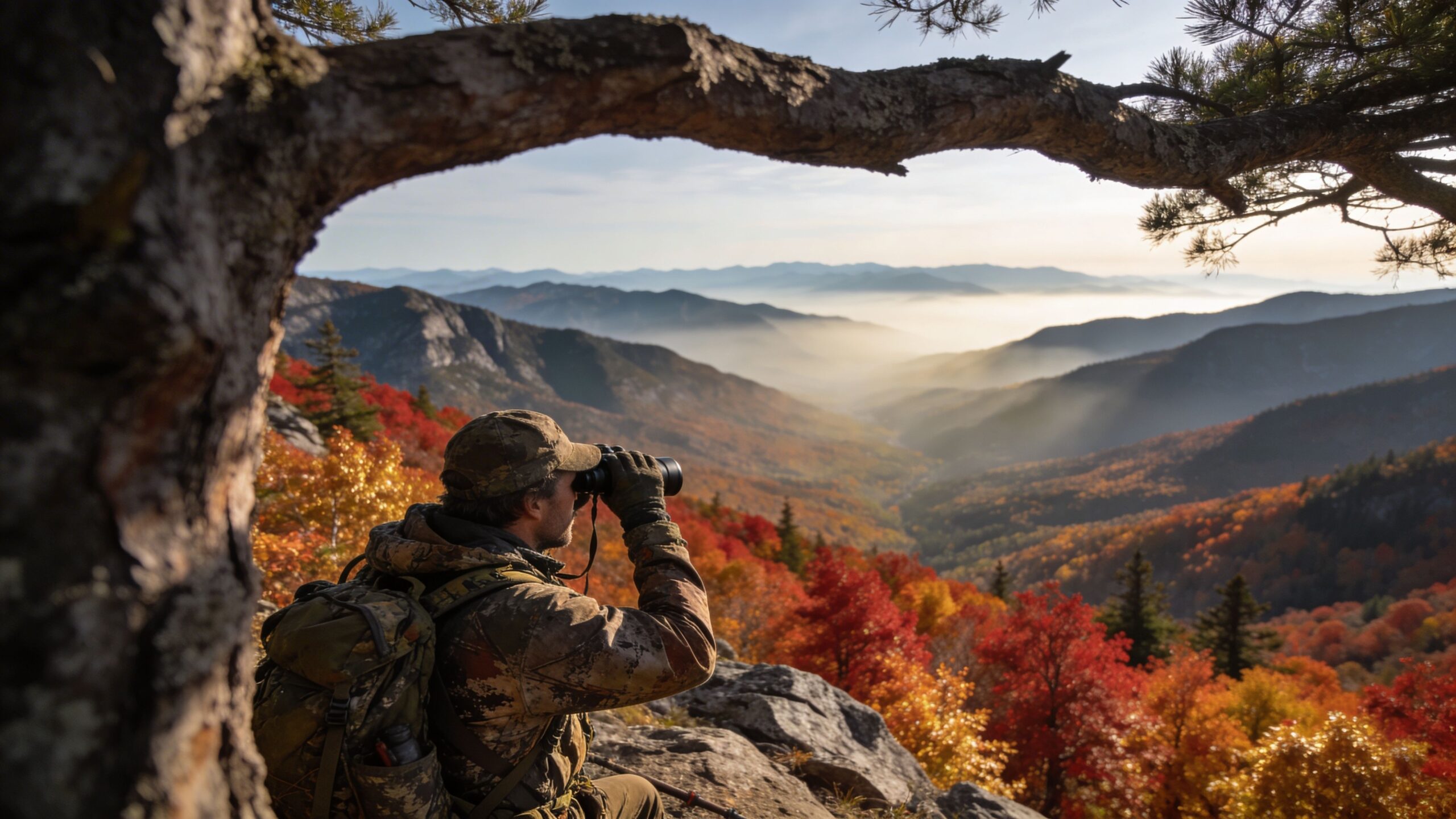
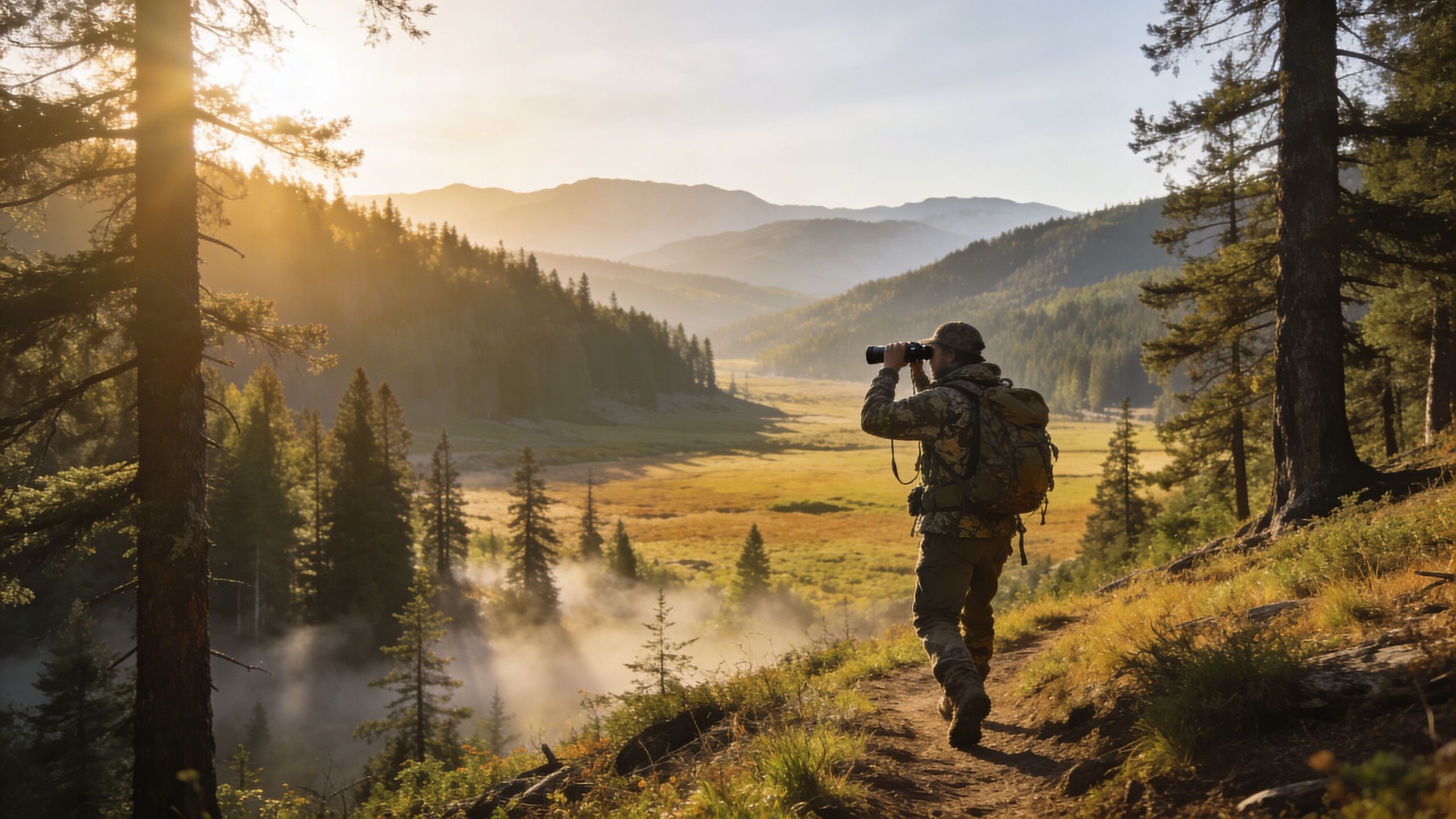
Professionals don’t track by marching. They track by controlling noise, minimizing silhouette, and stopping often to look ahead. Most big game animals aren’t “found” at your feet. They’re found with your eyes and ears long before you step on the next track. A tracker moves in short segments, pauses to scan, then advances again. This rhythm gives you time to catch subtle movement, hear an animal shift, or spot the curve of an antler through timber. In thick cover, the best trackers use micro-terrain—small folds in the ground, shrubs, deadfalls—to break their outline. In open country, they use distance and optics, tracking with binoculars as much as with boots. If you’re always looking down, you’ll bump animals you never saw. If you’re always looking up, you’ll lose the trail. Pro tracking is the balance between those two.
When the Trail Disappears: How Pros Reacquire Sign
Every tracker loses sign. The difference is what happens next. Professionals don’t panic and they don’t start wandering. They stop, mark the last confirmed sign, and slow down. Then they “cast” in a controlled pattern—small arcs forward and to either side—looking for the next clue. Casting works best when you think like the animal. If it was traveling, it likely continued on an easy path: a game trail, a contour, a saddle, a creek edge. If it was spooked, it likely took cover, climbed quickly, or dropped into a nasty hole of timber or brush.
In mixed terrain, pros often jump ahead to terrain funnels. Saddles, narrow benches, pinch points between cliffs and thick timber, and crossings in creek bottoms are natural places to pick up tracks again. They also use optics to find the animal itself rather than relying on ground sign alone, especially when the animal is moving toward open meadows or sparse timber.
Blood Trailing: Professional Recovery for Ethical Hunts
Tracking a wounded animal is where professionalism matters most. The goal is a clean recovery, not a fast chase. Blood trailing starts with discipline at the shot. The best trackers mark the last place they saw the animal and the exact location of the shot, then pause to listen. That listening period can reveal a crash, a final run, or silence that suggests the animal bedded quickly. Rushing in too soon can push an animal farther, especially if the shot wasn’t immediately lethal.
At the impact site, professionals look for more than blood. Hair type can indicate hit location. Short, coarse hair can suggest shoulder or back. Longer, softer hair may suggest belly or flank. Bone fragments can indicate a hard hit, while green matter can suggest a gut shot. Blood color and consistency add clues. Bright red with bubbles can indicate lung involvement. Darker blood can indicate liver. A watery, foul-smelling trail suggests a gut hit and usually demands patience and time before trailing.
When following blood, pros mark sign mentally or physically, keeping a line of travel. They avoid stepping on the trail itself to preserve evidence. They look ahead for the next sign rather than staring at the last drop. If blood becomes sparse, they return to the last confirmed point and cast carefully. If the animal beds, they treat it like a live animal until proven otherwise, approaching slowly and ready for a finishing shot if needed.
Terrain Funnels and “Animal Highways”
One of the most powerful professional habits is using terrain prediction. Big game animals rarely move randomly, especially in unfamiliar or pressured conditions. They use travel corridors—ridges that connect feeding to bedding, creek bottoms that offer cover, benches that provide easy walking, timber edges that conceal movement. Once you recognize these highways, you can intercept animals instead of chasing them.
In mountains, saddles are natural crossing points. In rolling country, low gaps and draws guide movement. In thick timber, old logging roads and game trails are the paths of least resistance. Professionals scout these features and then use fresh sign to decide which corridor is active now. The combination of terrain knowledge and sign reading turns tracking into strategy.
Practicing Tracking Without a Tag on the Line
The best trackers practice when it doesn’t count. Off-season hikes become sign-reading sessions. Snow days become track laboratories. Muddy trails reveal how different animals walk, how stride changes with speed, and how groups move differently than solitary animals. If you can identify what happened from tracks alone—feeding, trotting, stopping to look back—you’ll be far more effective when your hunt is live. Practice also trains confidence. When you trust your interpretation, you move with purpose. When you doubt everything, you second-guess and waste time.
Bringing It All Together: The Professional Tracking Mindset
Professional tracking is a discipline built from small habits repeated relentlessly. You confirm freshness with multiple indicators. You read the track line as behavior. You manage wind so the animal doesn’t track you back. You move like a predator—quiet, patient, and ready—because the animal is often closer than you think. And when sign disappears, you don’t wander; you rebuild the story and find the next page.
If you commit to tracking as a craft, you’ll notice something surprising: your hunts become calmer. You’ll spend less time hoping and more time knowing. You’ll turn empty miles into purposeful miles, and you’ll recover animals more ethically when the shot requires it. That’s what it means to track like a professional—not because you never lose the trail, but because you always know what to do next.